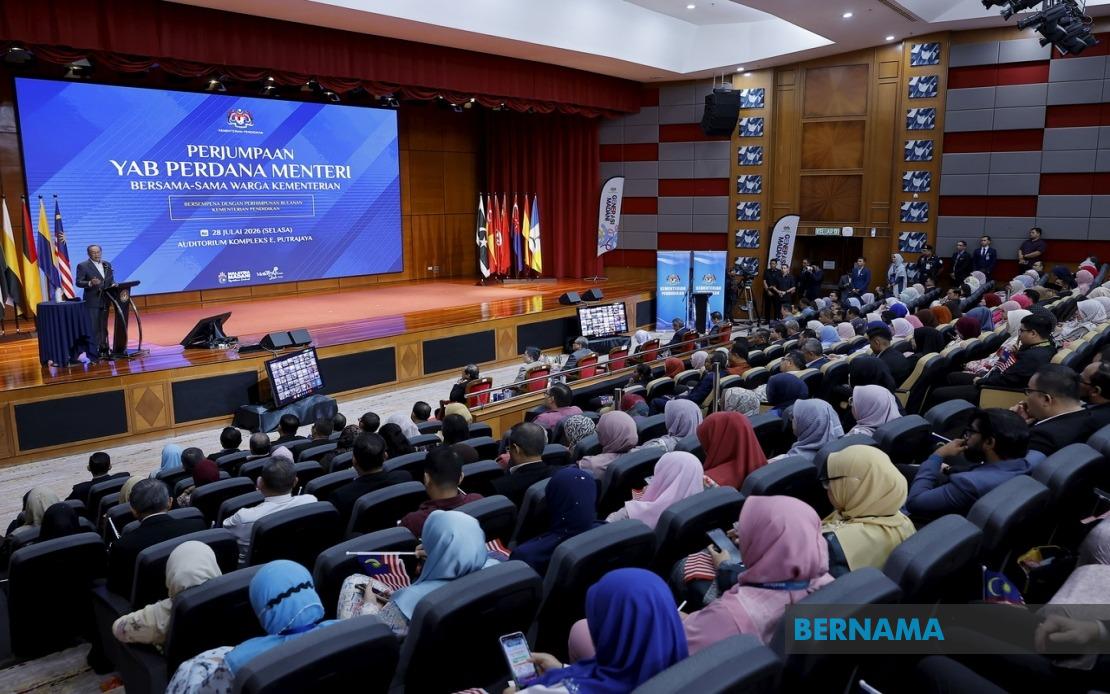
Prime Minister Datuk Seri Anwar Ibrahim has issued a firm directive to Malaysian schools, cautioning educational institutions against suppressing reports of bullying and abuse in an attempt to preserve their public standing. Speaking during discussions with Ministry of Education officials in Putrajaya, Anwar underscored the critical importance of transparency in addressing student welfare concerns, arguing that institutional image cannot take precedence over the safety and wellbeing of the school community.
The Prime Minister's remarks reflect growing concern about a troubling pattern in which schools may prioritise maintaining their academic reputations and performance metrics over the reporting and resolution of disciplinary incidents. Anwar made clear that this approach is fundamentally counterproductive, as concealing such problems at the outset allows them to fester and intensify. What begins as a manageable behavioural issue or isolated incident can metastasize into entrenched patterns of harassment, violence, and psychological harm if left unaddressed. The delay in intervention creates an environment where perpetrators face no immediate consequences, emboldening further misconduct, whilst victims receive no support or validation of their experiences.
Central to Anwar's message is the proposition that schools should view the disclosure and handling of bullying cases not as a mark of institutional failure, but as evidence of effective governance and duty of care. By adopting a transparent, responsive approach to student conduct issues, schools demonstrate their commitment to safeguarding and to the principles of justice and accountability. This reframing is particularly important for Malaysian school leaders who may harbour anxieties about how transparency might affect enrolment, parental confidence, or their school's standing in national performance rankings. Anwar's intervention suggests that these concerns, whilst understandable, must yield to the imperative of student protection.
The timing of Anwar's intervention reflects broader international recognition of bullying as a serious public health and education issue. Across the Asia-Pacific region, mounting evidence indicates that untreated bullying contributes to poor academic outcomes, mental health crises, and in extreme cases, tragic student suicides. Malaysia has experienced its own documented incidents of serious school bullying, some of which attracted media attention precisely because they had been inadequately managed or reported initially. By addressing the issue directly at the policy level, the Prime Minister is signalling that the Government intends to establish clear expectations for school leadership.
Anwar's framing of bullying as a gateway to more severe misconduct is psychologically and developmentally sound. Behavioural research indicates that violence and cruelty often emerge gradually, with early acts of bullying serving as a proving ground for more aggressive conduct. Students who engage in unchecked bullying may develop a false sense of immunity and escalate their behaviour. Conversely, swift, consistent intervention—applied fairly and proportionately—teaches accountability and deterrence. Schools that address such matters promptly send a powerful message that malicious behaviour will not be tolerated, whilst also providing bullies an opportunity to correct course through education and restitution rather than spiralling into deeper transgression.
For school principals and headmasters, Anwar's message carries an implicit challenge to reshape their institutional cultures. Rather than viewing bullying reports as crises that threaten the school's reputation, leaders should adopt a framework in which transparent handling of such matters becomes a marker of professional competence and integrity. This shift in mindset requires supportive systems: clear reporting mechanisms that protect complainants, trained staff equipped to investigate and mediate, counselling services for affected students, and structured consequences that are fair and rehabilitative rather than merely punitive. Schools that invest in these systems often find that their reputation actually strengthens, as parents and the broader community recognise a commitment to genuine pastoral care.
The Malaysian educational context adds particular dimensions to this issue. Many Malaysian schools operate under significant pressure to maintain strong academic results and positive external profiles, factors that can inadvertently create perverse incentives to minimise or obscure behavioural problems. Additionally, cultural norms emphasising deference to authority and face-saving may make students and even parents reluctant to report bullying formally. Anwar's directive creates political cover for school leaders who wish to implement more robust reporting systems, effectively overriding resistance rooted in conservative institutional traditions.
Implementation of this policy shift will require clear guidance from the Ministry of Education. Schools will need updated protocols for documenting and reporting bullying incidents, training for staff on trauma-informed responses, and frameworks for distinguishing between minor conflicts and systematic harassment. The Government should also ensure that schools have adequate counsellor-to-student ratios and access to mental health expertise, as the identification and resolution of bullying cases creates additional pastoral demands. Without these supporting resources, schools may struggle to translate the Prime Minister's directive into effective practice.
The broader implications extend to parental confidence and school choice. Malaysian parents increasingly expect schools to prioritise their children's emotional and physical safety alongside academic achievement. Schools that demonstrate transparent, professional handling of bullying cases will appeal to discerning families and will attract students whose parents value holistic education. Conversely, schools perceived as dismissive of safety concerns risk losing enrolment and facing reputational damage far more severe than would result from honest acknowledgement and remediation of incidents. Anwar's message, in this sense, aligns economic and moral incentives.
Looking forward, the Prime Minister's intervention should be supported by legislative and regulatory clarity. Malaysia's Education Act and school discipline guidelines should explicitly prohibit the concealment of bullying cases and establish clear reporting obligations to the Ministry, relevant authorities, and affected families. Schools that systematically suppress bullying reports should face sanctions, whilst those demonstrating excellence in student welfare and conflict resolution should be recognised and resourced accordingly. Such measures would operationalise Anwar's call for accountability within the education system itself.
Ultimately, Anwar's message articulates a fundamental principle: the purpose of schools is to educate the whole child in an environment of safety, respect, and justice. This mission is incompatible with protecting institutional reputation at the expense of student wellbeing. By speaking directly to this issue, the Prime Minister has elevated bullying from a routine disciplinary matter to a policy priority, signalling that Malaysia's Government is committed to ensuring that schools serve their students' interests rather than vice versa. The burden now falls on school leaders, the Ministry, and the broader education system to translate this principle into consistent, protective practice.

