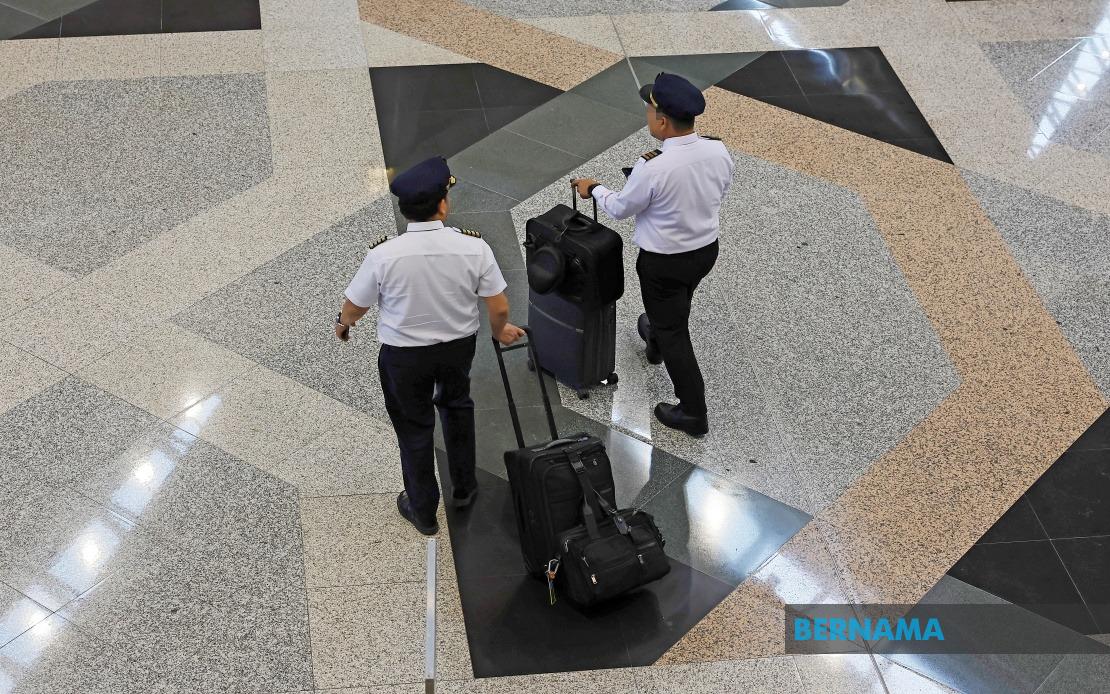
The chair of the Alliance For A Safe Community has raised alarm over potential vulnerabilities in Malaysia's airport security infrastructure, demanding a thorough examination of screening protocols at Kuala Lumpur International Airport in the wake of a pilot's detention in Indonesia on drug-smuggling charges. Tan Sri Lee Lam Thye issued the call following the arrest of a 39-year-old Malaysian aviator at Jakarta's Soekarno-Hatta International Airport Terminal 3, where Indonesian authorities allege he attempted to transport 25 kilogrammes of narcotics.
While acknowledging the legal principle that the accused pilot remains innocent until convicted through proper judicial proceedings, Lee articulated concerns that extend well beyond this single case. The incident, in his assessment, exposes fundamental questions about whether Malaysia's border and aviation security apparatus functions as intended. His statement zeroes in on a troubling contradiction: if the pilot successfully cleared screening at KLIA without detection of the drugs he is alleged to have carried, this suggests either the screening failed or procedural gaps exist that warrant immediate investigation.
Lee's intervention carries particular weight given the Alliance For A Safe Community's role as an independent watchdog on public safety matters. His call reflects growing anxiety among observers that security vulnerabilities could expose Malaysia to reputational damage internationally and undermine confidence in the country's ability to manage aviation safety—a critical concern for a nation that hosts major regional hubs and counts tourism as a significant economic driver. The reputation of Malaysia's aviation sector hinges on demonstrable commitment to rigorous security standards that match international expectations.
The specific focus of Lee's critique centres on whether screening procedures adequately cover all categories of airport users, including flight crew and airport personnel. He emphasized that security protocols must apply uniformly without exemptions based on professional status or familiarity with airport environments. This universal approach is essential because insider threats—particularly those involving individuals with legitimate access to restricted areas—represent a sophisticated security challenge that requires systematic controls rather than trust-based assumptions.
Lee's recommendations target multiple stakeholders across the aviation security ecosystem. He explicitly called on enforcement agencies, airport security operators, police services, and the Civil Aviation Authority to collaborate on a comprehensive procedural review. This inter-agency approach recognises that aviation security is not the responsibility of a single entity but depends on coordinated effort across government agencies and private operators. The fragmented nature of such oversight sometimes creates blind spots that determined bad actors can exploit.
Central to Lee's argument is the proposition that public confidence in Malaysia's aviation security represents a public good that cannot be sacrificed for convenience or institutional inertia. When passengers board aircraft or when shippers entrust cargo to Malaysian carriers, they implicitly rely on the state's capacity to prevent dangerous materials and persons from boarding. Once that confidence erodes—whether through actual breaches or perceived inadequacy in response to incidents—the effects cascade through the aviation industry in the form of higher insurance costs, regulatory scrutiny, and reduced passenger traffic.
The timing of this intervention matters for Malaysia's broader reputation management. As a major Southeast Asian nation and an aspirant regional leader, Malaysia's commitment to security excellence serves as a benchmark for standards across the region. Conversely, security lapses at flagship facilities like KLIA can invite unwanted international attention and may prompt trading partners or aviation authorities to impose additional restrictions or inspections on Malaysian carriers. The economic implications extend to aircraft maintenance contracts, pilot recruitment, and the competitiveness of Malaysian airlines against regional competitors.
Lee's emphasis on the need for transparent investigation and corrective action also signals an expectation that authorities will respond substantively rather than defensively. In developing democracies, security agencies sometimes resist external scrutiny or civilian oversight, viewing it as a challenge to operational autonomy. However, modern security practice increasingly recognises that public accountability and transparent procedures actually strengthen rather than weaken institutional effectiveness. Agencies that engage constructively with legitimate civil society concerns build the political capital necessary to secure resources and public cooperation.
The broader context involves ongoing tensions in Southeast Asia surrounding narcotics trafficking and the movement of contraband through major transportation hubs. The fact that the alleged smuggling was detected in Jakarta rather than at KLIA raises uncomfortable questions about comparative security standards within the region. If stricter Indonesian screening caught what Malaysian screening supposedly missed, this suggests the problem is not merely individual negligence but potentially systemic underinvestment or procedural inadequacy at the Malaysian end.
Looking forward, Lee's intervention may catalyse policy discussions about resource allocation to airport security, training standards for screening personnel, and technology upgrades to detection equipment. Many Southeast Asian airports operate older screening infrastructure, and budget constraints often prevent timely modernisation. However, high-profile incidents create political momentum for reform. If authorities respond seriously to Lee's call, the outcome could ultimately strengthen Malaysia's security posture and regional standing.

