The Selangor state government is urging residents to exercise extreme caution in the face of fraudulent communications claiming to relate to the KitaSelangor Voucher programme, a newly announced assistance initiative designed to support vulnerable households across the state. The State Secretary's Office issued the warning to protect the public from becoming victims of online scams that exploit the programme's anticipated launch, reminding citizens not to respond to unsolicited text messages or click on links from unverified senders purporting to represent the initiative.
The critical point underscoring this alert is timing: formal applications for the KitaSelangor Voucher Programme remain closed. Scammers are capitalizing on public anticipation of the scheme by sending fraudulent messages designed to trick unwary recipients into divulging personal information or accessing malicious websites. The state government has emphasized that all legitimate communications will originate exclusively from official Selangor State Government channels, and any information obtained elsewhere should be treated with suspicion and immediately disregarded.
According to the State Secretary's Office, eligible beneficiaries will be contacted directly through official SMS notifications beginning June 23, providing them with a secure window to verify their personal details and submit applications via the dedicated KitaSelangor Voucher Portal. This phased notification process forms part of a carefully structured rollout designed to prevent fraud and ensure that assistance reaches only those who genuinely qualify. The public has been advised to await the state government's official announcement scheduled for June 22 before taking any action related to the programme, creating a clear demarcation between authentic communications and potential scams.
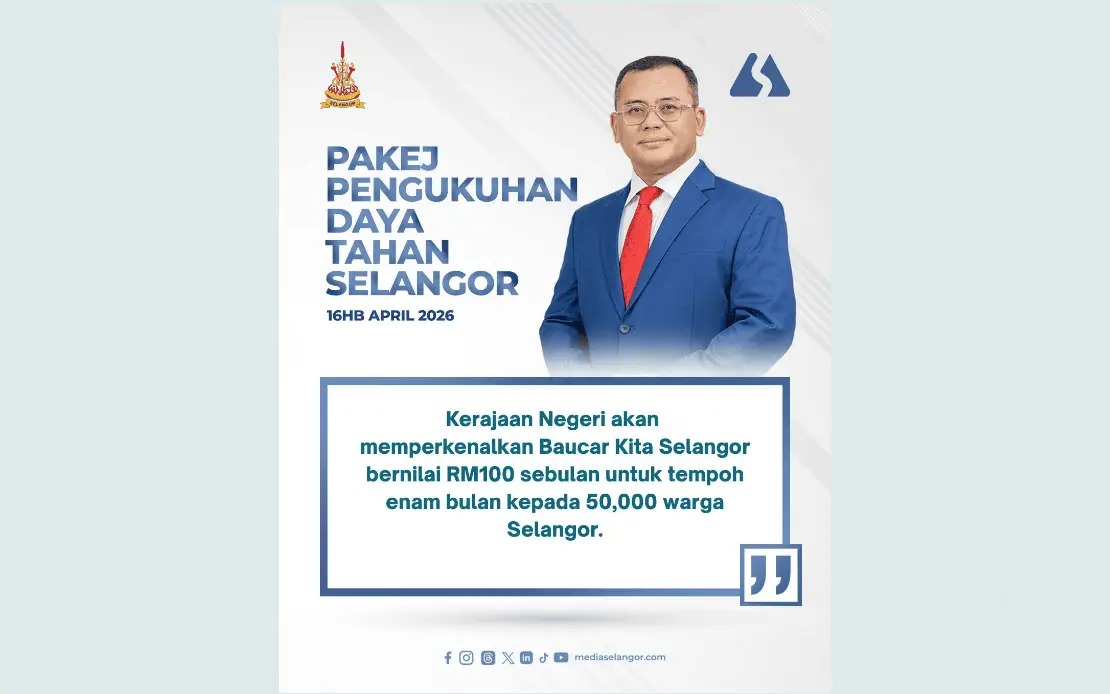
The KitaSelangor Voucher initiative represents a significant social safety net programme targeting Malaysia's most economically vulnerable populations. Menteri Besar Datuk Seri Amirudin Shari announced that approximately 50,000 low-income families across Selangor would receive monthly cash assistance of RM100 over a six-month period, beginning June 30. This targeted distribution approach reflects the state government's commitment to channeling resources directly to households struggling with inflationary pressures and economic uncertainty.
The programme forms part of the broader RM140 million Selangor Resilience Strengthening Package Phase 1, unveiled in April as a comprehensive response to mounting economic headwinds affecting ordinary Malaysians. Rising living costs, global supply chain disruptions, and the lingering effects of macroeconomic volatility have created genuine hardship for working families and marginalized communities. The KitaSelangor initiative acknowledges these realities by providing immediate, tangible relief to those most severely affected by circumstances beyond their control.
Recipient identification follows a rigorous, data-driven methodology rather than open application. The state will distribute benefits to households registered in the eKasih database for poverty tracking, individuals displaced from employment, vulnerable populations already enrolled with the Social Welfare Department (JKM), and single mothers who satisfy specific eligibility criteria. This targeted approach ensures that limited resources reach those with the greatest demonstrated need, minimizing administrative burden while maximizing impact. By leveraging existing government databases and agency records, the programme avoids duplication and reaches beneficiaries who might otherwise struggle to navigate complex application processes.
The emergence of fraudulent SMS messages exploiting the KitaSelangor Voucher scheme illustrates a persistent vulnerability in Malaysia's digital landscape. Scammers routinely monitor government announcements and social welfare programmes, rapidly adapting their tactics to harvest personal data or direct victims toward phishing websites. For a state with Selangor's size and economic diversity, such scams pose substantial risks to less digitally literate populations, including elderly residents and recent migrants who may lack familiarity with identifying fraudulent communications. The state government's proactive warning attempts to counteract this threat before the formal application period begins.
Malaysians considering eligibility for the KitaSelangor Voucher should remain skeptical of any unsolicited contact claiming association with the programme. Legitimate government agencies rarely initiate contact requesting personal financial information via SMS, and official government portals typically feature recognizable domain names and security features. Recipients who receive notifications after June 23 should independently verify messages by contacting the Selangor State Government through verified phone numbers or visiting official websites rather than clicking links embedded in text messages. This simple verification step prevents substantial harm.
The policy implications of this fraud alert extend beyond the immediate programme. It underscores the critical importance of public digital literacy campaigns accompanying government welfare initiatives, particularly when targeting populations with varying levels of technological familiarity. As Malaysia accelerates the digital delivery of public services, safeguarding vulnerable recipients from exploitation becomes increasingly essential. State and federal governments should establish standardized protocols for authenticating official communications, educating the public about verification methods, and rapidly responding to reported scams.
For Malaysian residents and Southeast Asian observers, the KitaSelangor Voucher controversy reflects broader regional challenges in balancing social safety nets with cybersecurity. As governments across Southeast Asia expand digital welfare programmes, opportunistic criminals inevitably follow, targeting the most vulnerable populations who most desperately need assistance. The Selangor warning serves as a regional reminder that public protection requires sustained collaboration between government agencies, telecommunications providers, and cybersecurity authorities to identify and shut down fraudulent operations quickly.
The state government has positioned the June 22 official announcement as a critical reference point for public clarity, signaling that any communication received before that date should be treated as potentially fraudulent. This clear temporal boundary helps residents distinguish authoritative information from scam attempts. Moving forward, Selangor authorities should establish dedicated reporting mechanisms allowing citizens to flag suspicious messages immediately, enabling rapid investigation and potential law enforcement action against perpetrators. Such transparency builds public confidence in the programme and demonstrates government commitment to protecting beneficiaries from exploitation.