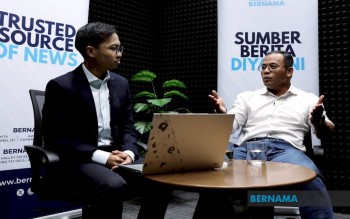
Selangor Menteri Besar Datuk Seri Amirudin Shari has identified a significant opportunity for Malaysia's central region, arguing that coordinated development between Selangor and Negeri Sembilan could establish a formidable economic corridor to rival established growth centres elsewhere in the country. Speaking in Seremban, Amirudin outlined how the two neighbouring states, through strategic alignment and shared development priorities, possess the potential to strengthen investment networks, advance high-tech industries, and build sophisticated logistics infrastructure capable of elevating the nation's central zone into a globally competitive hub.
The geographical positioning of the two states creates a natural advantage that remains largely underdeveloped, according to Amirudin's assessment. Their administrative boundaries, rather than acting as barriers, could become seamless economic zones if both governments pursue harmonised policies and project coordination. This neighbouring relationship differs fundamentally from distant regional partnerships, allowing for informal resolution of cross-border issues and faster implementation of joint initiatives without the bureaucratic delays typical of formal negotiations between non-adjacent jurisdictions.
Amirudin specifically highlighted the complementary strengths found in existing and planned developments across both states. Selangor's southward expansion trajectory, evident in growing investment and infrastructure projects in Sepang and Kuala Langat, aligns naturally with Negeri Sembilan's positioning as an emerging technology centre, particularly around Nilai. Rather than viewing these areas as separate economic zones, Amirudin envisions them as interconnected components of a unified regional system capable of attracting multinational corporations and high-value manufacturing operations seeking integrated ecosystems.
The Selangor Aero Park exemplifies this potential synergy. Located adjacent to developable land across the border in Negeri Sembilan, the aeronautical hub presents compelling investment opportunities that transcend state lines. When projects straddle both jurisdictions, governmental alignment becomes critical to their success. Amirudin argued that voters in Negeri Sembilan's forthcoming state election should consider this developmental alignment as a priority factor when evaluating political options, framing cross-border coordination as a tangible governance benefit.
Beyond manufacturing clusters, the proposed economic corridor would leverage the region's exceptional locational advantages. The proximity of Kuala Lumpur International Airport, combined with sophisticated highway networks and railway infrastructure, creates multiple access points for goods, services, and personnel. These existing assets require strategic coordination rather than additional major capital investment to unlock their full potential in driving regional competitiveness. The technology sector's development in the area further amplifies these advantages, creating opportunities for innovation-driven industries that demand modern infrastructure and skilled workforces.
Logistical integration stands central to Amirudin's vision for the corridor. The proposed Seremban Bypass, connecting industrial centres in Negeri Sembilan with port facilities in Selangor, would significantly reduce supply chain friction and transit times. This infrastructure project transcends simple road construction; it represents a mechanism for linking manufacturing operations with export capabilities at Port Klang facilities including Westports and Northport, as well as emerging developments at Pulau Carey. For manufacturers operating within the corridor, such connectivity dramatically reduces operational costs and improves competitiveness in global markets.
The manufacturing sector specifically stands to benefit from this integrated approach. Current operations in both states often function independently despite geographic proximity, missing opportunities for supply chain optimisation and shared service infrastructure. By establishing coordinated industrial zones spanning both states, manufacturers could access specialised support services, logistics hubs, and technology resources without replicating expensive facilities across state boundaries. This efficiency model reflects evolving international best practices in regional economic development.
Services and logistics sectors would similarly gain from the formalised corridor concept. Malaysia's ambition to position itself as a regional services hub requires sophisticated infrastructure and strategic locations offering accessibility to multiple markets. A unified Selangor-Negeri Sembilan economic zone would provide this platform, offering logistics operators the combination of modern port access, industrial clustering, and technology infrastructure necessary to serve Southeast Asian supply chains effectively.
Amirudin's emphasis on aligned government cooperation highlights a critical factor often overlooked in Malaysian economic development discourse. Institutional coordination between state governments can either accelerate or impede cross-border initiatives regardless of infrastructure investment levels. When leadership shares common development vision, informal channels supplement formal procedures, enabling faster problem-solving and adaptive management. Conversely, political misalignment between adjacent states frequently generates regulatory barriers and bureaucratic complications that deter private investment despite inherent economic advantages.
The proposed corridor model reflects broader global trends toward regional economic integration rather than isolated state-level development. Successful cross-border zones in other Asian economies demonstrate that when complementary resources, infrastructure, and workforces combine across jurisdictional boundaries through coordinated governance, outcomes exceed what isolated state development could achieve. This approach contradicts traditional Malaysian development planning, which typically emphasises state-level autonomy.
For Malaysia's broader economic positioning, such coordination carries strategic significance. As regional competition intensifies from Vietnam, Thailand, and Indonesia for manufacturing investment and services hub status, Malaysia requires competitive advantages beyond individual state offerings. A unified central corridor combining Selangor's established infrastructure with Negeri Sembilan's emerging potential creates a differentiated proposition in global markets, potentially attracting manufacturers seeking integrated regional bases rather than single-location operations.
The implied criticism of political misalignment in Amirudin's remarks reflects genuine frustration with development constraints imposed by fragmented governance. Negeri Sembilan's upcoming state election thus carries implications extending beyond local political competition into the practical realm of regional economic performance. The electorate's choice regarding state leadership will directly influence whether this corridor potential translates into concrete investment and job creation or remains an unrealised opportunity constrained by political barriers.
Moving forward, formalising this vision would require establishing institutional mechanisms for continuous cross-state coordination, joint planning frameworks, and shared investment vehicles. The corridor concept transforms from rhetorical possibility to achievable outcome only when political commitment translates into operational structures supporting sustained collaboration. For Malaysia's central region, unlocking this collaborative potential represents a significant opportunity to strengthen national competitiveness during an era of intensifying regional competition for foreign direct investment.

