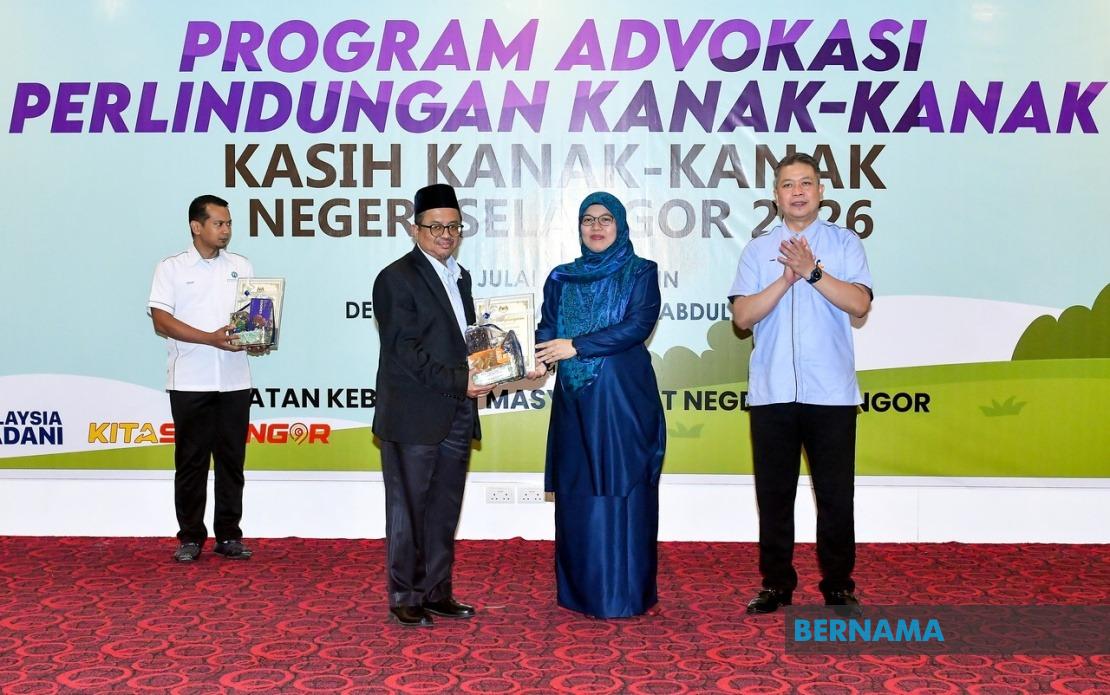
Selangor has launched an aggressive advocacy campaign designed to strengthen protections for approximately 1.8 million children across the state, acknowledging that prevention and continuous public engagement represent critical components of safeguarding vulnerable young residents. The initiative, rolled out in Shah Alam, reflects growing recognition among policymakers that comprehensive child welfare requires sustained effort beyond reactive crisis management.
According to Anfaal Saari, chairperson of the Selangor Women Development and Social Welfare Committee, the state's particularly acute challenges stem from its position as Malaysia's most densely populated region outside the federal territories. High population concentrations, combined with rapid urbanisation and associated socioeconomic pressures, create an environment where child protection systems face persistent strain. The advocacy push directly addresses this reality by emphasising prevention, education, and community awareness rather than addressing problems after they have already inflicted harm.
Statistical evidence from the first six months of 2024 underscores the urgency behind this initiative. Selangor authorities recorded 2,306 child-related cases during the January-to-June period, a figure that demands urgent attention. Within this caseload, 1,877 involved care and protection matters—cases where children faced potential abandonment, neglect, or abuse within family or institutional settings. A further 366 cases involved criminal misconduct affecting minors, whether as victims or witnesses. An additional 63 cases involved children deemed beyond parental control, reflecting broader social and behavioural challenges. These numbers, whilst representing documented cases, likely underestimate the true prevalence of child welfare issues given reporting barriers and institutional limitations.
The centrepiece of this effort is the 'Program Advokasi Perlindungan Kanak-Kanak: Kasih Kanak-Kanak Selangor', a collaborative initiative that draws heavily upon established partnerships with Yayasan Islam Darul Ehsan (YIDE). This foundation has maintained continuous programming since 2004, having already benefitted more than 100,000 students nationwide. By embedding child protection advocacy within existing institutional networks rather than creating parallel structures, the programme achieves greater penetration and sustainability. The initiative recognises that schools, both secular and Islamic, as well as tahfiz centres where students memorise the Quran, represent crucial touchpoints for identifying at-risk children and delivering preventive education.
The launch event itself involved 250 participants representing 52 educational and religious institutions across Selangor. This participation encompassed conventional schools supervised by the Selangor State Education Department (JPNS), religious education programmes overseen by the Selangor Islamic Religious Department (JAIS), and tahfiz centres coordinated through the Selangor Tahfiz Al-Quran Institutions Association (PITAS). The diversity of participating institutions signals recognition that child protection transcends sectarian boundaries and must operate coherently across all educational environments where young people spend substantial time.
Crucially, Anfaal stressed that government cannot adopt a merely reactive posture, waiting for incidents to occur before mobilising response. Such an approach, whilst addressing immediate crises, leaves fundamental vulnerabilities unaddressed. Instead, the Selangor government has embraced continuous, comprehensive advocacy grounded in prevention and early intervention. This represents a philosophical shift toward systems-based thinking, acknowledging that sustainable child protection emerges from consistent messaging, institutional coordination, and community participation rather than sporadic crisis response.
The programme architecture reflects this preventive philosophy through deliberate interagency collaboration. The Royal Malaysia Police (PDRM) participates, bringing law enforcement perspective and capability for addressing criminal threats to children. The Malaysian Communications and Multimedia Commission (MCMC) contributes expertise regarding digital safety, recognising that contemporary child protection encompasses online environments where exploitation increasingly occurs. Educational authorities coordinate curriculum integration and institutional protocols. Religious authorities ensure cultural sensitivity and community trust. This multistakeholder approach creates redundancy and cross-verification, reducing blind spots inherent in siloed institutional responses.
A particular emphasis falls upon protection within institutional settings themselves, including care homes, tahfiz centres, and religious schools. Such environments, whilst serving essential social functions, can paradoxically become sites of vulnerability if oversight mechanisms prove inadequate. By incorporating these institutions explicitly into the advocacy framework, the programme acknowledges that protection cannot be limited to family environments but must extend into the institutional landscape where significant numbers of Selangor's children spend considerable time.
For Malaysia more broadly, Selangor's initiative carries implications extending beyond the state's boundaries. As the country's economic engine and most urbanised major state, Selangor's policy innovations frequently establish precedents influencing federal approaches and neighbouring jurisdictions. The emphasis on institutional coordination through existing networks rather than bureaucratic expansion offers a scalable model. The integration of religious education institutions into mainstream child protection frameworks demonstrates how secular safeguarding objectives can align with community values and institutional structures without requiring artificial separation.
The emphasis on advocacy and prevention also reflects evolving international understanding of child protection. Contemporary best practice emphasises that statutory intervention, whilst necessary for addressing abuse, represents only one component of comprehensive protection. Community awareness, institutional accountability, accessible reporting mechanisms, and sustained public education generate social environments where children enjoy greater resilience and adults assume clearer responsibility for safeguarding behaviour. By targeting multiple institutions simultaneously, Selangor increases the probability that vulnerable children encounter adults trained to recognise warning signs and equipped with appropriate referral pathways.
Looking forward, the programme's success will depend upon consistent resource allocation, sustained institutional commitment, and mechanisms ensuring accountability across participating agencies. The involvement of 52 institutions in the launch represents an auspicious beginning, yet scaling this across Selangor's thousands of educational establishments and ensuring quality remain significant challenges. Whether this initiative catalyses meaningful change in child welfare outcomes will ultimately depend upon how effectively advocacy translates into institutional practice and behavioural change among adults who interact with children daily.

