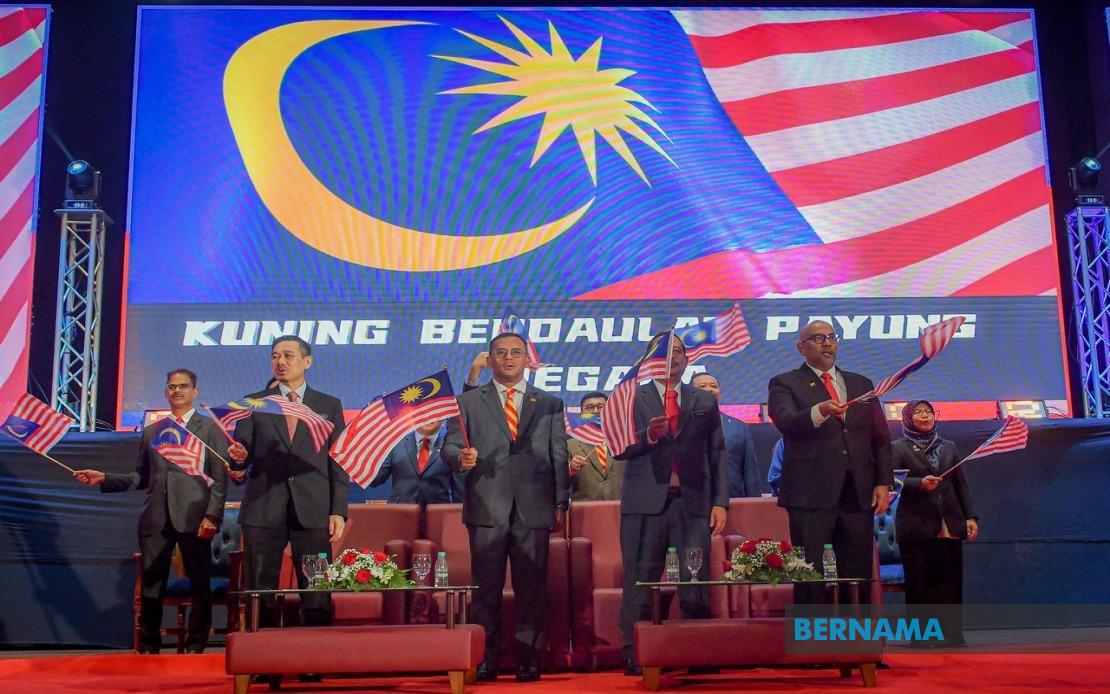
A resolution regarding the standing of a Selangor state legislative seat is poised to materialise within the coming days, Menteri Besar Datuk Seri Amirudin Shari announced on August 3, with the matter subsequently moving to the Election Commission for a determination on whether fresh polls must be called. Speaking in Shah Alam following the Menteri Besar's Assembly with civil service representatives and the launch of the Fly the Jalur Gemilang campaign, Amirudin outlined the procedural steps remaining before any electoral action could be triggered.
The situation emerged following allegations questioning the qualifications of one of Selangor's state assembly members, though the specific details remained largely under wraps at the time of the announcement. The state administration signalled its readiness to move swiftly through the necessary institutional channels, indicating that formal notification from the Selangor State Legislative Assembly Speaker regarding the seat's status would be forthcoming imminently.
Amirudin stressed that determining the fate of the seat remained squarely within the Speaker's remit, a constitutional principle that reflects the separation between the executive and legislative branches within state governance structures. Before that pronouncement could take effect, however, the state legal adviser was tasked with preparing comprehensive documentation that would crystallise the legal position and be circulated to all stakeholders affected by the decision.
Once the Speaker's formal notification materialises and the accompanying legal analysis is complete, responsibility for the subsequent call would pass entirely to the Election Commission. The Menteri Besar emphasised the state government's commitment to respecting the commission's judgment whatever it might be, underscoring that compliance with electoral law and constitutional protocols would be absolute. This measured approach reflects the institutional tensions sometimes inherent in such matters, where political considerations must be subordinated to legal propriety.
For Malaysian observers accustomed to watching state-level political manoeuvres, the timeline suggested in Amirudin's remarks indicated that clarity would emerge relatively quickly. By-elections, when triggered, typically occur within three months of a seat falling vacant, though the specific triggering event in this case—whether legislative procedures or formal declarations—had not been detailed publicly. The approach adopted by the Selangor administration appeared designed to ensure procedural correctness while maintaining discretion about the underlying allegations.
In a separate but equally contentious matter, Amirudin pivoted to address mounting public concern over stray dog populations across Selangor and the tension between animal welfare considerations and public safety imperatives. Recent viral incidents involving alleged cruelty to both domestic and roaming animals had sparked considerable public outcry, drawing intervention from the Tengku Permaisuri of Selangor, Tengku Permaisuri Norashikin, who articulated concern that enforcement actions were being executed without adequate compassion.
The Menteri Besar acknowledged the legitimacy of these concerns while defending the necessity of government intervention. He articulated what he framed as a delicate equilibrium: the state must maintain public safety through lawful enforcement against potentially dangerous animals, whilst simultaneously ensuring that such measures are conducted humanely and proportionately. This formulation represented an attempt to navigate between critics demanding stronger action on animal welfare and those prioritising the safety of citizens and schoolchildren in public spaces.
Amirudin pushed back against suggestions that local authorities had been reactive rather than proactive, pointing to prior discussions of the stray animal issue within the State Legislative Assembly, including remarks from the Port Klang assemblyman. The implication was that public safety concerns about roaming animals were not recent constructions manufactured by enforcement officials, but rather longstanding grievances that warranted action irrespective of contemporary social media campaigns.
The Tengku Permaisuri's intervention underscores the unusual position of royal figures in Malaysian governance, where the constitutional role of monarchs and their consorts extends into advocacy around social welfare matters without formal executive authority. Her call for the Federal Government to review and strengthen penalties under the Animal Welfare Act 2015 suggests that stricter statutory deterrents may form part of a comprehensive response that goes beyond enforcement operations undertaken by local councils.
For Selangor specifically, the dual challenges facing Amirudin—managing both a potentially contentious legislative vacancy and navigating the politically charged intersection of animal welfare activism and public safety—reflect broader governance tensions playing out across Malaysia's most urbanised and politically competitive state. The manner in which these issues are resolved will likely influence public perception of the administration's competence and values orientation in the months ahead.

