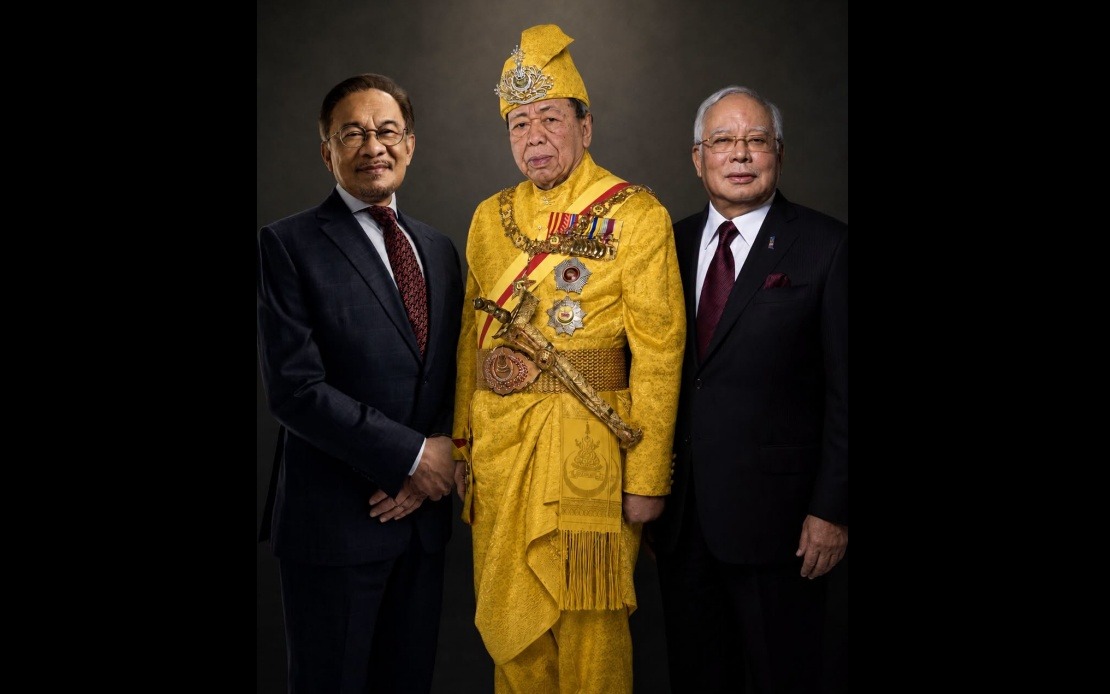
Sultan Sharafuddin Idris Shah has publicly acknowledged Prime Minister Datuk Seri Anwar Ibrahim's commitment to delivering the Shah Alam Line LRT3, which commenced service on Monday. In a statement released today, the Selangor ruler extended his gratitude to the Premier for maintaining momentum on the transport initiative, which was at serious risk of abandonment during earlier administrations. The Sultan's endorsement carries significant symbolic weight in Malaysian politics, as royal backing provides legitimacy and reflects public confidence in major infrastructure undertakings.
When Anwar assumed the dual portfolios of Prime Minister and Finance Minister in 2022, the LRT3 project was in precarious condition with multiple stations slated for removal and the scheme's viability questioned. The government's decision to reinstate five cancelled stations alongside Anwar's directive to develop affordable housing adjacent to rail terminals represented a meaningful shift in policy direction. These interventions underscore a governance philosophy prioritising accessibility and community benefit over purely commercial considerations. The Sultan explicitly commended this recalibration, noting it demonstrated genuine concern for public welfare rather than prestige-driven megaproject thinking.
The genesis of the LRT3 concept reveals how infrastructure often emerges from grassroots grievances rather than bureaucratic vision. Sultan Sharafuddin highlighted that the original impetus came from public complaints, particularly from residents' families struggling with severe traffic congestion during rush hours. The Shah Alam, Klang and surrounding districts suffered acute transportation constraints, with only two river crossings creating bottlenecks that paralysed commuter movement during peak periods. This origin story distinguishes the LRT3 from infrastructure projects designed primarily to showcase national achievement or generate prestige, instead casting it as a responsive initiative addressing genuine hardship.
The project's tortuous timeline reflects Malaysia's broader institutional challenges around long-term commitment and continuity. After Najib Tun Razak's administration approved the concept and subsequently abolished the Batu Tiga and Sungai Rasau toll plazas in 2018 as immediate congestion relief, the 2018 government transition triggered an 18-month hiatus during which progress stalled. The subsequent COVID-19 pandemic imposed another 19-month delay extending into 2021, creating compounding setbacks that forced considerable design compromises. Station dimensions were reduced, train consist numbers cut, and the five stations ultimately reinstated by Anwar's government had initially been eliminated during this fraught period. These cascading disruptions demonstrate how infrastructure projects in Malaysia remain vulnerable to political transitions and exogenous shocks.
The Sultan's public positioning regarding cross-administration collaboration warrants careful analysis. By explicitly stating that LRT3 success should not be attributed to any single individual or party, Sultan Sharafuddin performed important boundary-setting around credit allocation and political narratives. This royal intervention aimed to prevent emerging disputes over implementation achievements, establishing that the project resulted from sustained planning continuity across multiple governments. For Southeast Asian readers familiar with infrastructure competition among neighbouring countries, Malaysia's ability to complete major transport networks despite political transitions offers nuanced lessons about institutional persistence and democratic governance. The Sultan's emphasis on continuity over partisan attribution suggests recognition that infrastructure legitimacy depends on above-politics positioning.
The anticipated benefits extend beyond simple congestion relief to encompass broader economic and social development patterns. The connectivity improvements linking Kuala Lumpur, Petaling Jaya, Shah Alam and Klang carry implications for labour market integration, property value distribution and business concentration across the Klang Valley. For commuters, particularly lower-income workers commuting between residential areas and employment centres, the LRT3 offers faster, safer and more comfortable transit compared to congested road networks. The affordable housing development proposals near stations address fundamental affordability challenges that plague Southeast Asian urban centres, where rapid development has driven residential zones progressively outward while employment concentrates in city cores.
Operational sustainability remains a critical test for the new line's long-term success. Sultan Sharafuddin's explicit mention that Prasarana Malaysia Bhd must ensure continuous maintenance indicates concern that political completion differs from ongoing service reliability. Southeast Asian rapid transit systems frequently struggle with maintenance standards and cost recovery, particularly when serving price-sensitive passengers unable to sustain fare levels necessary for full operational cost coverage. The Sultan's statement implicitly acknowledges this vulnerability and establishes royal expectations for professional stewardship rather than allowing infrastructure to deteriorate through neglect.
The LRT3's opening occurs within Malaysia's broader infrastructure development context, where the nation attempts to balance fiscal constraints with growing urban transportation demands. Unlike wealthier developed nations funding rail systems through general taxation or property value capture mechanisms, Malaysian authorities must navigate competing priorities around healthcare, education and social services. The deliberate scale reduction and cost management evident in the LRT3 project design reflects this constrained fiscal environment. For policymakers across Southeast Asia, the Selangor Sultan's framing of infrastructure as public service rather than prestige symbol potentially influences how governments approach similar transport investments.
The economic implications for peripheral areas deserve consideration alongside congestion relief in established commercial zones. Workers in Klang and surrounding districts, historically facing substantial commute times and transport costs, gain access to improved connectivity that enhances job market access. Small and medium enterprises in Shah Alam benefit from enhanced workforce recruitment capabilities and customer accessibility. Property development patterns will likely shift as stations generate agglomeration benefits, though gentrification risks warrant monitoring to prevent displacement of existing communities. The deliberate affordable housing initiatives suggest some policy awareness of these distributional concerns, though implementation success remains contingent on continuous commitment across subsequent administrations.
Sultan Sharafuddin's statement also reflects evolving Malaysian governance frameworks around royal institution positioning. Rather than exercising traditional power-limiting authority, the Sultan employed public commendation to shape political narrative and establish expectations for continued infrastructure stewardship. This approach differs from confrontational royal interventions that have punctuated Malaysian political history. Instead, the Sultan leveraged soft power through praise coupled with explicit statements about project legitimacy deriving from multi-administration continuity. For constitutional monarchies across Asia, this model demonstrates how royal institutions can influence policy directions while respecting democratic parliamentary frameworks.
The LRT3 completion also signals evolving priorities within Malaysia's federal-state dynamics. Selangor's economic dominance and demographic scale grant considerable influence over national transportation policy, as the state encompasses roughly 20 percent of Malaysia's population and generates proportionally larger economic output. The Sultan's public engagement in infrastructure delivery reflects this significance while establishing expectations for federal-state partnership in addressing regional development challenges. As urbanisation concentrates further in Selangor and its neighbouring territories, similar collaborative frameworks will likely prove essential for managing infrastructure demands.
Looking forward, the LRT3's success or difficulties will shape policy approaches toward planned expansions of the rapid transit network. Proposed extensions, whether in Selangor or other states, will reference the Shah Alam Line's execution as either encouraging precedent or cautionary lesson depending on emerging operational performance. The Sultan's emphasis on continuity and multi-administration cooperation establishes important governance foundations for sustained infrastructure development. For Malaysian citizens in the Klang Valley, the practical benefits arrive after years of planning and setbacks. For the broader nation, the project demonstrates that Malaysia can complete major urban transportation infrastructure despite political transitions, fiscal constraints and external disruptions, provided commitment remains genuine and leadership maintains focus on public benefit rather than partisan advantage.

