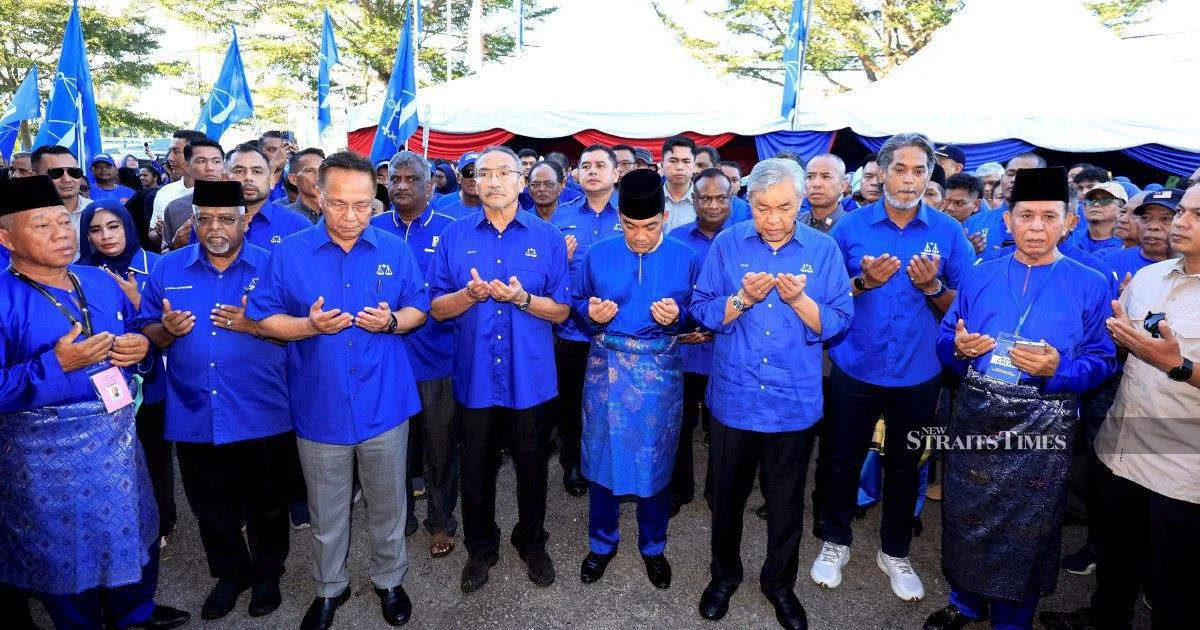
The arrival of prominent Barisan Nasional figures at Simpang Renggam District Council underscores the coalition's determination to project a unified front around Datuk Onn Hafiz Ghazi as Johor heads toward critical state elections. The gathering of high-ranking party officials at the venue signals internal cohesion within the traditionally dominant political grouping in Malaysia's southern industrial state, where electoral fortunes remain contested despite BN's historical dominance.
Simpang Renggam, located in the heart of Johor's industrial and manufacturing corridor, represents significant political territory for BN. The district's composition of factory workers, small business owners, and urban middle-class residents has historically formed core support for the coalition, though recent electoral cycles have seen shifting voting patterns across urban centres. By conducting a public show of force in this locality, BN leadership is attempting to reassert its claim on voter confidence and institutional legitimacy in an area that carries symbolic weight within state politics.
Datuk Onn Hafiz Ghazi's position as the focal point of this gathering reflects his standing within BN's internal hierarchy and his candidacy for senior office in Johor. As Menteri Besar of Johor, he represents continuity with BN governance, yet upcoming elections always introduce elements of uncertainty. The decision by senior party figures to publicly endorse him through physical presence rather than mere statements demonstrates the seriousness with which BN's leadership regards the electoral contest ahead.
The coalition's emphasis on visible unity carries particular significance in Malaysian politics, where party discipline and internal consensus represent crucial competitive advantages. When BN's most senior members appear together at campaign events, the message transmitted to both party cadres and ordinary voters emphasises that decisions have been made at the highest levels and dissent has been managed. This contrasts sharply with opposition coalitions, which frequently display internal fractures and public disagreements that can undermine electoral effectiveness.
Johor's electoral dynamics have undergone considerable transformation over recent years. While BN traditionally dominated state politics, the emergence of stronger opposition challengers, particularly from Perikatan Nasional and the Democratic Action Party through various coalition arrangements, has made past assumptions about electoral safety increasingly unreliable. The presence of multiple viable political alternatives has forced BN to adopt more aggressive and demonstrative campaign strategies than previously required.
The gathering at Simpang Renggam must also be understood within broader Malaysian political developments. Federal and state-level politics remain interconnected, with victories or defeats in individual states carrying implications for national coalition stability. A strong BN performance in Johor would validate the coalition's current trajectory under federal leadership and provide momentum for upcoming electoral contests in other states. Conversely, setbacks would raise questions about BN's organisational capacity and electoral appeal among crucial voting blocs.
Geographic considerations further illuminate why Simpang Renggam specifically became the venue for this coordinated display of senior-level backing. The district encompasses constituencies that have demonstrated competitive voting patterns, where BN cannot rely on automatic majorities as in previous decades. Targeting such areas with high-visibility campaign activities represents rational electoral strategy, concentrating resources and leadership attention where contests will likely be most closely fought.
The timing of such gatherings also warrants analytical attention. Campaign calendars in Malaysian politics are carefully orchestrated to build momentum gradually toward polling day. Initial phases of campaigns emphasise establishing leadership presence and demonstrating organisational readiness. By assembling multiple heavyweight figures early in the campaign period, BN signals that it possesses both the resources and the determination to contest vigorously, potentially discouraging voters from viewing the outcome as predetermined.
Within Johor specifically, manufacturing and industrial sectors dominate the economic landscape, particularly in districts like Simpang Renggam. The workforce in these areas has traditionally constituted BN's core voter base, though economic pressures, changing employment patterns, and demographic shifts have altered voting behaviour in recent years. Party leadership's decision to conduct high-profile activities in such constituencies reflects understanding that retaining support among industrial workers and associated communities remains essential for electoral victory.
Opposition movements in Johor have similarly intensified campaign activities, creating a genuinely competitive political environment. The appearance of BN heavyweights should be contextualised not merely as routine campaign activity but as a response to genuine electoral challenges from multiple directions. This competitive environment, while representing democratic improvement over periods of one-party dominance, requires BN to demonstrate superior organisational capacity and voter mobilisation capabilities.
The messaging implicit in such gatherings extends beyond the immediate locality to party members throughout Johor and beyond. Activists and grassroots organisers observe these high-level interventions and interpret them as signals about where the party's leadership prioritises resources and attention. The psychological effect of seeing senior officials rally behind particular candidates can energise party volunteers and strengthen internal morale during the demanding campaign period.
Looking forward, the pattern of BN activity in Simpang Renggam will likely be replicated across other contested areas of Johor throughout the campaign period. Senior party figures will periodically appear at strategic locations to reinforce key messages and demonstrate backing for selected candidates. The cumulative effect of such coordinated efforts contributes substantially to how voters perceive party strength, unity, and likelihood of continued governance.
Ultimately, while visible displays of senior-level support carry genuine significance in shaping campaign atmospherics and internal party dynamics, election outcomes depend on multiple factors including local issues, candidate quality, campaign messaging effectiveness, and broader voter sentiment regarding the government's record. The gathering at Simpang Renggam represents one element within BN's broader electoral strategy for Johor, reflecting the coalition's assessment that renewed competitive effort and demonstrated leadership unity are essential for electoral success in Malaysia's changing political landscape.

