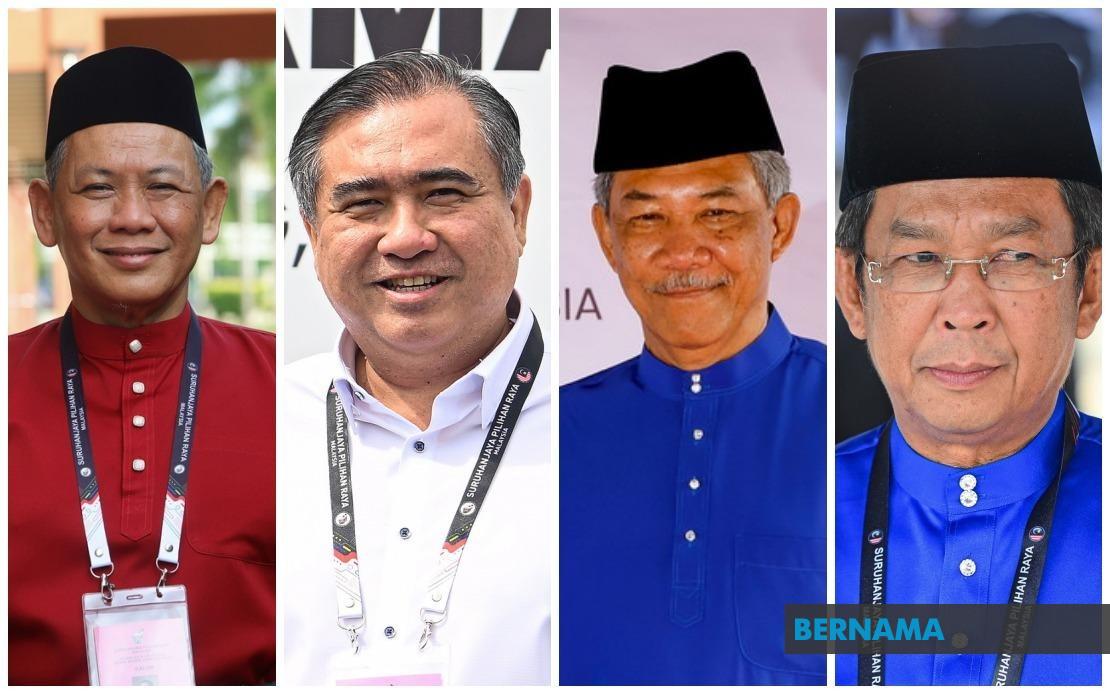
The political landscape in Negeri Sembilan is shaping up to be highly competitive, with several heavyweight figures encountering unexpectedly strong opposition in the state's 16th electoral cycle. The campaign officially commenced following nomination day proceedings across eight centres on July 18, setting the stage for a 14-day race that will conclude on July 31, with polling slated for August 1. The intensity of these contests reflects broader shifts in Malaysian electoral dynamics, where incumbency no longer guarantees a smooth path to re-election regardless of seniority or ministerial portfolio.
Central to the narrative is Datuk Seri Aminuddin Harun, the Pakatan Harapan chairman currently serving as Menteri Besar. His position in Linggi has become a three-way scramble involving Datuk Mohd Faizal Ramli, the sitting BN representative, and Bersatu's Datuk Zamri Md Said. This triangular configuration exposes vulnerabilities for the ruling coalition, particularly in a state where consolidating support across constituencies remains challenging. For Aminuddin, maintaining the Menteri Besar post depends partly on retaining his own seat, making his personal performance critical to broader coalition fortunes in Negeri Sembilan.
The Chennah seat represents another significant battleground, particularly because it has remained a DAP stronghold since 2013. Anthony Loke, who doubles as DAP secretary-general and Transport Minister, finds himself challenged by Negeri Sembilan MCA Youth chief Siow Kong Choon, fielded by Barisan Nasional. The contest reflects BN's determination to reclaim lost ground in peninsular states and suggests that Loke's ministerial responsibilities and high national profile may not insulate him from localized political pressures. Should DAP slip in this traditional bastion, it would signal broader concerns about the coalition's capacity to hold ground in constituencies once deemed relatively secure.
Rantau presents perhaps the most symbolically significant clash. Datuk Seri Mohamad Hasan, better known locally as Tok Mat, has represented this constituency since 2004 and currently serves as Foreign Minister and UMNO deputy president alongside his role as BN deputy chairman. At seventy years old, he faces a direct contest against Dr Azizul Hakim Mahdi, a significantly younger PH candidate. This generational dimension underscores a recurring theme in Malaysian politics: voters increasingly appear willing to consider alternatives regardless of an incumbent's tenure or seniority, suggesting that experience alone no longer carries decisive weight in electoral calculations.
Pertang offers another tightly contested arena, with incumbent Datuk Seri Jalaluddin Alias defending his seat against both Mohd Umry Abdul Khois from PH and Bersatu's Mohd Faizal Fadli Mohd Idrus. Jalaluddin has held the seat continuously since 2013, yet finds himself embroiled in a three-cornered fight rather than enjoying the typical advantage of incumbency. The splintering of the opposition vote, once a reliable protection for sitting representatives, no longer functions predictably when multiple blocs field competitive candidates.
Valor competitions have proliferated across several constituencies, most notably in Nilai and Sri Tanjung. In Nilai, DAP national deputy chairman J. Arul Kumar, the sitting representative, faces an unusually crowded field comprising Datuk Lai Chien Kong from BN, Bersatu's Datuk V. Saravana Kumar, Berjasa's Zamani Ibrahim, and an independent candidate. Such fragmentation fundamentally alters campaign dynamics, requiring candidates to secure pluralities rather than majorities while managing multiple rival messages and voter preferences simultaneously.
Sri Tanjung witnesses perhaps the most notable aspect of this election cycle: the emergence of Leevineshwaraan Murugan from Bersatu, at just twenty-three years old, as the youngest candidate contesting the state polls. His participation in a five-cornered contest alongside PH incumbent Dr G. Rajassekaran, BN's A. Achutan, and independent candidates highlights generational shifts within Malaysian politics. Younger voters and candidates represent a demographic cohort increasingly willing to engage across traditional party lines, and their involvement may reshape both campaign messaging and electorate expectations.
Overall candidate distribution reveals the competitive intensity pervading this election. A total of 103 candidates are contesting the thirty-six available state seats, with Pakatan Harapan fielding the complete slate of thirty-six, Barisan Nasional entering twenty-five, Bersatu presenting twenty-four, and Perikatan Nasional contributing eleven candidates. Smaller parties including Berjasa, ASLI, and PSM have each nominated individual representatives, while four independent candidates round out the field. This composition suggests that traditional two-coalition competition has genuinely fractured into a more complex multiparty environment where vote distribution and coalition-building will determine outcomes more decisively than historical voting patterns.
The significance of Negeri Sembilan elections extends beyond the state itself, carrying implications for national political balance. As a swing state where coalitions have alternated control, outcomes here often forecast broader peninsular trends. The apparent vulnerability of established figures across all major blocs suggests voters are adopting more transactional approaches to electoral choices, prioritizing constituency-level performance and local responsiveness over national leadership narratives. Early voting is scheduled for July 28, providing a preliminary indicator of momentum before the formal polling day. For Malaysian observers tracking political evolution, Negeri Sembilan's election will illuminate whether demographic shifts, economic pressures, and accumulated governance disappointments have genuinely restructured electoral behavior or whether traditional patterns retain dormant strength.

