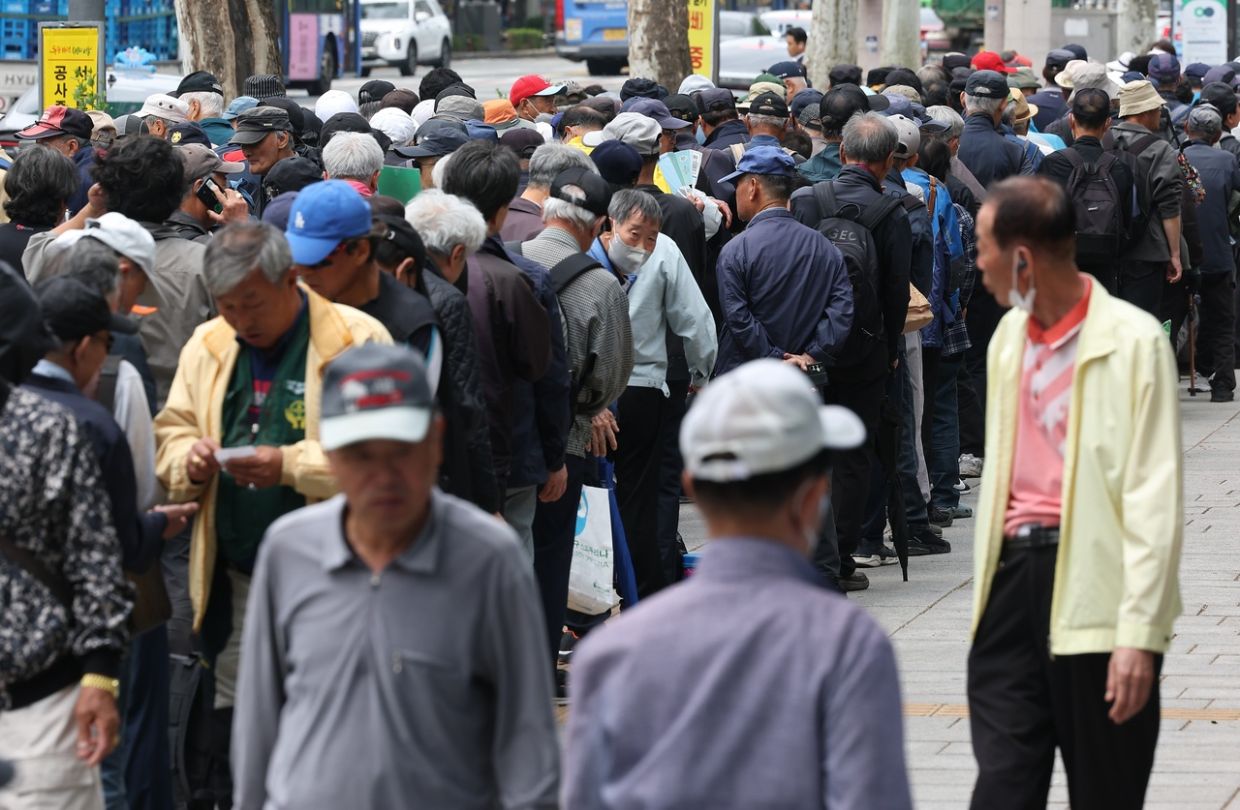
South Korea's capital is grappling with a significant policy decision that exposes the tension between electoral commitments and fiscal reality. Seoul's Transportation Committee advanced a proposal this month to offer free or heavily discounted bus fares to residents aged 70 and older, building upon the city's existing system of complimentary subway access for those 65 and above. The initiative, championed by Transportation Committee Chair Lee Byeong-yoon of the People Power Party, reflects a campaign pledge made by Seoul Mayor Oh Se-hoon during June's local elections and is scheduled for a full council vote later this month. However, as the measure progresses through the legislative process, mounting concerns about affordability and long-term sustainability have intensified, raising fundamental questions about how rapidly ageing cities can accommodate the welfare expectations of their senior populations.
Seoul's demographic profile makes this debate particularly urgent. Currently, one in five residents—21.2 per cent of the population—are senior citizens, and this proportion will only increase in coming years. The city's population aged 70 and above is projected to rise from approximately 1.27 million today to 1.63 million by 2031, fundamentally altering the fiscal equation underlying any transportation subsidy programme. This demographic trajectory means that any policy introduced now will face escalating costs as the eligible beneficiary pool expands, potentially straining municipal finances in ways that current estimates may not fully capture. For policymakers in Malaysia and other Southeast Asian nations facing similar ageing populations, Seoul's experience offers a cautionary case study about how demographic change can quietly overwhelm public budgets.
The financial projections paint a sobering picture of the commitment's true cost. According to analysis by the Seoul Metropolitan Council Secretariat, implementing universal free bus fares for all residents aged 70 and older would require an initial outlay of approximately 104.7 billion won—equivalent to roughly US$68 million—in the programme's first year, assuming a 2027 launch date. This figure is not static; as the elderly demographic expands over the succeeding five years, annual expenditure would climb to 127.5 billion won by 2031. Cumulative spending over this five-year horizon reaches nearly 579 billion won, representing a substantial commitment of municipal resources that must compete with other priorities. These projections arrive atop Seoul's existing transportation subsidies, which already impose considerable burdens on the city's budget.
The structural challenges facing Seoul's bus system amplify concerns about programme sustainability. The city operates a semi-public model wherein municipal authorities compensate private bus operators for operating losses, a mechanism that distributes financial risk across multiple stakeholders but also creates complexity in managing costs. Last year alone, Seoul provided more than 450 billion won in support to bus companies to cover their operating shortfalls, a figure that underscores the precarious economics of the sector. Recent court rulings on ordinary wages have introduced additional uncertainty, with labour cost increases expected to ripple through the bus industry and compress operators' margins further. Adding a new subsidy programme during a period of rising operational expenses and heightened labour costs raises the prospect of a cascade of escalating expenditures that could prove difficult to manage.
The comparison with Seoul Metro's experience managing free subway rides for seniors provides an uncomfortable precedent for policymakers. Seoul Metro, the quasi-public corporation responsible for the metropolitan subway system, has consistently maintained that providing complimentary fares to seniors, individuals with disabilities, and national merit recipients constitutes one of the primary drivers of its chronic financial difficulties. Over the past five years, these three categories of free-fare recipients generated average annual transportation losses of 364.5 billion won, a staggering sum that the corporation has repeatedly urged the central government to address. In 2025 alone, the loss climbed to 448.8 billion won, illustrating how demographic change and entitlement programmes can quickly overwhelm even large public-transport operators. Critics question whether the city can credibly introduce another major transportation benefit whilst simultaneously arguing that it lacks resources to sustain its current commitments.
However, the policy landscape in other South Korean regions demonstrates that municipalities have already concluded the programme is feasible. Daegu initiated free bus rides for seniors in 2023 and has established a trajectory to gradually lower the eligibility age from 75 to 70 by 2028, effectively broadening the beneficiary pool as implementation matures. Daejeon currently operates a programme providing free bus fares to residents aged 70 and older, whilst Incheon has announced plans to launch a similar initiative for those aged 75 and above during 2024. The existence of these precedents both legitimises Seoul's proposal and complicates the debate, as local politicians can point to neighbouring cities' successful implementation as evidence that the financial burden is manageable. Simultaneously, these examples raise questions about inter-regional equity and whether Seoul should match or exceed the generosity of competing municipalities.
Policy experts caution that once welfare benefits are introduced, the political economy of reversal becomes nearly impossible to navigate. Sohn Jong-pil, a senior researcher at the Fiscal Reform Institute, warned that cash-type welfare programmes create constituencies with vested interests in their preservation and face extraordinarily high political costs if scaling back becomes necessary. This dynamic means that decisions made in 2024 or 2025 regarding the scope and generosity of bus-fare subsidies will constrain policy flexibility for decades to come. The warning reflects a broader insight applicable across the region: when governments use targeted welfare benefits to secure electoral support, they may inadvertently create path dependencies that lock in expenditure trajectories regardless of changing economic circumstances. Sohn emphasised that policymakers must proceed cautiously and ensure that any system expansion occurs alongside strengthened public accountability mechanisms for the semi-public bus operators who would ultimately deliver these services.
Proponents of the measure counter that apocalyptic cost estimates may misrepresent the actual financial implications. Crucially, the ordinance that cleared committee does not mandate immediate universal free rides for all residents aged 70 and above; rather, it creates a legal framework permitting the city to establish eligibility criteria and determine benefit levels. This distinction between authorising a programme and specifying its parameters provides significant policy flexibility. Seoul officials suggest that implementation could commence with low-income seniors, incorporate trip caps, restrict support to designated times of day, or provide partial rather than complete fare discounts. A Seoul city official characterised the ordinance as establishing institutional foundations rather than prescribing immediate universal implementation, suggesting that the council vote represents a legal-framework decision rather than a binding commitment to specific expenditure levels.
This nuance reflects the gap between symbolic political gestures and administrative reality. Even if the measure passes the council later this month, actual implementation would remain distant. The city must still determine eligibility criteria, establish subsidy levels, identify funding sources, and establish operational mechanisms for delivery. These implementation decisions will ultimately determine whether the programme costs 104.7 billion won annually or significantly more or less depending on the generosity and breadth of the scheme ultimately adopted. For observers in Malaysia and other Southeast Asian democracies, Seoul's experience illustrates how political commitments made during election campaigns often transition into extended deliberation about actual policy parameters once elected officials must confront fiscal realities. The council vote may represent not a definitive policy decision but rather the beginning of a lengthy process of specification and negotiation among competing stakeholders with differing priorities and constraints.

