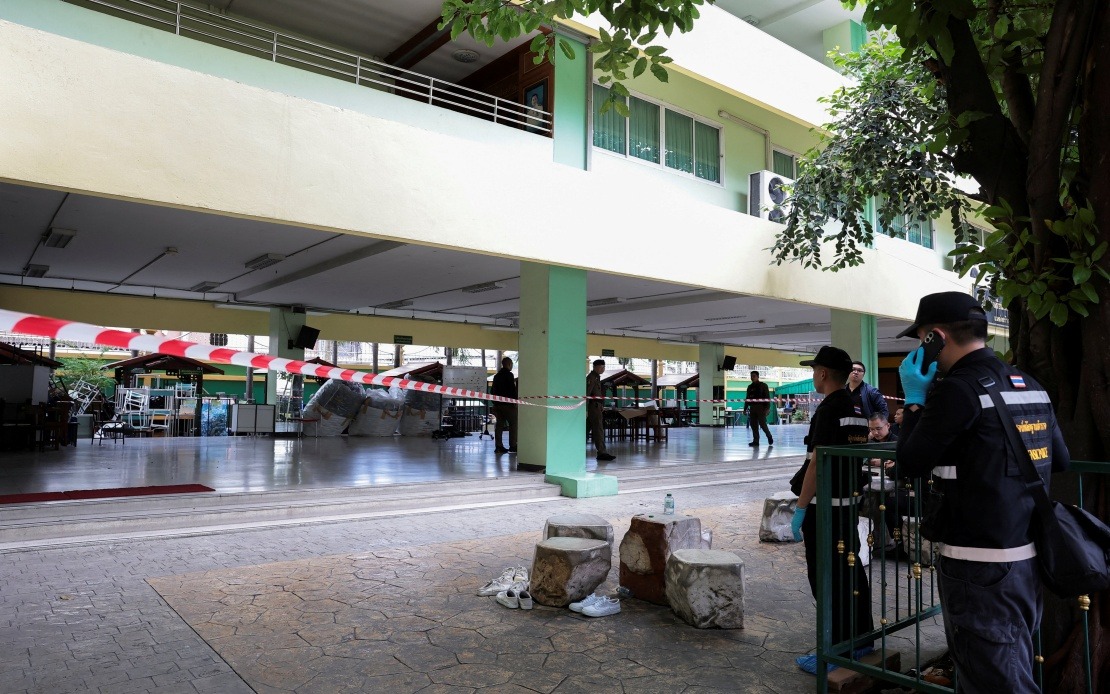
A devastating school shooting in Thailand's Nonthaburi province has left seven people dead and at least 15 others wounded, marking another tragic outbreak of gun violence in the Southeast Asian nation. The incident occurred at Debsirin Nonthaburi School in Bang Kruai district on Friday morning around 10 am, when a student opened fire at the institution located northwest of Bangkok.
The fatalities consisted of three teaching staff members, three students, and the gunman himself, according to Lieutenant General Trairong Piwpan, deputy inspector-general and spokesperson of the Royal Thai Police. Among those injured were two individuals classified as seriously hurt, with medical teams immediately transferring the wounded to nearby healthcare facilities for emergency treatment. School authorities swiftly evacuated both teachers and remaining students to the nearby Chanrat Wittaya School, while simultaneously contacting parents and guardians to arrange collection of their children from the temporary location.
Police investigations revealed that the firearm used in the attack was a 9mm handgun containing 34 rounds of ammunition, all recovered at the scene. Authorities established that the weapon belonged to the shooter's grandfather rather than the student himself, suggesting a critical breach in firearm storage and supervision within the household. This detail underscores ongoing concerns regarding how gun owners in Thailand secure weapons from access by family members, particularly young people with potential psychological vulnerabilities.
The incident has prompted Thailand's national police leadership to mobilize comprehensive mental health support for survivors and witnesses. The national police chief issued urgent orders for the Police General Hospital to deploy qualified psychologists to provide immediate counseling and psychological care to those affected by the traumatic event. This multi-agency response acknowledges the lasting psychological impact such violent incidents inflict on school communities and the broader public.
Prime Minister Anutin Charnvirakul, who concurrently holds the interior ministry portfolio, responded with expressions of profound sadness and extended condolences to grieving families. He directed authorities to provide comprehensive assistance to the injured and ensure all relevant government officials were present at the scene to coordinate response efforts. His statement characterized the shooting as a shocking tragedy, while simultaneously using the incident to reinforce his administration's firearms policy stance.
Anutin seized upon the tragedy to justify the government's stringent approach to gun licensing, explicitly linking the shooting to Bangkok's decision not to renew permits allowing citizens to carry and possess firearms. "This is exactly why the government does not allow gun-carrying and possession permits to be renewed," he stated, framing the tragedy as evidence supporting restrictive weapons legislation. This positioning reflects Thailand's ongoing struggle between public safety imperatives and maintaining civil liberties, a debate intensified each time mass shooting incidents occur.
The Nonthaburi incident represents a distressing pattern of school violence in Thailand, occurring less than six months after a previous shooting at a Hat Yai school in Songkhla province. In that February incident, an 18-year-old gunman fired upon the institution, fatally wounding the school director and injuring additional individuals before being apprehended by authorities. The recurrence of such violence within a relatively brief timeframe suggests systemic vulnerabilities in Thailand's approach to preventing armed attacks in educational settings.
For regional observers, including Malaysian policymakers and security analysts, Thailand's repeated school shooting incidents offer cautionary lessons regarding firearm accessibility and mental health infrastructure. While Malaysia has implemented strict gun licensing requirements that have generally kept school shooting incidents rare compared to regional counterparts, Thailand's experience demonstrates how even countries with existing regulations face persistent challenges when enforcement gaps exist or family members gain unauthorized access to licensed weapons.
The shooting raises critical questions about psychological screening protocols for firearms owners in Thailand and whether additional measures could identify individuals with concerning family members at elevated risk. Malaysia's own approach to gun ownership, which involves rigorous vetting and mandatory training, has been credited with reducing such incidents, though not eliminating them entirely. Thailand's struggle suggests that regulation alone proves insufficient without comprehensive background investigation and ongoing monitoring systems.
These incidents also highlight the particular vulnerability of educational institutions, where large congregations of young people create potential targets for individuals experiencing psychological crises or motivated by violent ideologies. Southeast Asian governments increasingly recognize that school safety requires multidisciplinary approaches encompassing mental health services, threat assessment protocols, and emergency preparedness training alongside traditional security measures.
As Thailand confronts another round of national mourning and policy reckonings, the incident underscores how quickly school environments can transform from sanctuaries of learning into scenes of tragedy. The immediate response demonstrating coordination between police, healthcare providers, and government ministries reflects institutional capacity for crisis management, yet prevents neither the initial occurrence nor the deep community trauma that follows. Regional security experts will likely examine whether Thailand's approach requires enhancement in mental health identification and intervention protocols to prevent future incidents.

