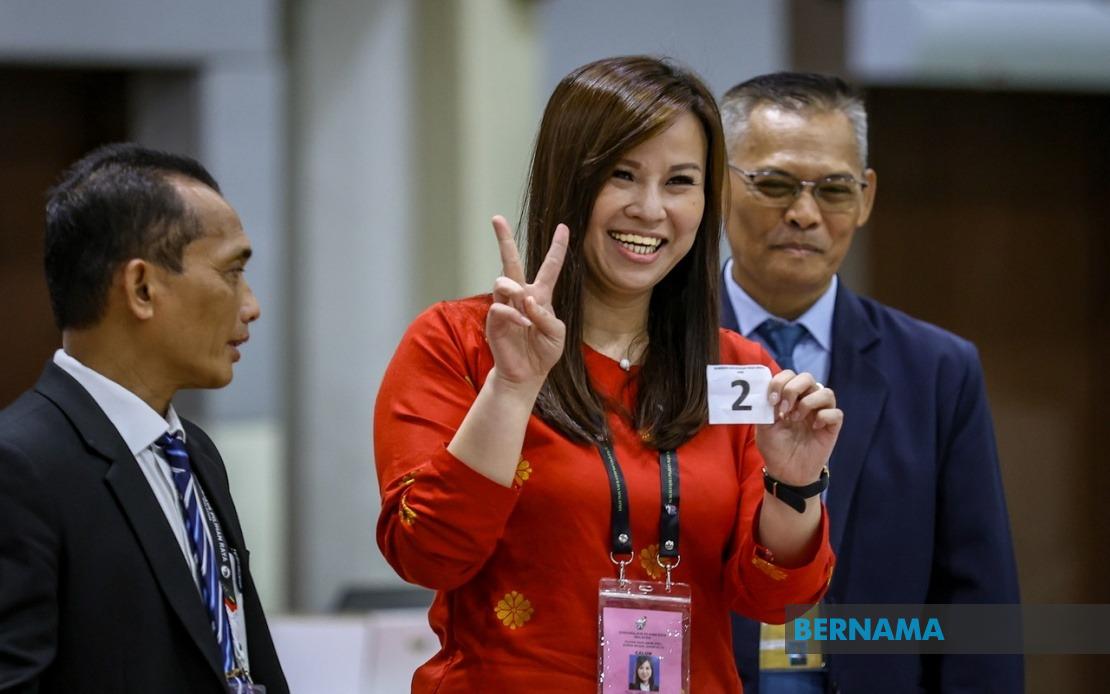
Pakatan Harapan candidate Sharon Teo has declared her intention to focus on infrastructure development and public welfare in her campaign for the Permas state seat, placing these twin priorities at the centre of her pitch to voters in the 16th Johor state election. During the nomination process held at Dewan Muafakat in Taman Mawar, Teo outlined her commitment to addressing the concerns that have emerged consistently during her grassroots engagement across the constituency. Her emphasis on practical, tangible improvements reflects a strategy designed to resonate with residents facing day-to-day challenges in their communities.
The chief of Johor Amanah Women's Youth expressed particular concern about road conditions throughout the constituency, framing the issue not merely as a matter of convenience but as a genuine public safety matter demanding immediate attention. This focus on basic infrastructure strikes at a common grievance across Malaysian constituencies, where deteriorating road quality affects commuting safety, business operations, and quality of life. Teo's decision to elevate this issue early in her campaign suggests research indicating strong voter dissatisfaction with current maintenance standards in Permas. Her background as an aide in the Pulai parliamentary constituency, where she worked under the late Amanah deputy president Salahuddin Ayub, provides her with legislative and administrative exposure that informs her platform.
Teo indicated that a detailed manifesto outlining her specific vision and mission for Permas voters would be released in the coming period, suggesting her campaign team is conducting broader consultation before finalising policy positions. This measured approach contrasts with candidates who arrive with pre-packaged platforms, potentially allowing Teo to address locally-identified priorities. The manifesto will likely detail funding proposals, implementation timelines, and accountability mechanisms that voters can scrutinise against incumbent performance.
Defending the seat is Barisan Nasional incumbent Baharudin Mohamed Taib, who secured the Permas mandate in the 2022 Johor election. Baharudin has acknowledged the competitive nature of the contest, recognising that each opponent brings distinct strengths and appeal to different voter segments. His statement that he cannot afford to underestimate his challengers reflects the political reality that incumbency no longer guarantees victory, particularly in closely contested constituencies. He has committed to working hard to secure a BN victory, framing the contest as a significant undertaking rather than a routine defence of the seat.
Notably, Baharudin indicated that rather than launching a personal manifesto, he will be guided by Barisan Nasional's broader electoral platform. This approach differs from Teo's strategy and raises questions about how effectively he will articulate localised responses to Permas-specific challenges. Relying on BN's national platform may limit his flexibility to address unique constituency needs and could position him as primarily implementing higher-level party directives rather than being a constituency advocate.
The Permas state contest has developed into a four-cornered race, with candidates representing four distinct political formations competing for voter support. Beyond Teo and Baharudin, T. Vela represents Perikatan Nasional while Dr Zamil Najwah contests on behalf of Parti Bersama Malaysia. This fragmentation of the vote across four serious contenders creates an unpredictable electoral landscape where victory margins may narrow considerably compared to two-candidate contests. Voters face a genuine choice between substantially different political philosophies and party affiliations.
Permas sits within the Pasir Gudang parliamentary constituency and encompasses 113,963 eligible voters, according to electoral rolls for this state election. This voter population base is substantial enough to sustain an intensive campaign and suggests that ground-level activism will significantly influence outcomes. The size of the electorate indicates a diverse population likely encompassing urban professionals, industrial workers, residential communities, and small business operators, each with distinct policy priorities and concerns.
The 16th Johor state election is scheduled for July 11, with early voting permitted on July 7. This timeline gives candidates approximately two weeks from the nomination process to conduct intensive campaigns and persuade undecided voters. The early voting option accommodates voters with mobility or work constraints, potentially expanding participation rates. Campaigns during this period will likely intensify, with candidates deploying all available resources to gain visibility and support among the electorate.
For Malaysian political observers, the Permas contest exemplifies broader patterns in contemporary state elections, where infrastructure and welfare messaging compete with partisan identity and national political dynamics. The emergence of Parti Bersama Malaysia as a fourth contender introduces additional complexity, as voters must evaluate a newer political formation alongside established parties. Regional implications extend across Southeast Asia, where Malaysian election results inform broader assessments of opposition capacity, incumbent strength, and voter sentiment toward governance and development priorities. The outcome in Permas will contribute to the overall results that determine the Johor state government composition and serve as a barometer of political momentum heading into potential federal-level electoral contests.

