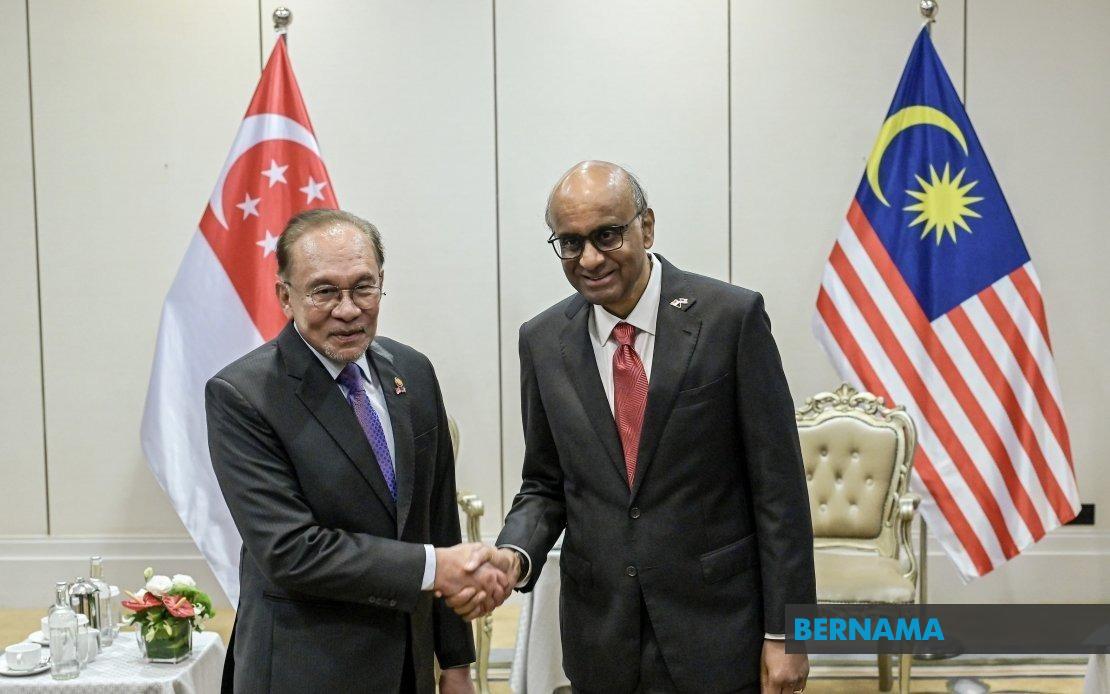
Singapore and Malaysia are moving to expand their strategic partnership across critical sectors, with both nations pledging to intensify cooperation on food security and energy resilience during a high-level diplomatic engagement this week. The commitment reflects a shared recognition that regional prosperity and stability depend increasingly on coordinated approaches to shared challenges. President Tharman Shanmugaratnam's inaugural state visit to Malaysia, which runs through July 15, has provided the framework for these discussions, with Prime Minister Datuk Seri Anwar Ibrahim receiving the Singaporean leader at a courtesy call on Monday.
The deepening bilateral relationship extends beyond economic cooperation into the realm of geopolitical strategy. Both leaders used the meeting to discuss unfolding developments across West Asia, demonstrating mutual concern about how international tensions might reverberate through the Southeast Asian region. This conversation underscores a broader recognition within ASEAN that even relatively insulated economies cannot remain entirely isolated from global disturbances, particularly those affecting critical shipping lanes and energy supplies upon which both nations depend.
Central to the two nations' strategic alignment is their shared commitment to upholding international maritime law and safeguarding freedom of navigation. Singapore and Malaysia both emphasised the importance of the United Nations Convention on the Law of the Sea (UNCLOS), a legal framework that underpins regional stability and protects the rights of all nations to conduct legitimate maritime commerce. This emphasis carries particular significance given ongoing tensions in other parts of Asia and the vital importance of the Strait of Malacca as a global shipping artery. By reaffirming their dedication to rules-based maritime conduct, the two neighbours are essentially signalling their determination to prevent regional waters from becoming contested zones.
President Tharman's visit has been marked by full ceremonial honours, reflecting the significance both governments attach to strengthening ties. His reception at Istana Negara included a formal state welcoming ceremony, and he was received by His Majesty Sultan Ibrahim, King of Malaysia, and Her Majesty Raja Zarith Sofiah, Queen of Malaysia. This level of protocol demonstrates that bilateral engagement operates at the highest institutional levels, involving not just the executive branch but also the constitutional monarchy, thereby embedding the partnership within Malaysia's broader governance structures.
Beyond the federal level, Singapore's engagement extends into Malaysia's subnational landscape. President Tharman held separate meetings with the Sultan of Selangor, Sultan Sharafuddin Idris Shah, and Selangor Menteri Besar Datuk Seri Amirudin Shari, signalling Singapore's interest in deepening ties with individual Malaysian states. This multilayered approach reflects pragmatic recognition that in a federal system, state governments wield considerable authority over economic development, infrastructure investment, and sectoral growth. Selangor, as Malaysia's most economically dynamic state and home to the Klang Valley industrial corridor, represents a natural focal point for bilateral economic cooperation.
The discussions with Selangor leadership revealed several concrete areas where the two jurisdictions see potential for collaboration. Technical and vocational education has emerged as a priority, reflecting both nations' understanding that workforce development and skills alignment are essential for economic competitiveness. Climate adaptation and flood mitigation represent another critical arena, particularly relevant given increasingly unpredictable monsoon patterns and the reality that Selangor has experienced recurring flooding in recent years. Enhanced coordination on climate resilience could yield mutual benefits, as Singapore's technological expertise and experience managing urban water systems might inform Malaysian approaches, while Malaysia's land area provides natural laboratories for adaptation strategies.
The startup ecosystem has also featured prominently in discussions, with President Tharman welcoming increased exchanges between Singapore and Selangor. This reflects both jurisdictions' aspirations to build innovation hubs and attract technology entrepreneurship. Singapore has established itself as Southeast Asia's leading fintech and deeptech hub, while Selangor increasingly positions itself as Malaysia's innovation centre through initiatives like the Selangor Digital Economy Office and various technology parks. Formalised collaboration could accelerate knowledge transfer and facilitate cross-border venture capital flows.
The emphasis on food security cooperation carries particular weight for both nations. Singapore, with its extremely limited agricultural land and dependence on food imports, has long identified supply chain resilience as a critical vulnerability. Malaysia, as a major regional agricultural producer with substantial unutilised arable land, represents a natural partner for addressing this challenge. Enhanced cooperation might encompass everything from joint investment in agricultural technology to coordinated approaches to climate-resilient crop development and supply chain infrastructure. For Malaysian policymakers, stronger ties with Singapore on agricultural matters could unlock investment and expertise that enhances productivity and export competitiveness.
Energy cooperation similarly addresses mutual strategic interests. Malaysia produces substantial quantities of oil and natural gas, while Singapore functions as a regional energy trading hub and refining centre. Deeper collaboration on energy security could include discussions about supply stability, energy transition planning, and investment in renewable energy infrastructure. As both nations commit to decarbonisation goals, coordinated approaches to the energy transition could position the bilateral partnership as a model for how neighbouring states can pursue environmental sustainability while maintaining economic dynamism.
The timing of Tharman's visit also carries significance for Malaysia's regional standing. As a relatively new president, Tharman's choice to conduct his first state visit to Malaysia—rather than to other ASEAN neighbours—signals Singapore's prioritisation of Malaysian relations. This diplomatic gesture carries implications for Malaysia's profile within ASEAN and suggests Singapore views strengthening the bilateral relationship as integral to regional stability and prosperity. For Malaysian officials, the visit represents validation of their efforts to position Malaysia as a cornerstone economy within Southeast Asia.
The breadth of cooperation areas discussed during this visit—spanning food security, energy, maritime law, education, climate adaptation, and innovation—reflects a maturing bilateral relationship that has moved beyond traditional trade and investment concerns. Instead, both nations increasingly recognise that shared prosperity requires coordination across the full spectrum of economic, environmental, and security challenges facing the region. As geopolitical tensions in other parts of Asia intensify, the Singapore-Malaysia partnership may serve as a stabilising anchor for ASEAN, demonstrating that neighbouring nations with distinct governance models and economic structures can forge pragmatic, mutually beneficial relationships grounded in respect for international law and shared commitment to regional peace.

