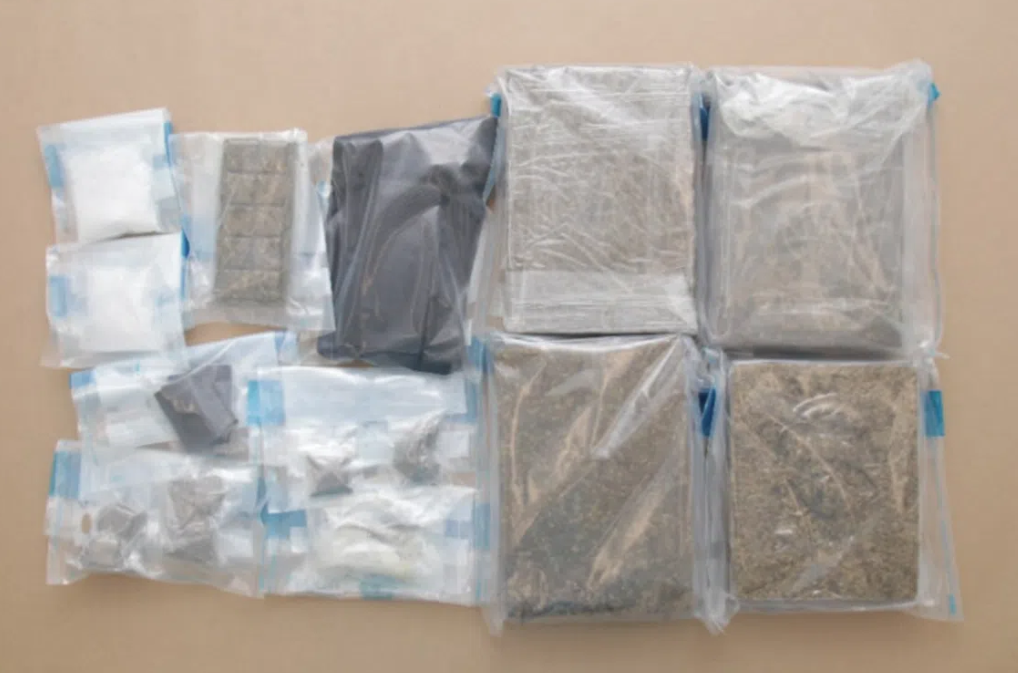
Singapore's anti-narcotics authorities have arrested three men following a significant drug seizure operation conducted on July 27, with the Central Narcotics Bureau announcing the action on July 29. The bust resulted in the confiscation of narcotics with an estimated street value of $142,000, underscoring the island nation's continuing battle against organised drug trafficking in residential communities. The three Singaporean suspects, aged 27, 29 and 34, face charges related to trafficking and possession offences, with investigators indicating that the seized quantities could have supplied roughly 860 regular drug users for an entire week.
The scale of the operation reflects the evolving nature of drug distribution networks in Singapore's densely populated urban environment. Officers seized a combined total of approximately 5.52 kilograms of cannabis across the three operations, alongside 132 grams of methamphetamine commonly known as 'Ice', 145 grams of ketamine, and four LSD stamps. These figures indicate a diversified supply operation spanning multiple controlled substances rather than a single-drug trafficking network, suggesting coordination among the arrested individuals or access to multiple sources.
The 34-year-old suspect became the initial focus of the investigation when Central Narcotics Bureau officers apprehended him at a void deck location near Ang Mo Kio Avenue 4 on the afternoon of July 27. Following his arrest on suspicion of drug trafficking, officers immediately escorted him to a residential unit in an adjacent block where they conducted a thorough search. This hideout yielded four LSD stamps, approximately 879 grams of cannabis, and roughly 123 grams of methamphetamine, indicating the location functioned as a distribution point rather than a simple storage facility.
The second arrest came shortly afterwards when authorities intercepted the 29-year-old man at a lift landing near Pasir Ris Street 11, also on suspicion of trafficking offences. Subsequent investigation of his residential unit in the same block uncovered the operation's largest haul of cannabis, with officers recovering approximately 4.641 kilograms distributed across multiple forms. The discovery included packets of cannabis and ketamine both within the unit and concealed outside it, suggesting deliberate compartmentalisation of inventory typical of larger-scale distribution operations. The recovery of 145 grams of ketamine from this location indicates the suspect's involvement extended beyond cannabis trafficking into synthetic drug markets.
The third suspect, a 27-year-old man, was taken into custody later that afternoon at his residential unit near Jalan Bukit Ho Swee after officers recovered nine grams of methamphetamine. Unlike his two co-arrestees, this individual faces charges as a suspected drug abuser rather than trafficker, though authorities did not clarify whether the distinction reflects consumption-level quantities or other investigative factors. The geographical spread of the three arrests across different residential precincts—Ang Mo Kio, Pasir Ris, and Jalan Bukit Ho Swee—suggests either a distributed network deliberately avoiding concentration in one neighbourhood or opportunistic enforcement responses as information emerged during the primary operation.
Singapore maintains some of the world's most severe penalties for drug trafficking, a deterrent that has shaped the city-state's approach to narcotics enforcement for decades. Under the Misuse of Drugs Act, trafficking in controlled substances represents a serious criminal offence, and any individual found guilty of trafficking more than 500 grams of cannabis faces a mandatory death sentence. The amount of cannabis seized in this operation—specifically the 4.641 kilograms recovered from the 29-year-old's residence—substantially exceeds this threshold, meaning at minimum one of the arrested individuals faces potential capital charges depending on trial outcomes and prosecution decisions.
The mandatory death penalty provision for large-scale cannabis trafficking reflects Singapore's zero-tolerance stance toward drug distribution, a position that continues to differentiate the jurisdiction from most other developed nations. This legal framework has historically resulted in high-profile executions and remains a contentious issue internationally, particularly when foreign nationals face such penalties. The current arrests and their potential legal consequences will likely be monitored closely by human rights organisations, especially given the quantities involved and the severity of applicable penalties.
Central Narcotics Bureau investigations remain ongoing as authorities seek to establish the full scope of the trafficking network, including potential supplier connections and the distribution channels through which these drugs reached street-level users. The coordinated nature of the three arrests suggests prior surveillance and intelligence gathering, indicating that these suspects represented a known concern to law enforcement prior to the operation. The agency's statement emphasised the community impact of the seized quantities, framing the bust as preventing approximately 860 individuals from accessing drugs for one week—a metric that contextualises enforcement activities within broader public health narratives.
For Malaysian readers and regional observers, this operation demonstrates the sophisticated drug networks operating across Southeast Asia and the significant quantities circulating despite border security measures. The presence of both traditional narcotics like cannabis and modern synthetics such as 'Ice' and ketamine reflects the diversification of trafficking operations adapting to market demand and enforcement priorities. Singapore's aggressive enforcement, while controversial internationally, has maintained relatively low reported drug addiction rates compared to regional peers, though this statistic remains contested by critics who question official figures and argue that incarceration rather than treatment dominates responses.
The bust also highlights the vulnerability of residential buildings as distribution nodes, with traffickers exploiting the privacy and accessibility of HDB blocks and private apartments. This pattern mirrors drug enforcement challenges across Malaysia and other regional jurisdictions, where the transition from street-level dealing to flat-based operations complicates detection and community awareness. The void deck arrest location particularly reflects how public spaces within residential complexes can facilitate quick transactions and hand-offs, a pattern consistently observed in regional drug enforcement operations.
Authorities have not disclosed details regarding investigation timelines, whether these arrests followed reports from the public or community informants, or the extent of any ongoing surveillance operations targeting additional network members. Typically in major operations of this scale, arrest announcements precede charging decisions and trial preparations by weeks, during which investigators establish the full chain of evidence and explore connections to broader trafficking organisations. The Central Narcotics Bureau's statement that investigations remain ongoing suggests this operation may represent an initial phase rather than the conclusion of enforcement action against related individuals or networks.

