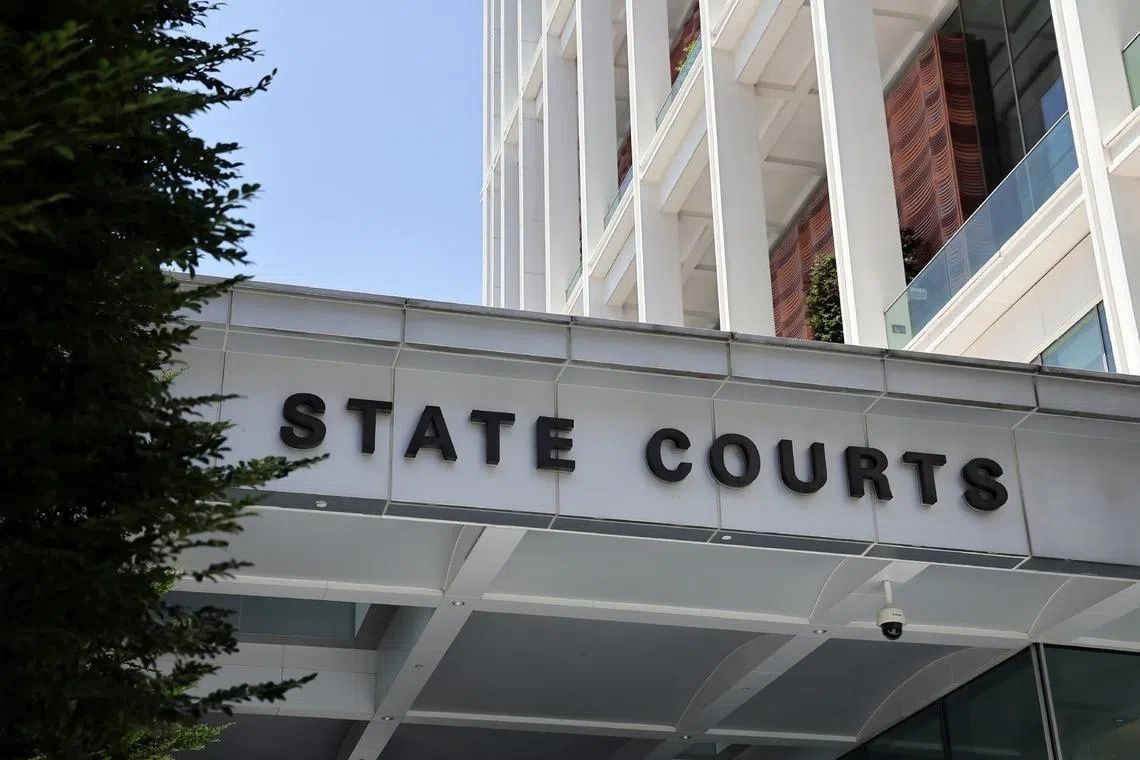
Singapore's Traffic Police marked a significant enforcement day on June 25 when they hauled 41 drivers to court on drink-driving charges, ranging in age from 25 to 68 years old. Among this cohort were three men whose cases drew particular concern: they had allegedly fallen asleep while operating vehicles under the influence of alcohol, creating hazardous conditions on public roads. The scale of the single-day operation reflects authorities' intensified efforts to combat drink-driving, a persistent public safety challenge across Southeast Asia where enforcement practices vary considerably by jurisdiction.
The three sleepy drivers—Tho Yu Wei Ronald, 34, Zhong Pengzhi, 38, and Dharuman Killivalavan, 29—faced dual charges of drink driving and abandoning vehicles in positions that caused undue inconvenience. Their cases reveal distinct danger patterns. Tho left his vehicle at the entrance of a multi-storey carpark at Block 176 Hougang Street 13 around 11:05 pm on April 30, with breath alcohol levels of at least 51 micrograms per 100 millilitres, exceeding the legal limit of 35 micrograms. Zhong's incident occurred nearly two weeks later when he abandoned his car in the second lane of Clementi Avenue 5 around 1:40 am on May 9, recording 48 micrograms of alcohol per 100 millilitres of breath. These scenarios demonstrate how intoxicated drivers pose dangers not only while actively driving but also when they incapacitate themselves in public spaces.
The most severe case involved Dharuman Killivalavan, who was operating a lorry along Loyang Avenue at 7:45 pm on June 15 when he came to a stop in the extreme right lane. Testing revealed 87 micrograms of alcohol in 100 millilitres of breath—substantially higher than the legal threshold and the highest among the three. On June 25, Killivalavan pleaded guilty and received a $7,100 fine coupled with a 36-month driving ban. This outcome illustrates Singapore's escalating penalty framework for drink-driving convictions, particularly when heavy vehicles are involved, reflecting the amplified risk such vehicles pose to other road users.
The enforcement action gained added significance through the presence of repeat offenders within the group. Cheng Woon Siong, 44, had previously been convicted of drink driving in December 2019, yet found himself in court again after being stopped by police checks with 52 micrograms of alcohol per 100 millilitres of breath. His prior conviction triggered substantially harsher sentencing: one month's imprisonment, a $5,500 fine, and a 60-month driving disqualification effective after his jail term concludes. Similarly, Koh Choon Lye, 48, had a 2018 drink-driving conviction on record when he was stopped for checks along Tyrwhitt Road on April 16 with 51 micrograms of breath alcohol. His prior history amplified the seriousness of the authorities' response.
These enforcement patterns carry profound implications for Malaysian motorists and road safety advocates. Singapore's strict liability approach—where the objective measurement of breath alcohol alone determines guilt—contrasts with enforcement methodologies in some other regional jurisdictions. The Straits Times' reporting, sourced through the Channel NewsAsia Network, indicates that Singapore recorded 1,716 arrests for drink driving during 2025, a figure that suggests persistent non-compliance despite strong deterrent penalties. More alarmingly, the same year witnessed 12 fatal accidents attributable to drink-driving incidents, underscoring that legal consequences, however severe, have not entirely eliminated the behaviour.
The concentration of charges on a single day likely reflects targeted enforcement operations rather than random coincidence. Singapore's Traffic Police strategically deploy resources during high-risk periods, particularly late evening and early morning hours when consumption-related driving is most prevalent. The composition of offenders—three falling asleep, two repeat violators, and 36 others—suggests police cast a deliberately wide net, capturing both first-time offenders and habitual violators. This mixed-penalty approach balances rehabilitation potential for newcomers against incapacitation for persistent offenders.
For regional context, Southeast Asia grapples with inconsistent drink-driving enforcement. Malaysia implements strict penalties under the Road Transport Act 1987, yet enforcement intensity varies by state and district. Thailand and Indonesia face similar compliance challenges. Singapore's comparative success in deterrence, measured by arrest rates relative to population, stems partly from pervasive surveillance infrastructure, swift court proceedings, and public awareness campaigns that have normalized alternative transport options. The encouragement to use taxis and private-hire vehicles reflects Singapore's matured ridesharing ecosystem, an advantage not universally available across the region.
The falling-asleep phenomenon merits particular attention. While impaired driving is well-documented as a cause of accidents, the specific hazard of drivers losing consciousness creates abandoned vehicles that obstruct traffic flow and create secondary hazards for other motorists. This category of offence—combining intoxication with vehicle abandonment—suggests the need for dual-layered enforcement addressing both the primary drink-driving violation and the secondary obstruction. Malaysian traffic authorities might usefully consider similar charging approaches that capture the compounding dangers these situations create.
Singapore's official messaging following the enforcement operation emphasized personal responsibility, urging citizens to abstain from driving if consuming alcohol and instead utilize alternative transport. This rhetorical strategy acknowledges that legal penalties, however stiff, operate as ex-post-facto deterrents requiring behavioural change before offences occur. The fact that 41 drivers still faced charges suggests that public education and penalty awareness remain incomplete, a sobering reality for regulators across the region attempting to shift cultural attitudes toward drink-driving.
Looking ahead, the concentration of enforcement and the persistence of repeat offenders suggest that Singapore will likely intensify operations through enhanced surveillance, particularly in zones and times associated with elevated drink-driving risk. The 60-month driving ban for repeat offenders represents a form of forced modal shift—compelling persistent violators to abandon private motoring entirely. For Malaysia and other Southeast Asian nations observing Singapore's approach, the case for proportionally escalating penalties for repeat drink-drivers becomes clearer: deterrence requires not merely fines but extended incapacitation through licensing suspension.

