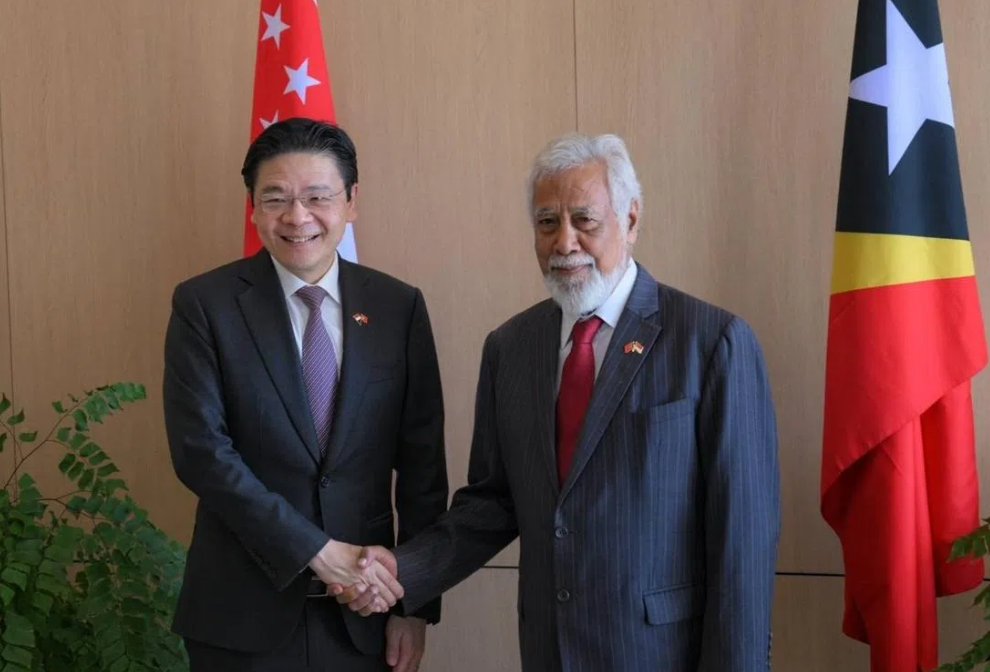
Singapore and Timor-Leste have formalised a sweeping partnership framework aimed at elevating diplomatic cooperation, economic engagement and regional integration. Prime Minister Lawrence Wong, on the first visit to Dili by a Singapore prime minister, jointly signed the bilateral agreement with Timor-Leste Prime Minister Xanana Gusmao on July 3 at the Government Palace. The accord establishes mechanisms for regular consultation between both countries' foreign ministries, creating structured channels to discuss bilateral matters alongside broader regional and strategic developments that affect Southeast Asia.
The pact represents a significant stepping stone for two island nations that share a conviction about their place in the region. Despite their modest geographic footprint and limited populations, both governments believe that strategic partnerships and determined leadership can transcend size constraints and chart independent futures. This philosophy underpins the relationship, particularly as Timor-Leste, having joined the Association of Southeast Asian Nations formally on October 26, 2025, seeks to establish itself as a capable regional player while managing its development priorities.
Singapore's economic presence in Timor-Leste already reflects substantial investor confidence. Singapore stands as one of the country's largest foreign investors, with companies actively exploring ventures across diverse sectors ranging from traditional wholesale commerce to high-potential renewable energy initiatives. This portfolio of investments signals growing commercial appetite in Timor-Leste's development trajectory and hints at broader Southeast Asian confidence in the nation's economic prospects. According to PM Wong, these engagements create platforms for identifying new cooperation opportunities that advance mutual prosperity and sustainable development benefiting both nations' citizens.
The labour dimension of the partnership introduces a practical dimension with immediate implications for Singapore's business community. Beginning in the second half of 2027, Singapore will designate Timor-Leste among approved non-traditional labour sources from which approved sectors—particularly construction and marine shipyard operations—can recruit work permit holders. This expansion addresses longstanding manpower pressures within Singapore's industries, particularly those demanding physical labour in infrastructure and maritime work. Singapore's Ministry of Manpower has already registered early interest from firms keen to tap this emerging labour pool, viewing access to Timorese workers as a means to diversify workforce composition and fill skill gaps within specific sectors.
The healthcare collaboration represents one of the most ambitious capacity-building initiatives emerging from the partnership. Singapore's National University Hospital and Timor-Leste's Ministry of Health intend to sign a five-year cooperation agreement by late July, establishing a comprehensive framework addressing health workforce development, clinical training systems, public health capacity and systemic healthcare strengthening. The collaboration targets priority areas identified by Timor-Leste's health authorities, including emergency medicine, pre-hospital emergency response, paediatric care, ophthalmology, obstetrics, gynaecology and foundational supportive medical services. This targeted assistance reflects realistic assessment of Timor-Leste's immediate healthcare infrastructure gaps while building institutional capacity for sustained improvement.
Education constitutes the second major pillar of Singapore's knowledge-transfer agenda. Singapore will channel resources toward strengthening Timor-Leste's national teacher training and professional development institute, with specific focus on cultivating educational leaders capable of implementing modern pedagogical approaches and institutional governance. This investment in human capital development acknowledges that educational quality directly correlates with long-term national competitiveness and social cohesion. By nurturing Timorese school leaders, Singapore contributes to institutional capacity that will shape educational outcomes and economic readiness for future generations.
Timor-Leste's recent Asean membership necessitates accelerated institutional preparation, recognising that the nation faces significant responsibilities as it integrates into regional forums and processes. Singapore has substantially enlarged its existing Singapore-Timor-Leste Asean Readiness Support package, originally launched in December 2022, with further enhancements implemented in July 2025. The expanded programme now encompasses tailored workshops equipping Timorese officials with detailed knowledge of Asean chairmanship duties and responsibilities. Singapore will additionally facilitate attachments allowing Timorese officials to observe and participate within Singapore's own Asean chairmanship team when Singapore assumes the rotating leadership position in 2027, providing invaluable first-hand experience navigating Asean's diplomatic machinery and decision-making processes.
This forward-looking capacity building carries particular significance given that Timor-Leste will assume the Asean chairmanship in 2029. PM Wong emphasised that post-membership engagement remains critical, with full organisational contribution and successful chairing representing essential next priorities. By positioning Timorese officials within Singapore's chairmanship framework two years prior to Timor-Leste's own turn, the arrangement creates opportunity for knowledge transfer and institutional learning that could substantially enhance Timor-Leste's chairing performance.
The partnership framework reflects broader regional strategic considerations influencing Singapore's engagement approach. As a stable, prosperous, and strategically located city-state, Singapore recognises tangible benefits from cultivating capable neighbouring states. Timor-Leste's geographic position astride critical sea lanes and its resource endowments make its stability and economic progress strategically relevant. Additionally, supporting Timor-Leste's Asean integration advances Singapore's long-standing agenda of strengthening the regional organisation's coherence and collective capacity. By investing in Timorese institutional development now, Singapore enhances the association's overall effectiveness and strategic relevance.
PM Wong's reception of the Order of Timor-Leste (Grand Collar) from President Jose Ramos-Horta underscores mutual recognition of Singapore's comprehensive contributions to Timor-Leste's national development journey. The honour acknowledges both Singapore's institutional efforts and PM Wong's personal leadership in championing these partnership initiatives. In accepting the award, PM Wong appropriately redirected recognition toward the unnamed Singaporeans who have conducted training, transferred professional expertise and worked alongside Timorese counterparts in building national capabilities over preceding years. This gesture illuminates the personal-level dimension underlying grand bilateral frameworks—relationships built through patient, consistent engagement by individuals committed to mutual development.
For Malaysia and other Southeast Asian nations observing these developments, the Singapore-Timor-Leste partnership illustrates evolving regional dynamics as Asean accommodates its newest member. The arrangement demonstrates how established members can facilitate integration through targeted capacity building while advancing mutual economic interests. It also illustrates Singapore's strategic approach to regional leadership—building relationships through practical support rather than geopolitical posturing, and recognising that investments in a neighbour's institutional strength ultimately benefit the entire regional system. As Timor-Leste implements its development agenda and prepares for future Asean responsibilities, Singapore's multifaceted engagement model offers broader lessons for how regional powers can constructively support integration while advancing shared prosperity.

