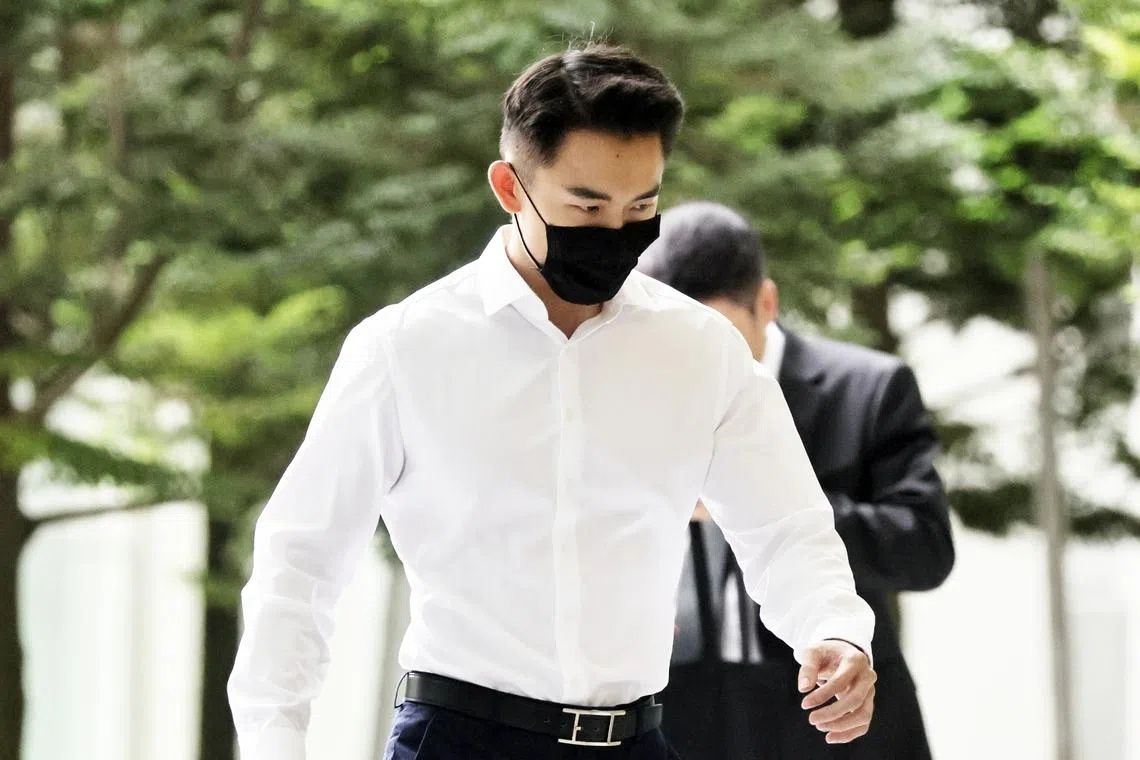
A Singapore doctor has been found guilty of drug consumption following his arrest at a late-night gathering that resulted in one of the city-state's largest drug raids in recent times. Rayson Lee Rui Sheng, 36, was among 49 men apprehended when police descended on a villa at the Sofitel Singapore Sentosa hotel in the early hours of August 9, 2023. The conviction on June 30 marks the culmination of legal proceedings that hinged on competing narratives about how the drugs entered his system—a case that underscores the challenges faced by those accused of consumption offences in the region's stringent drug enforcement framework.
Lee and co-accused Tan Li Ming, 29, were each found guilty of one count of consuming MDMA, commonly known as ecstasy. Both men maintained throughout their trial that they were victims of drink-spiking, a defence that District Judge A Sangeetha ultimately found unconvincing. Forensic evidence provided the foundation for the conviction: urine samples tested positive for MDMA, while hair analysis revealed traces of both ecstasy and ketamine, pointing to prior consumption as well. The judge's assessment that neither man's version of events stood up to scrutiny would prove decisive in the case.
The underlying incident unfolded when police received information prompting them to conduct checks at the Sofitel Singapore Sentosa shortly after 5.30am on August 9. Officers quickly discovered substances believed to be controlled drugs, leading to the deployment of the Central Narcotics Bureau (CNB). During the subsequent operation, authorities uncovered multiple items of concern, including ecstasy and ketamine, together with associated paraphernalia. The scale of the operation—involving 49 detainees aged between 21 and 46—highlighted the extent of the gathering and the breadth of the enforcement response.
Lee's account to the court painted a picture of an evening that began with celebration but took an unexpected turn. He had arrived at the villa around 8pm on August 8 to attend a birthday party for an acquaintance, mingled socially, and later ventured to a nightclub in Clarke Quay. There he encountered Tan, with whom he would later return to the villa in the early morning hours. Upon arrival, Lee found the party had swelled significantly, with numerous unfamiliar faces present. He testified that he consumed three drinks provided by strangers, saw no pills or drug paraphernalia, and witnessed no one using substances.
Tan's version introduced more dramatic elements. He claimed to have observed a small group of unknown men in a pantry area drawing liquid from a bottle using a syringe and dispensing the contents into plastic cups. After consuming from one such cup, Tan said he noticed white residue at the bottom. When he questioned an unidentified person about the procedure, he was allegedly told the mixture was "G-water"—a substance he professed not to recognise—which would produce intoxicating effects. This account, had it been accepted, would have substantially supported both men's contention that they unknowingly ingested drugs.
However, the prosecution and the bench identified critical weaknesses in the defence narrative. Deputy public prosecutors Jocelyn Teo and Dhiraj G Chainani argued that the pair's strategy had devolved into presenting "hypothetical scenarios and unexplored possibilities," including allegations that unidentified foreign nationals had tampered with their beverages. Most significantly, neither Lee nor Tan could identify specific individuals who supposedly perpetrated the spiking. The prosecutors contended that if the men had genuinely been victims of a coordinated drugging effort, they should have been capable of describing at least some concrete details about their assailants. The absence of such particulars, in the prosecution's assessment, undermined the plausibility of the entire defence.
Judge Sangeetha's reasoning aligned closely with the prosecution's critique. She observed that both men continued consuming additional drinks despite their claims that their beverages had been adulterated—behaviour inconsistent with someone aware they had ingested narcotics. Furthermore, the judge drew particular significance from the hair sample findings, which indicated that both Lee and Tan had a history of drug use predating the August 2023 party. "Neither man was a stranger to drug use," the judge noted, a characterisation that informed her assessment of their credibility throughout the proceedings.
The judge also addressed a secondary line of argument advanced by the defence. Lee and Tan's lawyer, Tania Chin, had suggested that police failed to seize certain "plastic silver cups" that might have contained drug residue, potentially exculpatory evidence. The prosecutors responded that even if such cups had been recovered and tested positive, this would merely confirm that the men had consumed drug-contaminated beverages, not that such consumption occurred without their knowledge. The logic was unassailable: proof that cups contained drugs does not establish that the drinker was unaware of the contamination.
Lee's own testimony inadvertently undermined his position. During trial proceedings, he disclosed that while visiting Thailand in June 2023—just two months before the Sentosa incident—he had taken a pill offered by a stranger on two separate occasions. This prior experimentation with illicit substances, combined with the hair evidence of sustained drug use, painted a portrait of someone familiar with narcotics and willing to consume them from unknown sources. The prosecution leveraged this admission to demonstrate that Lee's protestations of innocence at the hotel party lacked credibility.
The conviction carries significance beyond the individual case. Singapore maintains some of the world's most severe drug laws, with trafficking and manufacturing offences potentially carrying capital punishment. While consumption charges carry lesser penalties, they nonetheless represent serious criminal matters with lasting consequences for employment, professional licensing, and social standing. For Lee, a medical professional, the conviction raises questions about his continued fitness to practise medicine and his future professional prospects.
The case also reflects broader regional patterns in drug enforcement. Throughout Southeast Asia, the principal strategy for combating drug use centres on criminal prohibition and punishment rather than public health or addiction treatment approaches. The presumption in such systems often works against defendants, particularly when forensic evidence of drug presence is combined with hair analysis suggesting habitual use. For Malaysian observers, the case underscores the serious consequences that await those involved in drug consumption, even when circumstances appear ambiguous, and the limited effectiveness of inconsistent or poorly substantiated defences when confronted with biological evidence.
As enforcement agencies across the region continue to prioritise narcotics interdiction, the Sentosa hotel case demonstrates how stringent procedural standards and forensic technology create a formidable prosecutorial advantage. The conviction of Lee and Tan, despite their contested accounts, illustrates that courts are increasingly willing to rely on scientific evidence while scrutinising self-serving narratives that lack independent corroboration. For individuals in similar circumstances, the lesson is stark: proximity to drug consumption, combined with biological evidence of use, creates a presumption difficult to overcome through assertion alone.

