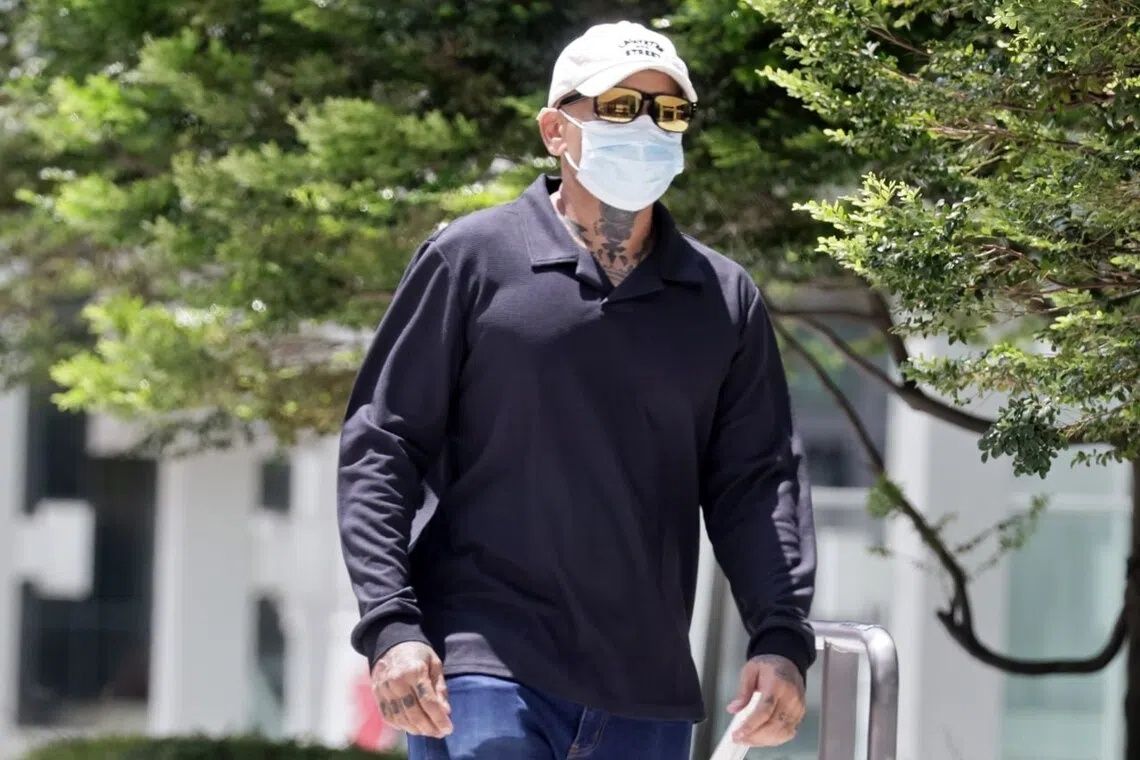
Andrew Suresh Markandan, 47, has been handed a three-week prison term after pleading guilty to two counts of voluntarily causing hurt against his girlfriend in an incident that unfolded at Singapore's Lucky Plaza shopping complex. The case, heard on Wednesday, July 29, underscores the serious consequences of domestic violence and the growing role of public documentation in bringing perpetrators to justice, a development with implications across Southeast Asia where similar incidents often go unreported.
The assault occurred on February 8 when the couple met at the mall. The court heard that tensions escalated when Markandan's girlfriend informed him that her teenage son had received financial assistance from his biological father. State Prosecuting Officer Zakir Hussain explained that the accused harboured resentment over this development, particularly because he had himself contributed financially to the upbringing of her child and viewed the ex-partner's renewed involvement as a breach of their family arrangement.
Markandan's emotional volatility became further apparent when he witnessed a female friend greet his girlfriend with a kiss and embrace at a nearby pub. Rather than addressing his insecurity through calm conversation, he allowed his displeasure to dictate his actions. Upon realising her partner's distress, the woman departed the establishment with her companion, but Markandan's escalating behaviour suggested the incident was far from concluded.
He pursued his girlfriend and, upon spotting her using her mobile phone, became convinced she was communicating with her ex-partner. This suspicion ignited a confrontation during which he attempted to seize her handbag. The struggle intensified as Markandan shoved the woman into a corner and restrained her with both arms from behind while trying to access her bag. He even attempted to force her toward a lift, demonstrating a pattern of physical domination that shocked onlookers who gathered at the scene.
When his girlfriend sought refuge inside a Lucky Plaza shop, Markandan's pursuit did not stop. Instead, he entered the establishment and struck her repeatedly—punching the back of her head and kicking her back—leaving her with multiple bruises across her shoulder, thigh and shin. The intervention of a compassionate stranger who assisted her in leaving the mall, combined with several bystanders who managed to restrain Markandan, prevented further injury.
The incident gained significant public attention when video footage circulated widely and attracted media coverage. Rather than demonstrating remorse for his actions, Markandan initially sought to suppress the matter. On February 10, he contacted his girlfriend to persuade her against filing a police report and offered financial compensation for her injuries. She rejected both his appeals and his money, proceeding to lodge a formal complaint with authorities on February 11.
What emerged during legal proceedings was that this February assault was not an isolated episode of rage but part of a troubling pattern of intimate partner violence. Nearly a year earlier, on March 30, 2025, Markandan had attacked the same woman near a hotel in Singapore's Bugis district. The trigger was seemingly mundane—the couple could not book a room because Markandan had left his physical identity card at home. After they departed the hotel, his girlfriend sensibly suggested they return to their respective residences given the late hour. Markandan, however, insisted they visit his residence so he could retrieve his NRIC and return to the hotel.
When his girlfriend refused this plan, his frustration transformed into violence. He seized her phone and threw it to the ground, then attempted to grab her handbag to compel her compliance. As she resisted, he struck her twice across the face and forced her to the ground. His pursuit continued even as she sought safety outside the hotel entrance, where he yanked her handbag away and departed with it. Hotel staff intervened by preventing his re-entry and alerting police, while the woman sustained facial redness, forearm scratches and knee abrasions from the assault.
The circumstances of both incidents reveal a deeply troubling dynamic: a man who interpreted minor events—a son receiving money from his biological parent, a friend's greeting, a woman's resistance to his plans—as personal betrayals or challenges to his authority. His responses escalated from emotional manipulation through intimidation to physical violence, each incident more severe than the last. The willingness to publicly assault his girlfriend at a busy shopping mall suggests a complete disregard for consequences or public perception.
For Malaysian and Southeast Asian observers, this case carries important lessons about the dangers of intimate partner violence and the necessity of protective interventions. While Singapore's legal system resulted in a custodial sentence, the broader context reveals how such abusers often operate within cycles of control, escalation and reconciliation that trap victims. The woman's decision to reject compensation and pursue legal action despite personal pressure represents a critical moment that potentially protected her from further harm.
The sentencing guidelines permit jail sentences of up to three years, fines of up to S$5,000, or both for offences of voluntarily causing hurt. Markandan's three-week custodial term, while meaningful, represents a relatively modest penalty for repeated assault. Legal experts and domestic violence advocates across the region often debate whether such sentences adequately deter abusers or protect victims. The case demonstrates the complex intersection of personal relationships, public safety and the judicial response to intimate partner violence—a issue that remains challenging across Southeast Asia despite increasing legal frameworks and awareness campaigns.
For women in similar situations throughout the region, the Lucky Plaza incident offers both cautionary and empowering lessons. The availability of public witnesses, the circulation of documentary evidence and the victim's refusal to be silenced or manipulated proved decisive. Yet the fact that such documentation was required to prompt serious legal action also highlights the ongoing struggle for domestic violence victims to obtain support without relying on chance bystander intervention.

