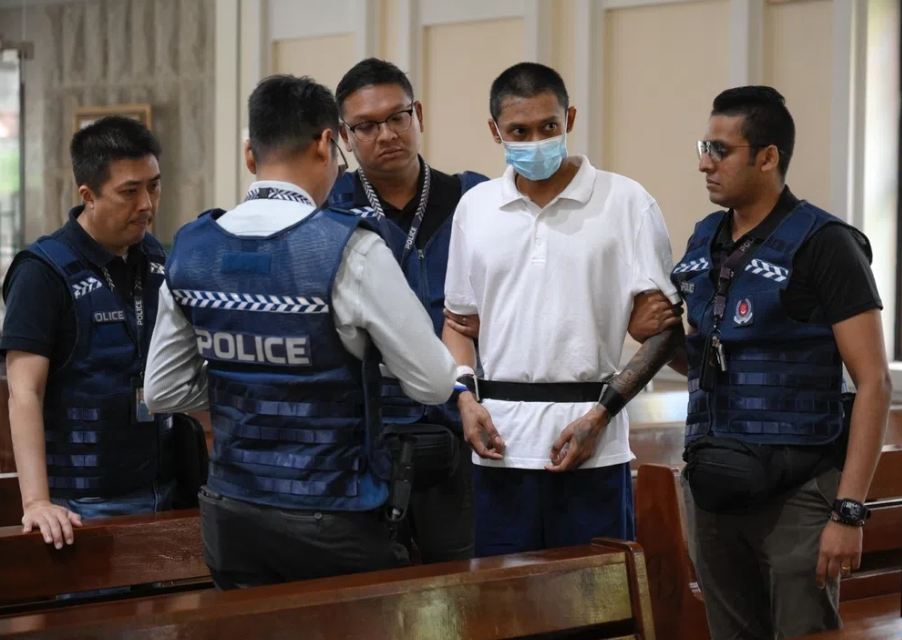
A Singapore District Court has handed down a sentence of four years and three months' imprisonment and nine strokes of the cane to Basnayake Keith Spencer, the man responsible for stabbing Reverend Christopher Lee during an evening service at St Joseph's Church on November 9, 2024. The 38-year-old pleaded guilty on August 21 to charges of voluntarily causing grievous hurt with a dangerous weapon and unlawful weapon possession, bringing to a conclusion a case that shocked Singapore's Catholic community and raised fresh concerns about security in places of worship across the region.
The incident unfolded during a children's mass attended by approximately 900 parishioners, making the potential for wider harm a significant factor in the court's deliberations. Basnayake arrived at the church around 5.30pm and initially sat alone in the middle of the hall, where he consumed multiple pills—first two to maintain focus, then three additional tablets in an apparent attempt to calm himself as he realised the nature of the service. When communion began around 6.15pm, he repositioned himself to join the queue behind Father Lee, then without warning withdrew a 23-centimetre foldable knife with a 10-centimetre blade and thrust it directly into the priest's mouth.
The assault inflicted devastating injuries on the 57-year-old clergyman. The stabbing created an 8-centimetre laceration on his tongue, a 3-centimetre wound on his upper left lip, and a 4-centimetre cut at the corner of his mouth, with blood pooling profusely from the injury. Father Lee's immediate instinct to grab Basnayake's rear pocket prevented further attacks, and nearby parishioners, including an off-duty police officer, quickly restrained the assailant and alerted authorities. The priest spent six days hospitalised before discharge on November 15, requiring 40 days of medical leave and subsequent speech therapy to address complications from the trauma.
The unprovoked nature of the attack and its deliberate timing—during the administration of communion, a sacred ritual central to Catholic worship—weighed heavily in judicial considerations. District Judge Shaiffudin Saruwan emphasised that striking a defenceless person engaged in a solemn religious function created genuine risk of mass panic and cascading harm among the large congregation present. The judge noted that the offence's gravity demanded a sentence reflecting its full severity, rejecting mitigating arguments centred on Basnayake's intoxication and alleged drug-induced psychotic state at the time.
Barking back to prior criminal history, Basnayake had been convicted in 2019 for voluntarily causing hurt with a dangerous weapon, when he stabbed his girlfriend in the buttocks with a kitchen knife while under the influence of methamphetamine. That prior conviction resulted in a one-year jail sentence, yet it did not deter subsequent violent behaviour. The prosecution additionally revealed that upon arrest, officers discovered multiple weapons in Basnayake's possession: a 14.5-centimetre penknife, a flip knife, and a fishing gaff—a pole with a sharp hook—suggesting premeditation or at minimum a pattern of carrying potential instruments of harm.
The prosecution's recommendation for sentencing fell between four years and three months and four years and eleven months, coupled with nine cane strokes, arguing that despite evidence of intoxication and psychological distress, Basnayake retained sufficient awareness to execute a deliberate stabbing. The defence sought leniency, requesting a term below four years while accepting the cane punishment, with Basnayake's lawyer arguing for proportionality and noting his client's expressions of remorse and shame. However, the court found these appeals insufficient to override the objective severity of attacking an unarmed religious leader during a mass attended by hundreds, including children.
Barking to remand conditions, Basnayake has spent more than one year and nine months in custody since his December 2024 denial of bail, when prosecutors successfully argued he represented a highly dangerous individual with substantial reoffending risk. His extended pre-trial detention—approaching two years—reflected judicial concern about his propensity for violence and the inadequacy of conventional bail conditions to ensure public safety. The final sentence thus incorporates this extended custodial period already served.
The case carries broader implications for Singapore and Southeast Asian societies grappling with violence in places of worship and the intersection of substance abuse, mental health crises, and criminal intent. While Basnayake's drug-induced state provided some context, the court declined to treat it as justification, establishing important precedent that intoxication cannot excuse attacks on religious figures performing sacred duties. For Malaysian readers and the wider region, the verdict underscores judicial systems' commitment to protecting communal worship spaces and those who facilitate them, even as courts remain cognisant of underlying factors like addiction and psychological disturbance.
The attack also prompted reflection on security protocols within churches and other houses of worship. With approximately 900 worshippers present, the rapid response of parishioners and an off-duty police officer prevented escalation, yet the incident revealed vulnerabilities in access control and early threat detection. Many Catholic institutions across Southeast Asia subsequently reviewed their security arrangements, balancing openness and spiritual accessibility with protective measures against individuals displaying concerning behaviour.
Father Lee's recovery process exemplifies the extended physical and psychological toll of such violence. Beyond the surgical healing of lacerations, speech therapy requirements highlighted trauma affecting fundamental communication abilities central to a priest's vocation. His gradual return to pastoral duties required months of rehabilitation, with the spiritual and pastoral communities affected by the violent intrusion into sacred space and the violation of a trusted religious authority.
For sentencing purposes, the court weighted several factors: the unprovoked and sudden nature of the assault, the severity of injuries sustained, the location and timing during religious ritual, the presence of children and large crowds, Basnayake's prior conviction for similar weapon-based violence, and the multiple weapons discovered in his possession suggesting either premeditation or habitual carrying. The prosecution successfully argued these factors collectively warranted the upper end of sentencing guidelines, while defence mitigations around remorse and psychological state proved insufficient to substantially reduce the court's determination.
The sentence's finality brings closure to a case that troubled Singapore's faith communities and prompted broader conversations about violence, mental health, and substance abuse within the city-state. For the wider Southeast Asian region, where similar incidents have occasionally occurred, the judgment provides a clear statement: attacks on religious leaders and the desecration of worship spaces through violence will face severe judicial consequences, irrespective of underlying psychiatric or pharmacological factors. As religious institutions continue assessing safety measures, the balance between welcoming openness and protective vigilance remains an ongoing challenge for churches, temples, mosques, and other sacred spaces across the region.

