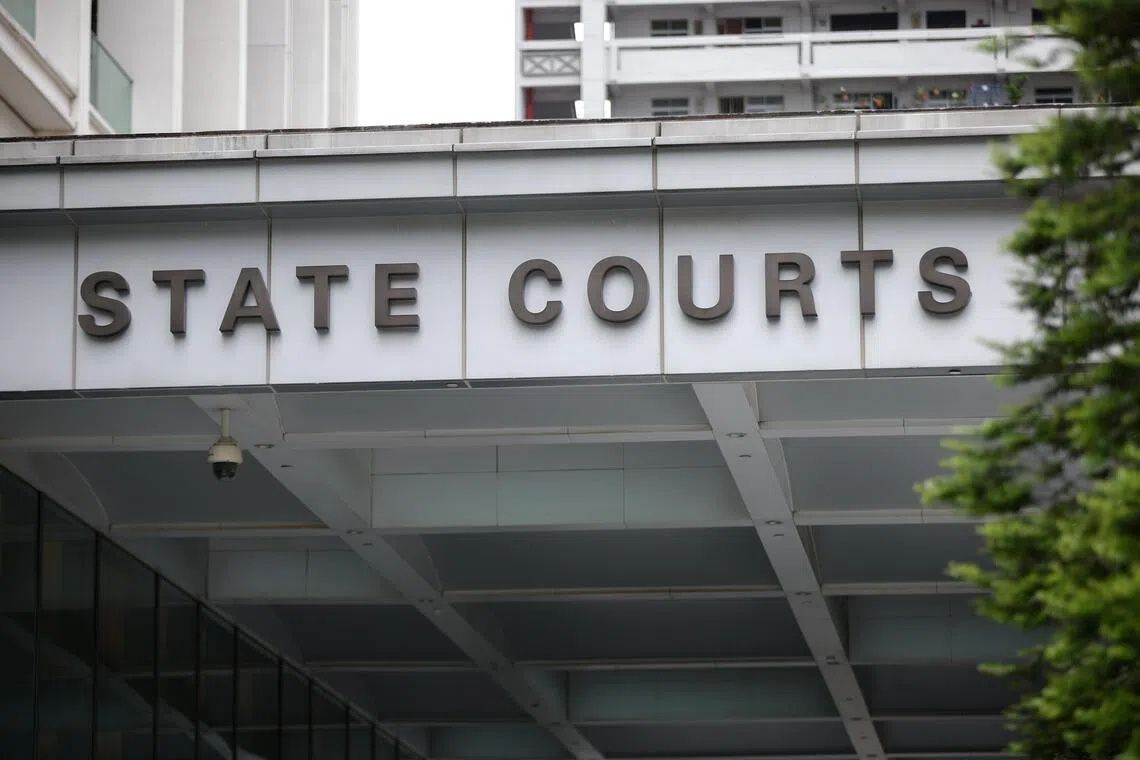
A Singapore court has handed down a substantial sentence to a man convicted of one of the city-state's most serious forms of digital abuse—uploading explicit videos of his ex-girlfriend to a social media platform with nearly 80,000 members. The offender, now 27, received two years and eight months' imprisonment coupled with two strokes of the cane, alongside a compensation order of $4,000 to his victim. The judgment, released on June 25, underscores the judiciary's firm stance against revenge pornography and the enduring trauma inflicted on victims in the digital age.
The case reveals a troubling pattern of control and manipulation that began years before the actual offence. The pair first met in 2016 at a religious school, where she was 15 and he was 17. During their relationship, he pressured her into creating intimate imagery of herself, obtaining at least two explicit videos and photographs. When the victim eventually ended the relationship in 2017, she felt suffocated by his possessive and toxic behaviour and took the responsible step of deleting all intimate content she possessed of him, even requesting he do the same. He falsely assured her he had, but retained the material for personal gratification—a lie that would set the stage for years of suffering.
More than three years after their breakup, in April 2021, the offender attempted to rekindle their relationship through messaging, despite being in another relationship himself. The victim's firm refusal and decision to block him sparked a calculated act of vengeance. Driven by a desire to humiliate and punish her rejection, he impersonated the victim online and systematically uploaded her intimate videos to a large social media group. The group, which was part of a platform serving millions of users globally, proved to be a repository for obscene imagery featuring women specifically depicted in religious attire—a deliberate targeting that compounded the victim's humiliation.
The violation's discovery came unexpectedly when a stranger contacted the victim on Instagram, having encountered her explicit images online. When she traced the source, she discovered her videos were circulating within the massive online group alongside numerous other women's intimate content. Rather than remain passive, the victim demonstrated remarkable courage by creating a fake identity and infiltrating the group to gather evidence of the crime. What she uncovered was deeply disturbing: a coordinated collection of explicit material featuring women in religious dress, with her images prominently included among them. She promptly filed a police report, leading to the offender's arrest.
The prosecution presented this case as exceptionally grave, with Deputy Public Prosecutor Chong Kee En arguing for a sentence of 30 to 36 months' imprisonment and three strokes of the cane. The DPP emphasised that nearly five years after the initial offence, the victim remained ensnared in its consequences. The psychological and social damage extended far beyond the moment of upload: the victim had become estranged from her mother, faced ongoing unwanted contact from individuals who had viewed the material, and fundamentally altered her life trajectory. She had aspired to become a religious teacher but abandoned this career path entirely, fearing that her intimate images might resurface within her faith community and destroy her reputation and professional prospects.
The defence sought a markedly more lenient outcome, with the offender's lawyer Sean Marican requesting merely one year's imprisonment without caning and a compensation order of just $500. The defence characterised the offence as impulsive, motivated by anger following rejection rather than premeditated cruelty. This argument, however, found little traction with Principal District Judge Toh Han Li, who recognised the deliberate and calculated nature of the offence. The judge's reasoning focused on the offender's explicit intent to exact revenge, to harm the victim's reputation and standing, and to portray her as promiscuous—a particularly damaging narrative given the religious context of the imagery.
A striking aspect of the judgment is the judge's observation that the victim's ordeal has not concluded. Years after the offence, she continues to receive solicitations from strangers who have accessed her explicit images, indicating that the material remains in active circulation across online platforms. This persistence of harm distinguishes digital abuse from many traditional crimes: victims cannot move forward with the assurance that their violation has been contained or resolved. Each new contact, each accidental discovery by someone in her social circle, reactivates the trauma and humiliation.
The sentence imposed falls between the prosecution's request and the defence's plea, reflecting a judicial determination that the offence merited serious punishment while acknowledging certain mitigating factors. The two-year, eight-month custodial term signals that such breaches of intimate trust and dignity warrant substantial incarceration, sending a clear deterrent message to potential offenders. The two strokes of the cane add a physical dimension to the penalty, though the decision not to impose the full three strokes suggested the court weighed some consideration of the offender's age at the time of the crime, his initial guilty plea, and his lack of prior convictions.
For Malaysian readers, this case illuminates the cross-border nature of digital abuse in Southeast Asia and the varying legal consequences across jurisdictions. While Singapore's Penal Code provides for sentences of up to five years for distributing intimate recordings without consent, coupled with potential caning and fines, Malaysian law similarly recognises such offences under provisions addressing voyeurism and harassment. The case demonstrates that regional courts are increasingly willing to impose substantial sentences for revenge pornography, recognising the profound and lasting damage inflicted on victims. Malaysian law enforcement and judiciary have similarly begun treating such cases with appropriate gravity, though awareness of these crimes and their psychological impact remains unevenly distributed.
The broader implications extend to the role of social media platforms in facilitating and perpetuating such abuse. The fact that the offender could upload videos to a group with 80,000 members, and that the material remained accessible and circulating years later, raises questions about platform accountability and the effectiveness of content moderation policies across the region. Tech companies operating in Southeast Asia face mounting pressure to implement more robust mechanisms for detecting and removing intimate imagery shared without consent, yet significant gaps remain in their enforcement and responsiveness to reports from victims.
For victims of digital abuse in Malaysia and across Southeast Asia, this judgment provides some reassurance that the legal system takes such violations seriously. However, the victim's continued suffering years after the offence highlights the inadequacy of criminal sanctions alone in providing meaningful justice or healing. Comprehensive support systems—including specialised counselling, legal aid for pursuing civil remedies, and assistance in having intimate imagery removed from online platforms—remain underdeveloped in many regional jurisdictions. The psychological toll of knowing one's image circulates without consent, and the social isolation that often accompanies such violations, demand multifaceted responses beyond imprisonment.
The case ultimately serves as a cautionary tale about the weaponisation of intimacy in the digital age. The offender's actions transformed a moment of trust and vulnerability into a tool for humiliation and control, exploiting both the victim's youth when she created the imagery and the permanence and reach of digital distribution. For young people in Malaysia and the region, it underscores the importance of understanding the risks inherent in creating explicit imagery, even within relationships that seem trustworthy at the time. Yet it also makes clear that responsibility lies primarily with those who choose to violate others' privacy and dignity—a responsibility that Singapore's courts have now demonstrated will carry serious consequences.

