A 49-year-old woman was taken into custody on August 6 by Singapore's police force as part of an expanding investigation into Fun Coffee, an investment platform that has defrauded hundreds of people across multiple Asian jurisdictions. The authorities released details of the arrest two days later, revealing that the suspect had played a central role in pushing the scheme within Singapore and enlisting fresh participants into what is increasingly recognised as a sophisticated international scam.
Fun Coffee operates on a deceptively simple yet insidious model. Prospective investors are required to download a dedicated mobile application, then transfer Tether—a stablecoin cryptocurrency pegged to the United States dollar—into digital wallet addresses embedded within the platform. The scheme's primary appeal hinges on the promise of exceptionally high investment returns, bolstered by lucrative commissions paid to members who successfully recruit others into the network. This dual incentive structure, combining the allure of passive income with active recruitment bonuses, is the hallmark of pyramid selling operations that regulators worldwide have long sought to eliminate. Police statements emphasise that participants in Singapore discovered they could not access their funds through the application, effectively trapping their money within the system with no legitimate pathway to recovery.
The woman faces charges under Singapore's Multi-Level Marketing and Pyramid Selling (Prohibition) Act, legislation designed specifically to combat precisely these types of fraudulent ventures. If prosecuted and found guilty, she could face imprisonment for up to five years, financial penalties reaching S$200,000, or a combination of both sentences. This substantial legal exposure underscores the seriousness with which Singaporean authorities treat such offences and signals their commitment to dismantling the operational infrastructure supporting such schemes.
The Fun Coffee platform claims a Vietnam-based headquarters in Phu Quoc and presents itself to prospective investors as a substantial financial entity, asserting assets exceeding US$1 billion and an operational team numbering more than 5,000 individuals. However, these claims remain unverified and are consistent with the grandiose representations typically made by fraudulent investment schemes to establish credibility and legitimacy. The actual ownership structure, management qualifications, and asset composition of Fun Coffee remain opaque, raising fundamental questions about how the operation sustains itself and where investor funds ultimately flow.
The scheme's reach extends well beyond Singapore's borders, indicating a coordinated regional operation targeting Chinese-speaking communities across East and Southeast Asia. During a single week preceding the Singapore arrest, authorities in Hong Kong and Macau jointly apprehended eight individuals connected to the Fun Coffee operation. These arrests culminated from investigations into massive financial losses sustained by approximately 200 victims in those jurisdictions alone, who collectively lost nearly HK$100 million in what represents one of Asia's larger documented pyramid scheme collapses. The scale of these losses underscores the scheme's sophisticated marketing machinery and its ability to penetrate communities with varying levels of financial literacy.
In Singapore itself, documented victims report staggering personal losses. One affected investor disclosed that she had committed approximately S$400,000 to the scheme, representing a substantial portion of personal savings that she has been entirely unable to recover. Such cases illustrate the devastating impact these operations inflict on ordinary individuals seeking investment opportunities, particularly among middle-class savers searching for enhanced returns in an environment of persistently low interest rates.
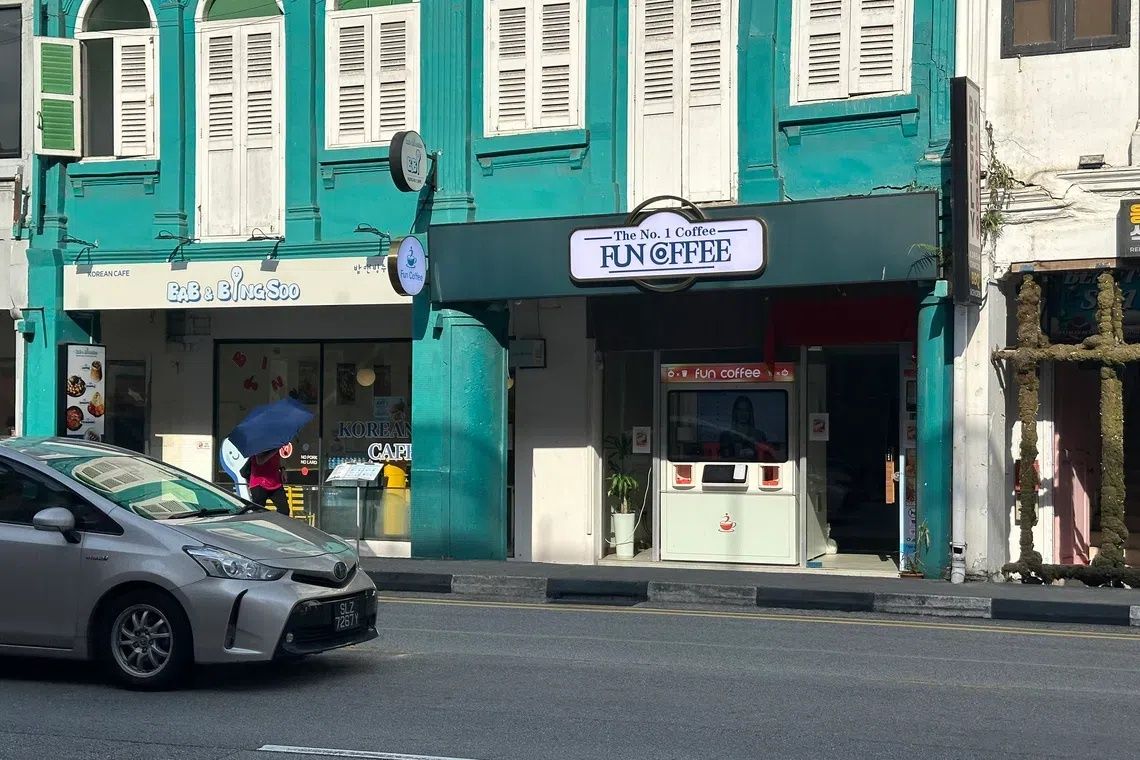
Fun Coffee markets itself on its website as a "lifestyle brand combining coffee, wellness and digital innovation into a community experience," a framing designed to distance the operation from overt financial services claims and thereby evade regulatory oversight. The Straits Times' investigation of the scheme's registered address at 202 Jalan Besar revealed a physical storefront featuring a coffee vending machine at the entrance, suggesting the operation maintains a deliberately low-profile retail presence designed to lend superficial legitimacy. Handwritten instructions affixed to the machine directed customers to scan a QR code for payment transactions, indicating a deliberately informal operational style that may have been intended to appear grassroots and community-oriented rather than institutionalised.
The vending machine presence and associated QR code payment systems represent a particularly cunning element of the scheme's architecture. By maintaining what appears to be a legitimate coffee retail operation, Fun Coffee could plausibly claim to operate as a genuine commercial enterprise selling physical products, thereby creating cover for the cryptocurrency transfers and investment recruitment that constituted its actual business. This hybrid model—combining token physical infrastructure with digital financial operations—illustrates how modern fraud schemes exploit the intersection of traditional retail and digital finance to obscure their true nature.
Police have issued explicit warnings cautioning Singaporeans against making additional payments or transfers to Fun Coffee, regardless of whether recruitment pitches originate from individuals claiming official representation or through direct requests via the platform's application. Authorities particularly highlighted red flags surrounding payment requests routed through personal PayNow QR codes, individual mobile telephone numbers, or overseas-based bank accounts. These payment mechanisms consistently signal fraudulent operations, as legitimate financial services providers typically utilise institutional banking channels subject to regulatory oversight and anti-money laundering verification procedures.
The Fun Coffee investigation represents a broader challenge confronting Southeast Asian regulators: the integration of cryptocurrency technology with traditional pyramid selling structures creates enforcement complications that conventional regulatory frameworks struggle to address effectively. The borderless nature of blockchain transactions, combined with the difficulty of tracing funds across multiple jurisdictions and the anonymity cryptocurrency platforms afford, substantially impedes law enforcement efforts to recover stolen assets or identify the ultimate beneficiaries of investment proceeds.
For Malaysian investors and residents, this case carries particular relevance given Malaysia's substantial Chinese-speaking population and established communities with connections throughout Southeast Asia. The scheme's regional footprint and cross-border operational structure mean that Malaysians may encounter recruitment overtures through social media, family networks, or WhatsApp groups. Financial regulators and consumer protection authorities across Southeast Asia will likely intensify coordination in response to the Fun Coffee situation, potentially establishing new protocols for rapid information-sharing regarding emerging cross-border fraud schemes.
The arrest and ongoing investigations signal that authorities across Asia are accelerating efforts to combat investment fraud, yet the underlying vulnerabilities remain substantial. The persistent appeal of higher-than-market returns, the difficulty of distinguishing legitimate fintech operations from fraudulent schemes, and the psychological power of recruitment-based incentive structures continue generating fresh waves of victims. Consumer education emphasising the mathematical impossibility of sustainable returns from pyramid structures and the legitimacy indicators of properly-regulated financial services providers remains essential, yet patchy implementation across the region leaves populations inadequately protected against increasingly sophisticated operators.

