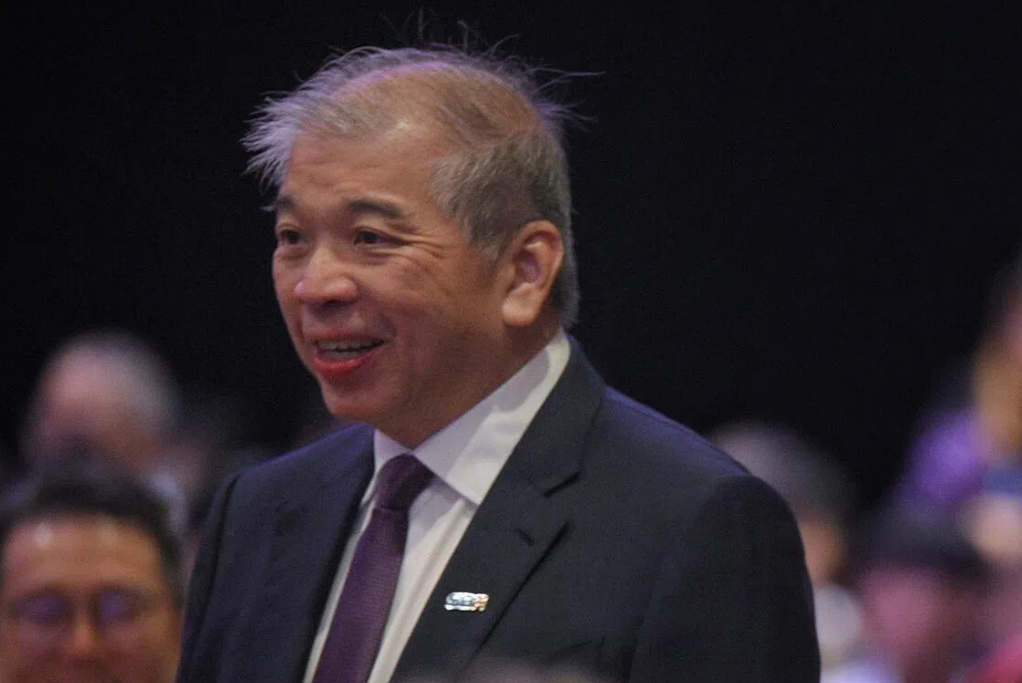
Singapore shipping magnate Teo Siong Seng and other senior container industry executives have been named as defendants in two separate civil lawsuits filed in California, marking a significant escalation in legal consequences stemming from an alleged global price-fixing conspiracy in the shipping container sector. The class-action cases, lodged in the District Court for the Northern District of California on June 2 and 9, represent a new wave of challenges driven by private American companies seeking financial restitution, operating independently from the criminal prosecution already initiated by the US Department of Justice.
The two civil suits were brought by manufacturing firm C.A. Spalding Company and transportation company Daybreak Express, both seeking to recover millions of dollars in losses they claim to have sustained through participation in the alleged cartel. This civil litigation route allows private businesses to pursue damages without waiting for the outcome of criminal proceedings, creating a dual legal jeopardy for the accused executives and their organisations. The strategy reflects a broader pattern in American antitrust enforcement, where injured businesses leverage the findings of criminal investigations to build their own compensation claims.
The civil complaints directly reference a criminal indictment filed by the US Department of Justice on January 22 and unsealed on May 19, which identified five major container manufacturing entities as members of a cartel controlling approximately 95 per cent of global standard dry container production. The named organisations include China International Marine Containers (CIMC), Shanghai Universal Logistics Equipment, CXIC Group Containers, and Singamas Container Holdings, where Teo serves as chief executive. This concentration of market control made the alleged conspiracy particularly potent in its ability to influence global shipping economics.
According to court documents, the conspirators employed a coordinated strategy to artificially suppress container supply and maintain elevated pricing. The scheme involved deliberately restricting production capacity by limiting the number of operational shifts and working hours across container manufacturing lines at the cartel members' facilities. Most notably, the defendants installed approximately 87 surveillance cameras distributed across 49 production lines across multiple factories, a monitoring infrastructure designed specifically to enforce compliance with agreed-upon output quotas and prevent individual cartel members from cheating by exceeding production limits.
The impact of this coordinated activity on global shipping economics proved dramatic. Investigators documented that the price of a standard 20-foot shipping container more than doubled during the alleged cartel period, rising from approximately US$1,600 in 2019 to US$3,500 by 2021. For global supply chains heavily dependent on containerised shipping, this surge represented a substantial inflation of logistics costs, with ramifications extending far beyond the immediate parties to the containers themselves. Manufacturers, retailers, and logistics companies worldwide experienced compressed margins as transportation expenses surged.
The financial benefits accruing to the cartel members during this period were substantial and demonstrable through corporate records. CIMC's container manufacturing division saw its profits expand dramatically from approximately 137 million yuan in 2019 to 1.99 billion yuan in 2020, before reaching 11.3 billion yuan in 2021, representing explosive growth directly attributable to the price elevation strategy. Singamas Container Holdings experienced an even more dramatic financial turnaround, moving from a net loss of roughly US$110 million in 2019 to profitability of approximately US$186.8 million by 2021. These profit trajectories stand in sharp contrast to ordinary competitive market conditions and serve as documentary evidence of the scheme's financial efficacy.
Both civil lawsuits are explicitly requesting treble damages from the court, a legal remedy under American antitrust law that permits judges or juries to impose financial penalties equivalent to three times the documented actual losses suffered by the plaintiff businesses. This damages multiplier mechanism serves both compensatory and punitive functions within the American legal framework, designed to deter corporate wrongdoing by making violations economically ruinous. If the defendants are found liable, the financial consequences could substantially exceed the direct losses caused by the price inflation, potentially reaching hundreds of millions of dollars across all claims.
The procedural timeline has progressed rapidly since the complaints were filed. Court records accessible through PACER, the US federal court's electronic filing system, confirm that summonses were issued on June 8 and 11, initiating formal notification to all named defendants. Standard procedure requires the defendants to file formal responses within 21 days of service, with failure to respond within this timeframe risking default judgment—an automatic loss entered by the court without requiring the plaintiff to prove its case. This procedural pressure incentivises defendants to mount an active defence rather than ignore the proceedings.
Among the five individual executives specifically named in the civil lawsuits, four are Chinese nationals: Mai Boliang, who initially served as president and chief executive of CIMC before transitioning to the chairman role in August 2020; Huang Tianhua, the company's vice-president; Wan Yongbo, general manager of CIMC's Operation Management Centre; Li Qianmin, general manager of Shanghai Universal Logistics Equipment; and Zhang Yuqiang, chief executive of CXIC Group Containers. Teo Siong Seng, the 71-year-old Singaporean chief executive of Singamas Container Holdings, appears alongside these executives as a named defendant. Also listed is Vick Ma, Singamas's marketing director and a Chinese national, who was arrested in France in April and is currently facing extradition proceedings to the United States to address the criminal charges.
Teo has declined to provide substantive public comment regarding the civil lawsuits, maintaining a posture of limited disclosure since being named in the criminal indictment. However, his professional circumstances have shifted markedly since the allegations surfaced. The executive has voluntarily taken leaves of absence from multiple prominent positions, including his role as executive chairman of Pacific International Lines, the substantial shipping company he has long been associated with. His governance commitments have similarly been suspended, encompassing his position as chairman of the Singapore Business Federation, his membership on the board of Enterprise Singapore, and his role as pro-chancellor at the National University of Singapore, where he previously served on the Economic Resilience Taskforce.
Teo's departure from the Singapore Business Federation chairmanship carries particular symbolic weight, given his substantial history with the apex business chamber. He previously served as the organisation's chairman from 2014 to 2020, completing three consecutive two-year terms and establishing himself as a senior figure within Singapore's business establishment. His most recent appointment occurred on May 20, when he assumed the chairmanship following Lim Ming Yan's early departure to focus on his newly acquired role as chairman of Changi Airport Group. In a statement released on May 28, Teo announced that he does not intend to seek re-election when his current term concludes on June 24, effectively signalling a clean break from the position and reducing his public-facing business leadership during the legal proceedings.
In his sole public statement since the allegations emerged, Teo explained his strategic withdrawal from these various roles as a deliberate choice to provide himself adequate time and attention to address the legal matters. He stated that he had "proactively decided to take these leaves of absence to afford myself sufficient time to attend to this matter, and for the best interests of the aforementioned organisations." This framing suggests that Teo views his reduced professional visibility as a protective measure both for himself and for the institutions with which he is affiliated, minimising potential reputational spillover effects. For Malaysian and Southeast Asian business observers, the case underscores the growing extraterritorial reach of American antitrust enforcement and the serious consequences that regional business leaders face when implicated in alleged international cartels.