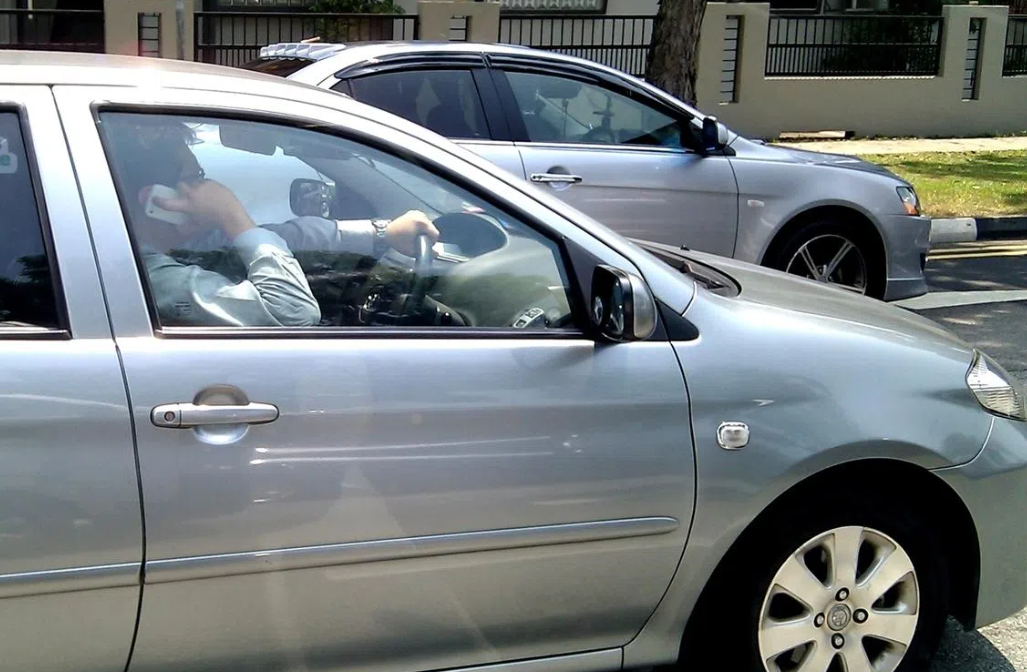
Singapore is moving to dramatically strengthen its road safety regime by criminalising the mere act of holding a smartphone while driving, even when the device is not in active use. The Ministry of Home Affairs tabled the Road Traffic (Miscellaneous Amendments) Bill on Tuesday, July 7, signalling a comprehensive legislative overhaul designed to combat a mounting crisis on the island's roads. The proposed changes represent a significant shift in enforcement philosophy, broadening the scope of prohibited conduct and substantially increasing penalties for dangerous driving behaviour.
The urgency behind this legislative push stems from alarming traffic statistics that underscore Singapore's deteriorating road safety. Between 2021 and 2025, traffic fatalities surged approximately 24 per cent while traffic violations climbed roughly 38 per cent. More starkly, Singapore recorded 149 deaths on its roads in 2025—the highest toll in a decade—compared with 141 deaths in 2016 and 142 in 2024. The injury toll has similarly worsened, rising from 9,342 road casualties in 2024 to 9,955 in 2025. These figures prompted MHA officials to publicly declare that enforcement must tighten and penalties must bite harder across all traffic violations.
Existing legislation already criminalises using a phone to text or make calls while driving, with offenders typically receiving 12 demerit points and fines ranging from S$400 to S$500. For serious breaches, prosecution in court can result in up to six months' imprisonment and S$1,000 fines for first offences, or up to one year in jail plus S$2,000 fines for repeat offenders. However, this framework requires authorities to prove actual usage, a burden that necessitates observing the infraction in real time and verifying it manually. This evidentiary requirement has rendered enforcement cumbersome and inconsistent, allowing many offenders to escape consequences.
The proposed amendment eliminates this enforcement bottleneck by criminalising the possession of a phone while a vehicle is in motion, regardless of whether the device is being actively used. MHA argues that merely holding a phone substantially diminishes driver focus and attention, creating dangerous road conditions. This legislative recalibration will empower Traffic Police to deploy camera technology and analyse photographs or videos submitted by members of the public, dramatically expanding enforcement capacity. The change does not restrict drivers from using mounted devices or holding phones when the vehicle is stationary, providing some operational flexibility for navigation and other functions.
Beyond the phone-holding provision, the Bill introduces a novel offence targeting deliberate vehicle endangerment—conduct that transforms motor vehicles into instruments of violence. Current law restricts murder and culpable homicide convictions to situations where prosecutors can prove intent to kill or knowledge that death would likely result. Consequently, drivers who deliberately endanger others through reckless conduct but do not technically meet the threshold for these capital offences often face only dangerous driving charges, which carry a maximum of eight years' imprisonment. The case of Jarrett Tee Lee Kiat exemplifies this limitation; despite causing an 18-year-old's death during an expressway street race and displaying no remorse, Kiat received five years and eight months' jail after pleading guilty to dangerous driving.
The Bill creates a new offence of purposeful endangerment using a vehicle causing death or grievous hurt, with substantially elevated consequences. Convictions can result in up to 15 years' imprisonment, financial penalties, caning, and driving disqualification for life or a minimum of 10 years if extenuating circumstances exist. This represents a qualitative leap in consequences for conduct that bridges the gap between ordinary dangerous driving and intentional violence. By establishing proportionate accountability for deliberately reckless behaviour that causes severe harm, the legislation addresses judiciary concerns that existing maximum sentences may not adequately reflect culpability in egregious cases.
The Bill simultaneously increases penalties for dangerous and careless driving causing grievous hurt, recognising that even non-deliberate recklessness can produce catastrophic outcomes. For dangerous driving causing grievous hurt, maximum imprisonment increases from five years to seven years for first-time offenders and from 10 years to 13 years for repeat offenders. Aggravated sentences for factors such as concurrent intoxication rise from one year to 18 months additional imprisonment. These adjustments reflect sentencing principles articulated by the High Court in cases such as that of Yoong Kok Kai, who received a five-year term (increased from 3½ years) after causing a drunk-driving accident that left an auxiliary police officer permanently vegetative. The court's observation that maximum sentences might be inadequate for the worst incidents prompted legislative action.
For Malaysian observers, Singapore's legislative approach offers instructive lessons regarding road safety governance in the region. Singapore's densely populated environment and high-speed expressway network create distinct hazards compared with Malaysia's varied road infrastructure, yet the underlying principles of evidence-based enforcement and proportionate sentencing carry universal relevance. Malaysia's own road safety statistics indicate persistently high fatality rates, and enforcement mechanisms reliant on eyewitness observation face similar constraints to those that prompted Singapore's legislative revision. The use of technology—dash cam footage, traffic cameras, and public submissions—to expand enforcement capacity represents an adaptation that could enhance Malaysian enforcement of existing traffic statutes.
The phone-holding provisions particularly merit consideration within the Malaysian context, where smartphone penetration has created widespread distracted driving. Current Malaysian traffic laws address phone usage, yet enforcement relies substantially on manual observation. Singapore's shift to criminalising possession reflects recognition that in modern driving environments, the mere presence of a phone in hand creates demonstrable risk, even when not in active use. This represents a pragmatic acknowledgment that cognitive science increasingly supports—the physical act of holding a device triggers attention shifts that compromise driving performance. For jurisdictions contemplating enhancement of distracted driving enforcement, this legislative model provides a template that addresses both the practical constraints of policing and the substantive dangers of distracted operation.
The purposeful endangerment provision addresses a different concern: the vulnerability of existing criminal law to situations where drivers deliberately endanger others without meeting the legal threshold for murder or culpable homicide. Street racing incidents, which have claimed lives across Southeast Asia, exemplify conduct that courts have struggled to prosecute effectively within conventional criminal frameworks. By establishing a tailored offence that captures deliberately reckless vehicular conduct without requiring proof of intent to kill, Singapore's approach provides prosecutors with graduated escalation options. This structure may prove instructive for other regional jurisdictions reviewing criminal provisions governing dangerous driving, particularly where street racing and deliberate traffic violations have become entrenched among certain demographics.
Implementation of these provisions will require careful coordination among Singapore's Traffic Police, prosecution authorities, and the judicial system to ensure consistent application and proportionate sentencing. The expansion of camera-based enforcement, while enhancing detection capacity, also necessitates robust procedural safeguards to prevent misidentification and ensure fairness. Public education campaigns will be essential to communicate the shift from usage-based to possession-based liability, as drivers currently cognisant of texting prohibitions may not immediately adjust behaviour to avoid mere holding of devices. For Singapore's transport ecosystem, these measures represent a recalibration of the regulatory balance between individual driver autonomy and collective safety—a tension that remains unresolved across the region.
Regionally, Singapore's legislative trajectory reflects a broader Southeast Asian concern about escalating road fatalities and the inadequacy of existing enforcement frameworks. Thailand, Indonesia, and the Philippines have all grappled with high traffic mortality rates and introduced various legislative responses. However, Singapore's approach stands out for its simultaneity—addressing phone use, deliberate endangerment, and drunk driving penalties within a single comprehensive bill, backed by empirical data demonstrating deterioration in road safety indicators. This bundled approach may offer a model for other jurisdictions contemplating systematic road safety reform rather than piecemeal legislative adjustment. For Malaysia, which has historically implemented incremental traffic law changes, Singapore's integrated legislative approach and its explicit grounding in statistical evidence of deteriorating road conditions present a compelling case study in how comprehensive governance responses can address complex public safety challenges.

