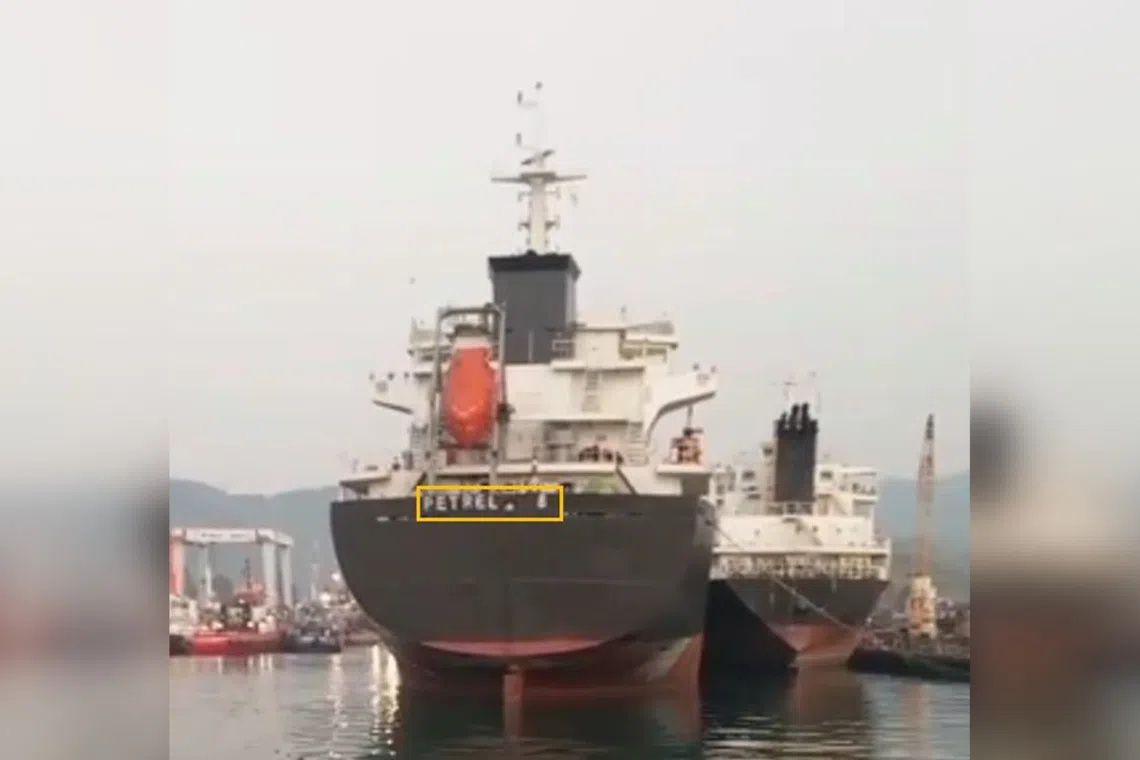
Singapore's police force is preparing to bring criminal charges against a maritime company and its director for facilitating flag registration services for PETREL 8, a cargo vessel that had been formally blacklisted by the United Nations Security Council for illicit North Korean activities. The case, which comes to court on July 31, represents a significant enforcement action against potential sanctions evasion in one of Asia's most critical shipping hubs.
The Commercial Affairs Department's investigation determined that the company provided its registration services on May 18, 2022, despite the ship having been designated by the UNSC in October 2017 for engaging in illegal transportation of banned North Korean exports including coal and iron ore. That designation placed PETREL 8 on the international blacklist specifically established to combat proliferation threats and maintain global security standards. The vessel had previously operated under Comoros and Niue flags before the attempted re-registration in Singapore.
According to police statements released July 30, the company's 49-year-old director possessed reasonable grounds to know that PETREL 8 was a sanctioned vessel involved in North Korean prohibited trade. This element of knowledge becomes crucial to the legal case, as the distinction between negligence and deliberate facilitation carries substantial implications for both penalties and the broader deterrent effect against similar violations. The director's alleged awareness transforms the case from a potential administrative oversight into what authorities characterise as intentional sanctions circumvention.
The company faces a single charge under Regulation 8D(d)(ii) of the United Nations (Sanctions – DPRK) Regulations 2010, which explicitly prohibits persons within Singapore or acting on behalf of Singapore entities from furnishing classification, certification, or related maritime services for vessels flagged to North Korea. This regulatory framework exists specifically to prevent sanctioned nations from accessing international shipping infrastructure that would enable circumvention of weapons proliferation restrictions. The director is additionally charged with abetting the company's violation, establishing personal criminal liability alongside corporate responsibility.
The potential consequences reflect Singapore's commitment to rigorous enforcement of international sanctions architecture. If convicted, the director faces imprisonment for up to a decade, financial penalties reaching SGD 500,000, or both sentences combined. The company itself faces maximum fines of SGD 1 million, penalties sufficient to create meaningful economic deterrent effects across Singapore's maritime registration and services sector. These substantial consequences underscore that sanctions violations carry serious consequences beyond diplomatic censure.
Singapore's actions derive from its obligations under the United Nations Act, which domestically implements sanctions resolutions adopted by the Security Council against North Korea. These sanctions regime specifically target the Democratic People's Republic of Korea's development and proliferation of weapons of mass destruction. The regulatory framework prohibits not only direct trade with sanctioned entities but also the provision of enabling services—including maritime registration, insurance, certification, and related professional services—that would facilitate North Korean access to international commerce.
For Southeast Asian readers and maritime industry participants, this prosecution carries practical significance regarding sanctions compliance across regional shipping networks. Singapore serves as a global maritime centre handling hundreds of thousands of vessel registrations and service transactions annually. When authorities rigorously prosecute sanctions violations, they establish precedent that incentivises compliance across the entire ecosystem of brokers, agents, insurers, and service providers who facilitate maritime commerce throughout Asia.
The case also illustrates how sanctions evasion schemes operate in practice. Ship owners and operators seeking to circumvent restrictions typically employ flag-hopping—re-registering vessels under different national flags to obscure their true ownership and operational history. By attempting to register PETREL 8 with Singapore authorities despite its known blacklisting, the company and director allegedly participated in exactly this type of evasion strategy. The police statement emphasises that reasonable grounds to believe the vessel was sanctioned existed, suggesting the evidence presented a clear basis for compliance.
International pressure on maritime industry participants has intensified substantially since 2017, when PETREL 8 was initially designated. The Financial Action Task Force, an intergovernmental body founded by the Group of Seven, has elevated sanctions compliance to a priority concern for financial regulators and maritime authorities worldwide. Regional economies including Malaysia, Thailand, and Indonesia have upgraded their own sanctions implementation frameworks, creating more consistent enforcement across Asia-Pacific shipping lanes.
Singapore's police statement declares explicitly that the city-state "takes its international obligations under UNSC Resolutions seriously and is committed to implementing them fully." This positioning reflects broader strategic considerations regarding Singapore's role in the international system. As a major financial and maritime centre with significant dependence on maintaining relationships with major trading partners including the United States and European nations, Singapore has strong incentives to demonstrate rigorous sanctions compliance. Conversely, the city-state must also manage relationships with Asian neighbours and avoid appearing as a mere enforcement arm of Western sanctions regimes.
The PETREL 8 prosecution occurs within broader regional context of proliferation concerns extending beyond North Korea. Iran sanctions violations, Taliban-era Afghan asset restrictions, and Russian sanctions following the Ukraine invasion have all generated maritime enforcement actions across Asia-Pacific ports in recent years. Shipping companies, flag registries, and service providers operating throughout Southeast Asia increasingly face compliance obligations that require sophisticated understanding of sanctions lists, designation procedures, and regulatory penalties.
For Malaysian businesses engaged in maritime services, shipping, or international trade, the Singapore prosecution underscores the necessity of robust compliance systems. Many Malaysian companies operate throughout Southeast Asia and maintain relationships with Singapore-based service providers. Understanding that Singapore authorities will actively prosecute sanctions violations—even those involving foreign vessels and foreign company directors—should inform corporate governance, transaction screening, and risk management practices across the region.

