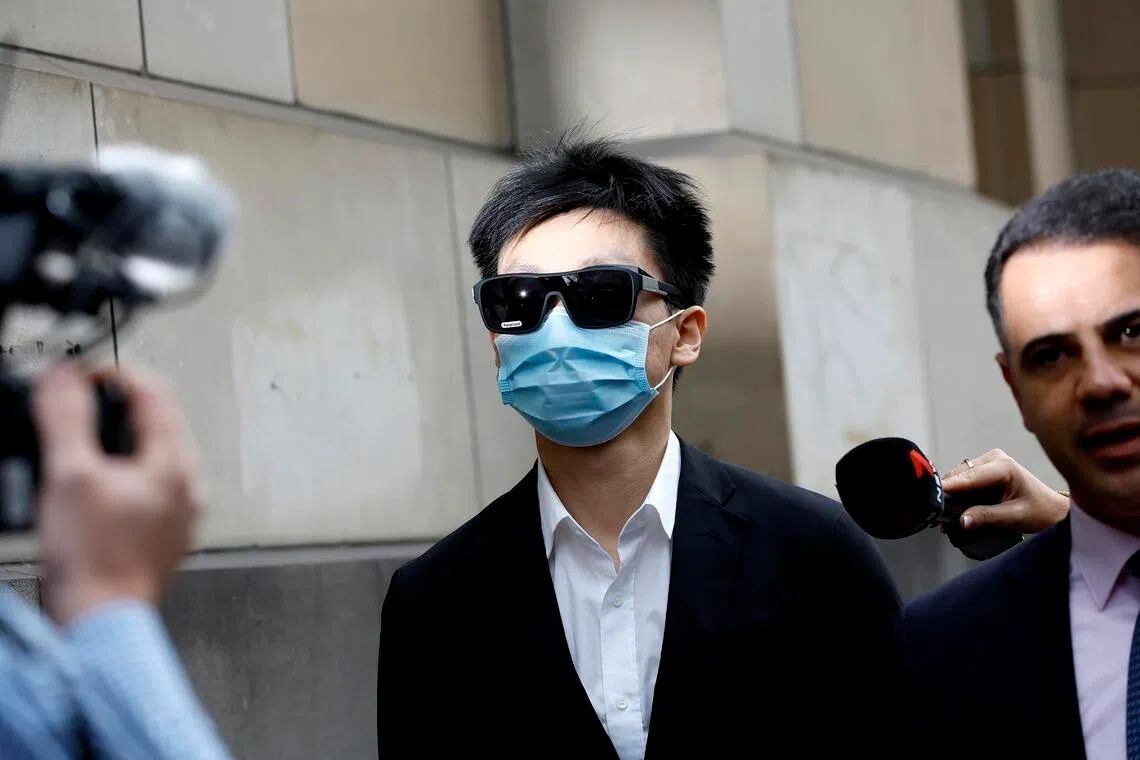
A 28-year-old trainee doctor from Singapore has entered guilty pleas to serious charges of secretly recording hundreds of colleagues in compromising situations across three of Melbourne's leading hospitals. Ryan Cho's admission at the Melbourne Magistrates Court on Thursday marks a significant moment in what has become a high-profile case that extends beyond criminal proceedings into broader workplace safety and institutional accountability concerns affecting Australian healthcare.
The scale of the alleged offences discovered during the investigation is substantial. Police seized multiple electronic devices from Cho's residence, revealing a collection exceeding 10,000 video and image files documenting more than 500 victims. The devices included a laptop, hard drive, and mobile phone, all containing thousands of intimate recordings that Cho had obtained without consent. The severity of this digital archive underscores the systematic and prolonged nature of the alleged conduct, suggesting a pattern of behaviour rather than isolated incidents.
Chargewise, Cho faced an initial 910 charges laid by Victorian police following the discovery of the extensive collection of intimate files, including approximately 4,500 videos. These charges have since been consolidated into 13 counts encompassing stalking, installing optical recording devices to capture private images, and producing intimate images. The consolidation, agreed upon by both prosecution and defence, streamlines the legal proceedings while maintaining the gravity of the allegations. Magistrate Michelle Mykytowycz confirmed there was sufficient evidentiary weight that a jury could secure convictions on each count, providing the legal foundation for Cho's guilty pleas.
Chо had been employed across three major Australian medical institutions: the Austin Hospital, Royal Melbourne Hospital, and the Peter MacCallum Cancer Centre, where he worked between 2021 and 2025. His pathway to Australia began in 2017 when he initially settled there, later pursuing medical studies at Monash University. This progression—from international student to permanent resident—illustrates how his residential stability in Australia increased over time. He was granted permanent residency in April 2025, just three months before his arrest in July that year, when Austin Hospital staff discovered a recording device concealed in a mesh bag placed in a staff toilet.
The discovery mechanism itself reveals how institutional vigilance ultimately exposed the conduct. Had alert staff members not identified the phone positioned to record, it remains unclear how long Cho's activities might have continued undetected. This finding prompted the subsequent police investigation that uncovered the full extent of his alleged offences, extending beyond hospital settings to include filming of individuals with whom he shared residential accommodation during the same period.
Chо's bail arrangement, which extends until a three-day pre-sentence hearing scheduled for November 23 at Melbourne's County Court, involves stringent conditions designed to protect potential witnesses and the community. A A$50,000 surety lodged by his parents in 2025 guarantees his continued compliance. His restrictions include mandatory police reporting three times weekly, prohibition against contacting witnesses, restrictions on hospital access except in emergencies with police approval, confiscation of his passport, and a ban on possessing photographic or video devices outside his residence. Additionally, he must undergo appropriate medical treatment, a requirement his legal team has indicated relates to acknowledged psychological complexities.
Chо's father, Wilson Cho, a logistics manager from Singapore, attended Thursday's hearing and was present at earlier court appearances. The family has committed to having one or both parents reside in Melbourne throughout the legal proceedings to ensure their son's compliance with bail conditions. Notably, Wilson Cho previously stated to the court that he had "no idea" regarding the alleged behaviour that culminated in charges against his son and the suspension of his medical registration by Australian health regulators in 2025. This parental involvement underscores the personal and familial dimensions of the case, particularly for families navigating the Australian justice system.
Beyond the criminal proceedings, the case has triggered significant civil action with potentially far-reaching implications for Australian hospitals and workplace protections. Approximately 100 victims, predominantly women, have filed human rights complaints with the three affected hospitals, alleging sexual harassment and workplace discrimination. These complaints have been escalated to the Australian Human Rights Commission. Tony Carbone, managing partner at Carbone Lawyers representing victims, has indicated that additional hospital employees are likely to join the civil action, suggesting that the scope of accountability may extend beyond Cho's individual criminal liability to institutional responsibility for workplace safety protocols and victim support mechanisms.
The case resonates particularly for Malaysian and Southeast Asian healthcare professionals working in Australia, highlighting vulnerabilities within institutional systems and the importance of workplace protections. For Malaysian medical graduates and practitioners considering overseas opportunities, the situation underscores the necessity of understanding Australian workplace rights, reporting mechanisms, and institutional accountability frameworks. It also raises questions about background screening processes, psychological assessment protocols in medical training programs, and the adequacy of surveillance and safety measures within healthcare facilities.
The November pre-sentence hearing will hear impact statements from victims, providing the court with detailed accounts of how the offences have affected individuals whose privacy and dignity were violated. These statements may substantially influence sentencing outcomes and could establish precedents regarding penalties for technology-enabled privacy violations in workplace settings. The case has attracted significant attention in Australia and internationally, partly due to the cross-border dimension involving a Singaporean national and partly because it exposes vulnerabilities in institutional systems handling intimate spaces and sensitive data protection.
Chо's case also intersects with broader discussions about medical professional conduct, ethical standards, and mental health support within the profession. His barrister has characterised him as a "complicated young professional man" with "complex psychological issues," suggesting that underlying psychological factors contributed to his behaviour. This dimension raises questions about whether early intervention, appropriate mental health assessment during medical training, or workplace mental health support systems might have prevented the escalation of concerning behaviour into criminal conduct affecting hundreds of individuals.
The implications for Australian healthcare institutions extend to reviewing physical security in sensitive areas, monitoring of personal electronic devices, staff training on workplace safety, and victim support protocols. For the broader Southeast Asian community working in Australian healthcare, the case underscores the importance of understanding and utilising workplace reporting mechanisms and understanding protections available under Australian law. The legal proceedings will continue through November, with sentencing expected to follow the pre-sentence hearing, and the outcome may establish important precedents for technology-enabled privacy violations within professional settings.

