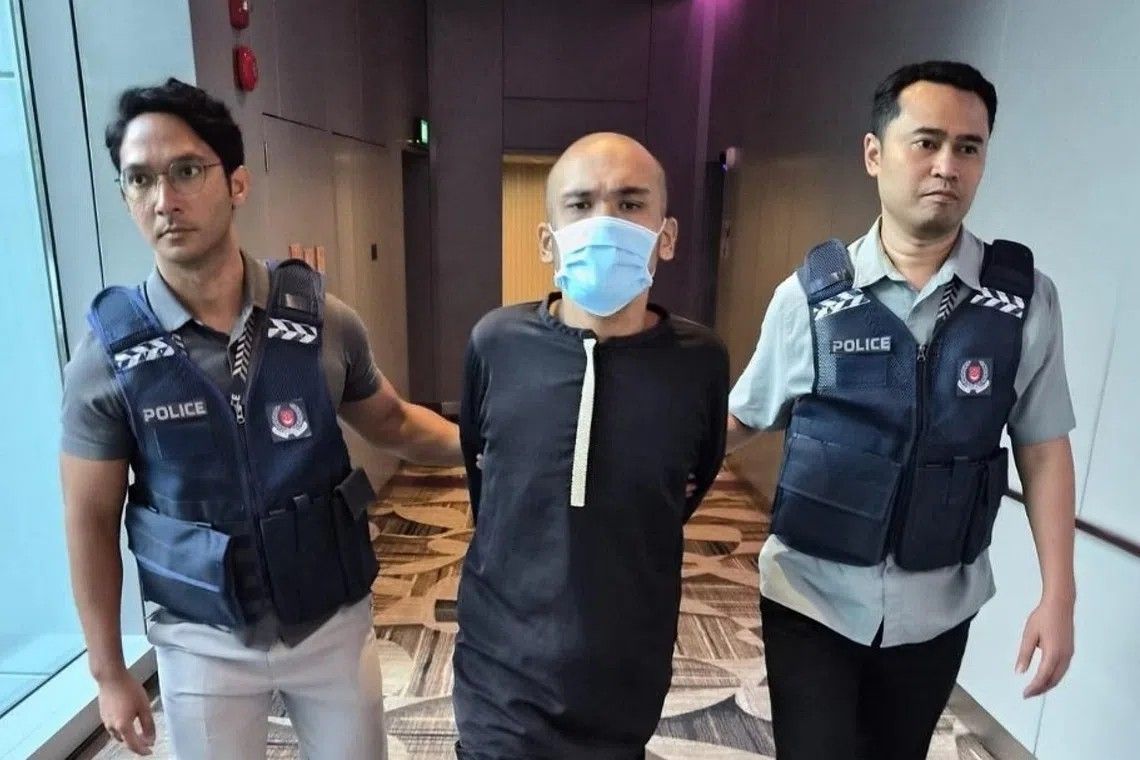
A Singaporean man has been charged in court over offensive remarks directed at the Muslim community, marking another high-profile case of religiously inflammatory speech on social media in the city-state. Elvin John Baptist, 27, appeared in court on August 7 facing a single charge of insulting the religion of another person under the Maintenance of Religious Harmony Act, a piece of legislation designed to protect Singapore's delicate religious balance across its diverse population.
According to court documents, Baptist allegedly uploaded two videos to TikTok on March 1 containing inflammatory remarks in Malay that he knew would demean Islam and potentially disrupt public harmony. The exact nature of the remarks was not disclosed in court proceedings, but authorities determined they crossed the legal threshold for religious insult in Singapore's multicultural context. The timing of the investigation revealed a lag in response—police received reports about the videos on the same day they were posted, yet by that point Baptist had already departed Singapore.
What distinguished this case was the international dimension of the arrest. Baptist initially evaded local authorities by leaving Singapore before police could apprehend him, prompting a coordinated effort involving Malaysian law enforcement. With assistance from the Royal Malaysia Police, Baptist was tracked down and deported from Malaysia on August 6. Upon his return to Singapore that same day, he was immediately arrested and brought before the courts, highlighting how regional cooperation has become essential in addressing digital-era offences that transcend borders.
The Maintenance of Religious Harmony Act represents Singapore's legislative approach to protecting religious minorities while preserving social cohesion. Rather than relying solely on general hate speech laws, the provision specifically targets insults to religion, reflecting the government's view that protecting the sentiments of religious communities is fundamental to stability. Over the years, the law has been invoked in numerous cases involving offensive remarks about Christianity, Islam, Buddhism, and Hinduism, establishing Singapore as comparatively strict in enforcing religious respect online.
Baptist's case occurs amid broader regional concerns about religiously divisive content spreading through social media platforms. Southeast Asia has witnessed multiple incidents of inflammatory videos, memes, and posts targeting religious minorities, often amplified by algorithmic recommendation systems that prioritise engagement over responsibility. The relative ease of creating and sharing video content on platforms like TikTok has created enforcement challenges for authorities across the region, who struggle to identify perpetrators and act swiftly before content reaches large audiences.
Crucially, Baptist is also assisting police with investigations into a separate, disturbing incident that has compounded concerns about religious tolerance in Singapore. Another video circulating on social media allegedly shows an individual stepping on a Quran aboard a public bus—an act considered deeply offensive in Islam. Authorities believe the video was filmed in Singapore, though the perpetrator has not been identified. This parallel investigation suggests a pattern of deliberately provocative religious content emerging in the city-state, prompting heightened scrutiny of social media activity.
The bus-related incident carries particular symbolic weight. Public transportation represents shared civic space where Singaporeans of different faiths interact daily. An act of desecration captured on a crowded bus not only insults Muslims but violates the implicit social contract of respectful coexistence that undergirds Singapore's multicultural model. That such an incident could occur and be recorded suggests either a troubling erosion of social norms or an isolated breach by an individual testing boundaries—distinctions that will become clearer as investigations progress.
For Malaysia, which shares cultural and religious ties with Singapore's Muslim majority, these cases carry resonance beyond the island nation's borders. The involvement of Malaysian authorities in Baptist's deportation underscores how regional governments coordinate on matters affecting Islamic communities. Malaysian officials' cooperation, while procedurally routine, sends a message that Southeast Asian nations take religiously inflammatory conduct seriously, regardless of where perpetrators initially flee.
The broader implication for the region is that digital platforms have become primary arenas for religious conflict, requiring governments to balance free expression with community protection. Singapore's approach—combining swift legal action with international coordination—represents one model, though critics argue it may be overly restrictive. Other Southeast Asian democracies face similar pressures to respond to religious incitement online without stifling legitimate speech.
Baptist's prosecution also highlights the vulnerability of young people to social media dynamics that reward provocative content. At 27, he belongs to a generation immersed in digital culture where views and likes can incentivise increasingly extreme behaviour. Whether Baptist's actions reflected genuine religious animus or performative transgression remains unclear, but the legal consequences underscore that religious insult carries real penalties in Singapore's legal framework.
Looking forward, these cases may prompt technology platforms to enhance moderation efforts in Southeast Asia, where religious diversity creates complex content moderation challenges. Facebook, TikTok, and YouTube must balance local legal requirements with global policies, a tension that becomes acute in religiously sensitive matters. Authorities in Singapore and Malaysia will likely increase pressure on platforms to remove inflammatory content more rapidly and cooperate with law enforcement investigations.
The Baptist case also reinforces Singapore's self-image as a nation where religious harmony is non-negotiable. Since independence, successive governments have treated communal religious peace as foundational to national survival, making legal protection of religious sentiments a cornerstone of social policy. While this approach has generally succeeded in preventing large-scale religious violence, critics question whether it adequately protects freedom of speech and religious critique in a mature democracy.
As investigations into both the TikTok videos and the bus incident continue, attention will focus on whether these represent isolated incidents or signals of deteriorating religious tolerance among younger Singaporeans. The outcomes of these cases will likely influence how authorities approach future religious speech cases, potentially setting precedents for regional jurisdictions wrestling with similar challenges.

