Singapore's roads have become increasingly hazardous as a new and alarming class of substance—anaesthetic-laced electronic vaporisers—emerges as a significant factor in fatal traffic accidents. In a particularly troubling cluster spanning just 12 days in June, police charged three separate motorists with driving under the influence, each case involving a collision that exposed a worrying pattern of impairment on the roads. The incidents underscore the evolving nature of traffic safety threats in the island nation, where innovative drug delivery methods are outpacing detection and enforcement protocols.
The primary culprit gaining notoriety among these cases is etomidate, an anaesthetic traditionally used in clinical settings but now being infused into commercially available e-vaporisers marketed as "Kpods". Two of the June offenders allegedly consumed methamphetamine, commonly known as "Ice", while behind the wheel. The third is accused of operating a vehicle while under the influence of etomidate. This diversification of substances—from traditional illicit drugs to repurposed pharmaceuticals in modern vaping devices—presents an enforcement challenge that has caught public health authorities scrambling to understand and mitigate the risks.
Dr Jonathan Tang, a clinical toxicologist at the Emergency Medicine Department of the National University Hospital, has witnessed firsthand the devastating consequences of etomidate-impaired driving. He has treated multiple trauma patients whose injuries stemmed from road accidents where the driver had consumed etomidate through vapes. Tang emphasises that the substance produces effects fundamentally similar to alcohol intoxication, degrading the cognitive and motor functions essential for safe vehicle operation. The medical professional notes with particular concern that impairment manifests through delayed reaction times, compromised hazard perception, and diminished vehicle control—a combination that exponentially increases collision risk for everyone sharing the road.
The human cost of this trend has been staggering. Between 2023 and 2025, authorities documented 38 traffic accidents directly linked to drug and etomidate use, resulting in 19 deaths. These figures carry particular weight when disaggregated: among the fatal collisions, 10 involved conventional drugs while nine involved etomidate specifically. A notable acceleration occurred in 2025, when 29 of the 38 documented accidents occurred—demonstrating a sharp upward trajectory in both frequency and severity. The breakdown reveals that etomidate featured in 18 of these 2025 incidents, with seven accidents involving both drugs and etomidate in combination, suggesting poly-substance impairment may be compounding the danger.
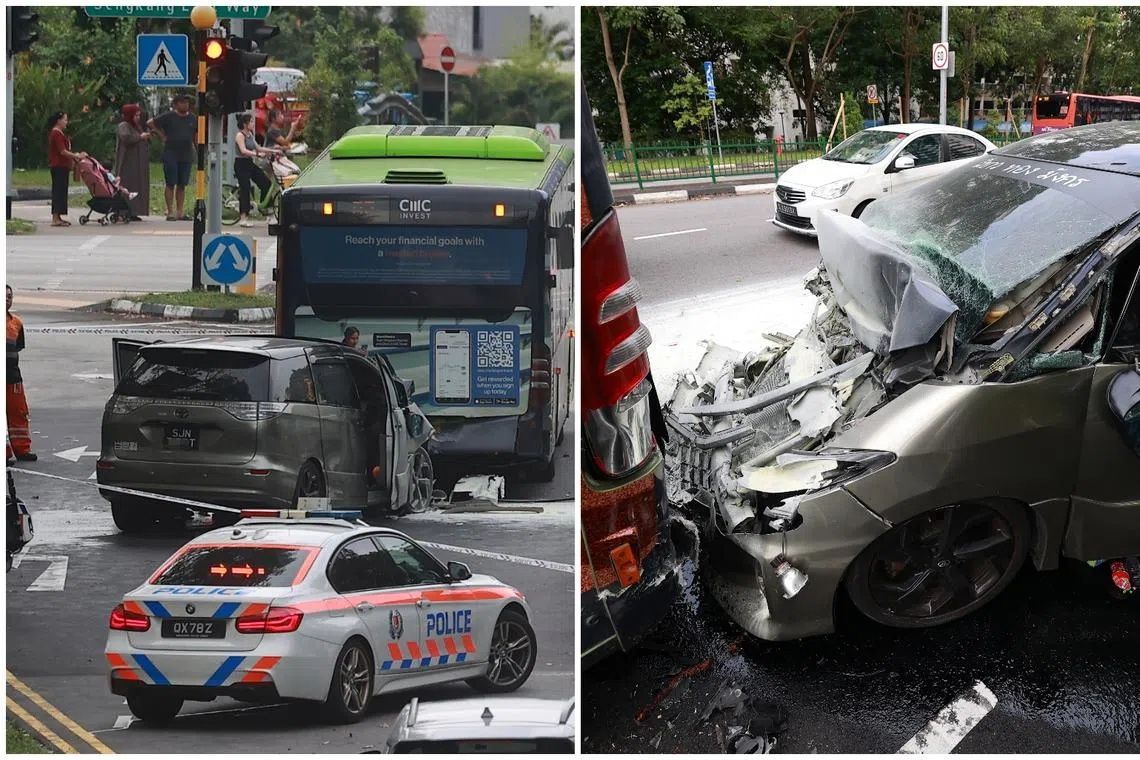
One particularly tragic case illustrates the lethal potential of etomidate-impaired driving. On May 13, 2025, a vehicle driven by a man collided with a bus in Punggol while carrying a female passenger. The impact proved fatal for the 28-year-old woman. Subsequent investigation of the vehicle uncovered 42 vapes and more than 1,200 pods, some containing etomidate. Toxicological testing confirmed the presence of etomidate in both the driver's and the deceased passenger's bloodstreams. This case exemplifies how the substance's ready availability in device form has normalised its consumption, with users seemingly unaware of the grave risks they impose on themselves and their passengers.
Beyond impairing driving mechanics, etomidate presents a distinctly troubling secondary danger that distinguishes it from conventional intoxicants. Dr Tang highlights that regular Kpod users frequently develop psychiatric symptoms including depressed mood, heightened aggression, and impulsive behaviour patterns that can precipitate suicide attempts. These psychological effects fundamentally compromise judgement and decision-making capability even before accounting for the direct neuropharmacological impairment of motor control. The convergence of acute intoxication and underlying psychiatric destabilisation creates a singularly hazardous driver profile, one that existing traffic safety frameworks were not designed to address.
Singapore's traffic fatality landscape has darkened considerably in recent years, with deaths hitting a decade high in 2025. The year recorded 149 fatalities compared with 141 in 2016, and 142 in 2024, representing a troubling acceleration in the past 12 months. Injury figures have similarly deteriorated, climbing from 9,342 in 2024 to 9,955 in 2025. These aggregate statistics provide the sobering context within which the drug-impaired driving phenomenon must be understood—it represents not an isolated problem but a contributing strand within a broader crisis of road safety that demands systemic intervention.
The enforcement response, while demonstrating police capability to detect and prosecute offenders post-accident, raises questions about preventive capacity. In February, Member of Parliament Valerie Lee raised concerns in Parliament about whether Traffic Police had instituted standard protocols to assess accident-involved motorists for vaping and drug use. Coordinating Minister for National Security K. Shanmugam responded by outlining the framework: when Traffic Police suspect impaired driving from drug or etomidate use, blood testing is mandatory, with drivers facing liability for operating a vehicle while intoxicated. However, this reactive approach—testing only after accidents occur—suggests that many impaired drivers may be operating undetected on roads before tragedy strikes.
The three men charged in June exemplify the range of offences now appearing in courts. Mohamed Firdouz Mohamed Akram, 36, was handed multiple charges on June 19 for dangerous driving causing injury in Kallang. His collision with a taxi injured both the cab driver and a passenger; he subsequently abandoned his vehicle and fled before arrest. Police recovered drugs, vaporisers, and weapons from his car, and testing confirmed Ice consumption. Puah Zhe Cong, 34, faced seven charges under the Road Traffic Act on June 10, including dangerous driving causing death and failing to remain at an accident scene. He allegedly operated his vehicle while impaired by etomidate, resulting in one fatality and two injuries. Sivakandesh, 32, was charged on June 8 after his Mercedes-Benz crashed into a rubbish chute in Yishun Street 11 while he was allegedly under the influence of methamphetamine, striking concrete bollards, a parked vehicle, and the chute before stopping.
Legal penalties for first-time offenders of driving while under the influence carry sentences of up to one year imprisonment, fines reaching S$10,000, or both. Repeat offenders face enhanced penalties of up to two years' imprisonment and fines reaching S$20,000. While these sanctions aim to deter dangerous behaviour, their application remains contingent on detection—a limitation that becomes acute when novel substances like etomidate Kpods operate in legal grey areas where the substance's vaping form may initially escape regulatory classification.
For Malaysian readers and Southeast Asian observers, Singapore's experience offers a cautionary tale about emerging drug delivery mechanisms and their intersection with road safety. The normalisation of vaping culture has created vectors for substance abuse that existing drug control and traffic enforcement frameworks struggle to address. The phenomenon of etomidate Kpods—anaesthetics repurposed for recreational use in vaporiser form—exemplifies how globalised supply chains and shifting consumption patterns can rapidly introduce novel public health threats. As similar devices become available across the region, neighbouring jurisdictions would be prudent to anticipate rather than merely react to the dangers such innovations pose.
The convergence of substance abuse, psychiatric effects, and vehicle operation represents a particularly insidious road safety challenge that demands responses operating simultaneously across detection, enforcement, and prevention domains. Singapore's authorities have begun addressing the issue through post-accident testing protocols and prosecutions, yet the spike in 2025 figures suggests these measures have not yet achieved sufficient deterrent effect. A more comprehensive approach might integrate roadside impairment screening, public awareness campaigns specifically targeting etomidate and similar emerging substances, regulatory action against vape retailers, and intensified efforts to understand and interrupt supply chains. Until such multi-layered interventions materialise, road users across Singapore and the region must contend with an expanding population of dangerously impaired drivers whose presence on the roads represents an escalating, largely invisible threat.

