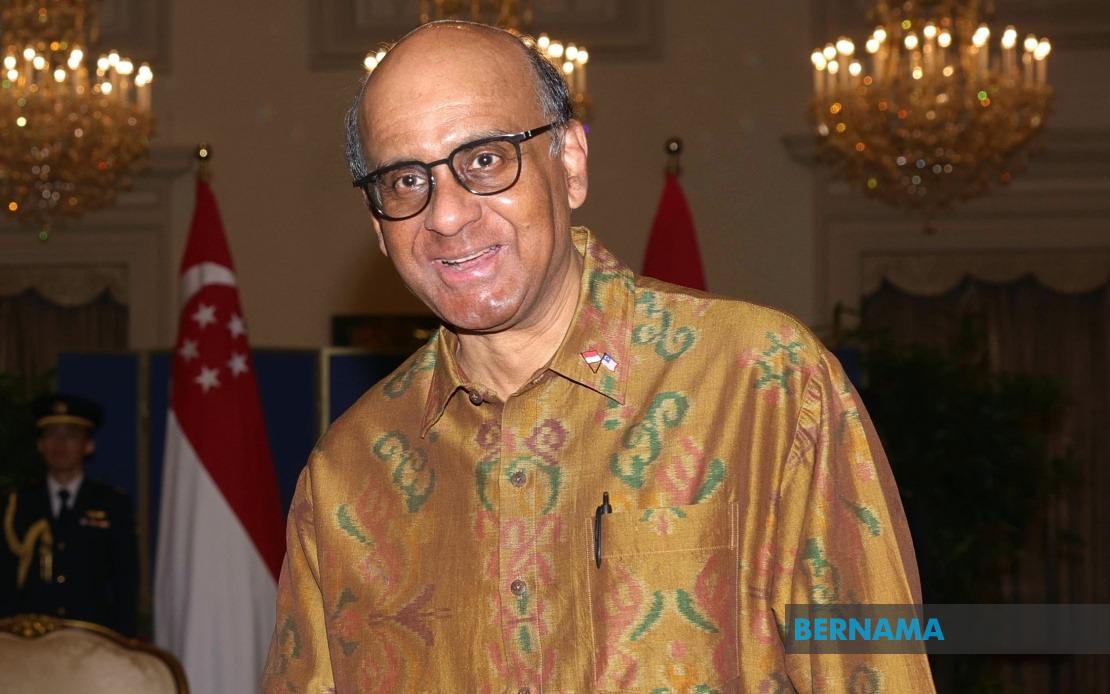
Singapore President Tharman Shanmugaratnam is set to arrive in Malaysia on July 13 for a three-day state visit extending through July 15, having accepted an invitation from His Majesty Sultan Ibrahim, King of Malaysia. The trip marks a significant moment in bilateral relations, particularly as it constitutes the President's inaugural state visit to Malaysia since he took office as Singapore's ninth President on September 14, 2023. His delegation will include his spouse, Jane Ittogi Shanmugaratnam, alongside multiple ministers and senior government officials, signalling the formal importance both nations attach to the engagement.
The visit functions as a reciprocal gesture, directly acknowledging His Majesty's own state visit to Singapore on May 6 and 7, 2024. In diplomatic protocol, such exchanges represent mutual recognition of bilateral importance and shared commitment to regional cooperation. By hosting the Singapore President with full state honours, Malaysia demonstrates continued investment in what the Foreign Ministry characterises as a "strong and enduring partnership" that spans economic, security, and cultural dimensions. This pattern of high-level exchanges reflects how the two neighbours, despite their geographic proximity and shared maritime border, deliberately maintain formal state-level engagement to reinforce political bonds.
During his time in Kuala Lumpur, President Tharman will experience the full ceremonial treatment accorded to visiting heads of state. He will be welcomed with a State Welcoming Ceremony before proceeding to Istana Negara for an official audience with His Majesty. The itinerary also includes a State Banquet, one of the most formal elements of state hospitality, designed to facilitate substantive conversation and informal relationship-building among senior leadership. Additionally, Prime Minister Datuk Seri Anwar Ibrahim has scheduled a courtesy call with the President, ensuring that the executive leadership of both nations has opportunity for direct dialogue on matters of mutual interest.
The economic relationship underpinning these diplomatic courtesies is substantial and expanding. Singapore ranks as Malaysia's second-largest trading partner globally and Malaysia's largest trading partner within ASEAN. The figures demonstrate consistent growth in commercial ties. In 2025, bilateral trade between the two nations reached RM402.35 billion, equivalent to US$93.97 billion, reflecting a 1.5 per cent increase compared with 2024. More striking is the recent trajectory: from January through May 2026, trade grew at a significantly accelerated pace of 14.5 per cent, reaching RM189.90 billion (US$47.87 billion), contrasted with RM165.93 billion (US$37.65 billion) during the same five-month period in 2025.
This acceleration in trade growth carries implications beyond simple commerce. The 14.5 per cent growth rate in the first five months of 2026 suggests that both economies are leveraging complementarities and deepening integration in key sectors. For Malaysian companies, Singapore provides access to sophisticated financial markets, advanced logistics infrastructure, and connections to global supply chains. Conversely, Singapore benefits from Malaysia's natural resources, manufacturing capacity, and regional manufacturing hubs. The uptick in recent bilateral trade suggests that post-pandemic recovery has solidified into structural expansion, potentially driven by increased intra-ASEAN commerce as regional economies prioritise neighbourhood partnerships.
From a broader Southeast Asian perspective, the Malaysia-Singapore relationship serves as a bellwether for ASEAN cohesion. The two countries, despite occasional disagreements over maritime boundaries and water resources, have developed institutional mechanisms for managing differences while expanding cooperation. Their robust economic partnership demonstrates that ASEAN members can pursue integration without abandoning sovereignty concerns. The state visit underscores this pragmatic approach: diplomatic formality and economic engagement proceed in parallel, each reinforcing the other.
For Malaysia specifically, the visit signals continued priority on bilateral relations even as the country navigates complex regional and global dynamics. Malaysia's economy benefits significantly from the Singapore connection—the city-state's role as a financial centre, logistics hub, and gateway to Asian markets creates natural complementarities with Malaysian enterprises. The strong growth in bilateral trade, particularly the recent acceleration, suggests that Malaysian exporters and service providers are increasingly competitive in Singaporean markets and benefiting from preferential access through ASEAN frameworks.
The timing of President Tharman's visit, following the King's visit to Singapore several months earlier, reflects a deliberate diplomatic rhythm designed to maintain momentum in the relationship. State visits, while ceremonial in appearance, serve practical functions: they provide occasions for leaders to discuss complex issues in relaxed settings, they signal to domestic and international audiences the importance of the bilateral relationship, and they create opportunities for the expansion of cooperative agreements and understanding. The presence of ministers and senior officials alongside the President suggests that substantive discussions on policy matters will accompany the formal ceremonies.
Looking forward, the trajectory of Malaysia-Singapore relations will likely remain a significant factor in regional stability and ASEAN effectiveness. Both nations face common challenges including maritime security, counter-terrorism cooperation, and economic adaptation to technological change. The strong economic ties and regular high-level engagement provide foundations upon which to address these challenges collaboratively. President Tharman's visit, therefore, should be understood not merely as ceremonial exchange but as affirmation of practical partnership in an increasingly complex regional environment.

