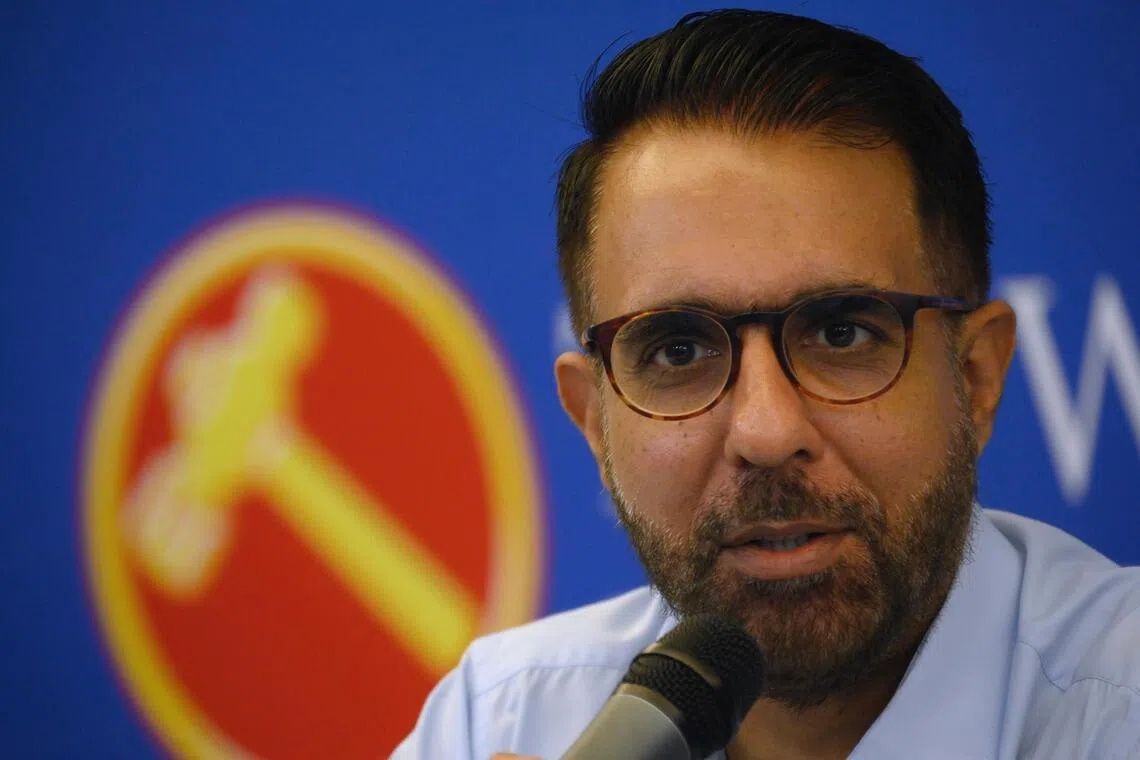
Singapore's opposition Workers' Party is bracing for a significant internal power struggle that could reshape the party's direction and leadership. On June 28, the party's cadre membership—a select group of roughly 100 members forming the organisation's decision-making core—will gather to determine whether Pritam Singh remains as secretary-general, marking the first serious leadership contest during his eight-year tenure in the role.
The push to challenge Singh's authority originated from a December 2025 High Court decision that upheld his conviction for providing misleading testimony to a parliamentary committee, a ruling that intensified existing grievances within the party ranks. What began as quiet dissatisfaction has evolved into an organised effort, with cadres reaching out to prominent party figures about potential candidacies against Singh. Among those mentioned as possibilities are Gerald Giam, the Aljunied GRC MP; Dennis Tan, Hougang MP; and Sengkang GRC representatives He Ting Ru and Jamus Lim. However, none have publicly committed to challenging Singh, with insiders citing the threat of disciplinary action against vocal critics as a restraining factor on open discussion.
The formal mechanics of the challenge began when 25 cadres requested a special conference in December 2025, which will precede the party's regular biennial leadership elections. At this special gathering, Singh will be asked to account for his actions leading to his conviction and will face calls to resign voluntarily. Should he refuse to step down, the cadres have requested a secret ballot to determine his fate. This procedural layer adds complexity to the dynamics, as Singh's response to these demands could significantly influence whether a challenger emerges for the subsequent ordinary cadres' conference where formal voting for the secretary-general position occurs. With only a simple majority required to retain his position, Singh's path to re-election depends heavily on the composition of those voting and their commitment levels.
The roots of this internal rebellion extend beyond Singh's legal troubles to broader strategic disagreements within the party. Cadres have expressed concern that his continued leadership undermines the Workers' Party's carefully cultivated brand as an alternative political force built on integrity and trustworthiness. One anonymous cadre articulated this concern starkly: voters support the Workers' Party precisely because they view it as fundamentally different from the ruling establishment, and having a leader convicted of deception strikes at the heart of that appeal. This perception problem looms especially large given that Singapore's electorate has repeatedly demonstrated sensitivity to issues of character and honesty in political leadership.
Another significant grievance involves Singh's handling of former Sengkang GRC MP Raeesah Khan's false parliamentary statement about a police report she fabricated in August 2021. Khan did not clarify her misstatement until November of that year, and Singh was subsequently found by Parliament's privileges committee and courts to have guided her in maintaining the falsehood. The 25 cadres who triggered the special conference specifically criticise Singh for failing to demand that Khan immediately correct her false account when he first became aware of the discrepancy. This delay proved costly both to the party's reputation and to Singh's personal standing, as it suggested either poor judgment or a willingness to tolerate dishonesty when it appeared politically convenient.
Singh's political position has further eroded following the 2025 general election, where the Workers' Party failed to expand its parliamentary footprint despite entering the contest with what many viewed as a strong roster of candidates. Several cadres expressed frustration that the party made no electoral gains, a disappointing result that some attributed to strategic decisions made by Singh. His decision to withdraw from Marine Parade-Braddell Heights GRC on Nomination Day particularly vexed some members who questioned whether the withdrawal was strategically sound. Beyond electoral performance, Singh was removed from his position as Leader of the Opposition by Prime Minister Lawrence Wong in January 2026. While the Prime Minister invited the Workers' Party to nominate another MP to assume the role, the party declined and instead closed ranks behind Singh—a decision that some cadres have privately questioned as ultimately damaging both to the party's parliamentary influence and to the broader opposition cause in Singapore.
The potential kingmaker in this scenario is Low Thia Khiang, the former party chief who served in that capacity from 2001 to 2018 and who achieved the historic milestone of leading the Workers' Party to its first GRC victory in 2011. Low, now serving on the party's central executive committee, remains a towering figure within the organisation with considerable influence over cadre voting patterns. Rumours have circulated within party circles that Low voted against Singh during a central executive committee meeting that deliberated on findings from a three-member disciplinary panel examining Singh's conduct. If Low has indeed withdrawn his support, this shift could prove decisive given his enduring prestige among the broader cadre membership. A former cadre estimated that if Low openly backs an alternative candidate, the combination of roughly 30 explicitly unhappy cadres plus those inclined to follow Low's lead might constitute sufficient numbers to unseat Singh. However, party insiders stress they do not anticipate Low running for the position himself, making the critical question whether the former party chief will publicly endorse and campaign for another candidate.
Low's role carries particular historical resonance because he himself faced a leadership challenge during the 2016 party elections from former Aljunied GRC MP Chen Show Mao. That challenge ultimately failed, but the episode involved many of the same veteran cadres now leading the push against Singh. These experienced party members bring institutional memory and genuine concern about the organisation's direction, distinguishing their challenge from a purely factional dispute. Many of them perceive the current moment as a critical juncture where the party risks permanently damaging its reputation and electoral prospects if Singh remains in charge.
The timeline leading to June 28 remains fluid, with multiple party insiders noting that the situation could shift substantially before votes are cast. Singh faces no formal legal restrictions on seeking re-election despite the reprimand letter issued two months prior to the June elections, meaning he remains technically eligible to contest. However, Singh's vulnerability stems less from formal barriers and more from the erosion of confidence among influential cadres and the accumulated weight of controversies surrounding his leadership. If no challenger emerges at the special conference and Singh survives any vote there, a new challenger might still materialise at the subsequent ordinary cadres' conference. Party sources suggest that the margin by which Singh prevails in any first vote could determine whether others gain confidence to contest in subsequent proceedings.
For Malaysian observers and regional watchers, this internal Workers' Party drama carries implications beyond Singapore's borders. Opposition parties across Southeast Asia face persistent challenges in maintaining organisational coherence, member satisfaction, and public trust during periods without executive power. The Workers' Party's current troubles illustrate how personal legal difficulties affecting opposition leaders can cascade into broader institutional crises, potentially weakening the entire opposition ecosystem. Additionally, the emphasis by dissenting cadres on protecting the party's integrity-based brand resonates with challenges faced by opposition movements throughout the region, where claims to represent a cleaner, more principled alternative to ruling establishments form a critical part of their electoral positioning. The Workers' Party case demonstrates how even a single significant lapse in that positioning can mobilise internal constituencies and threaten leadership continuity, a pattern that may offer lessons for opposition parties navigating governance challenges elsewhere in Southeast Asia.

