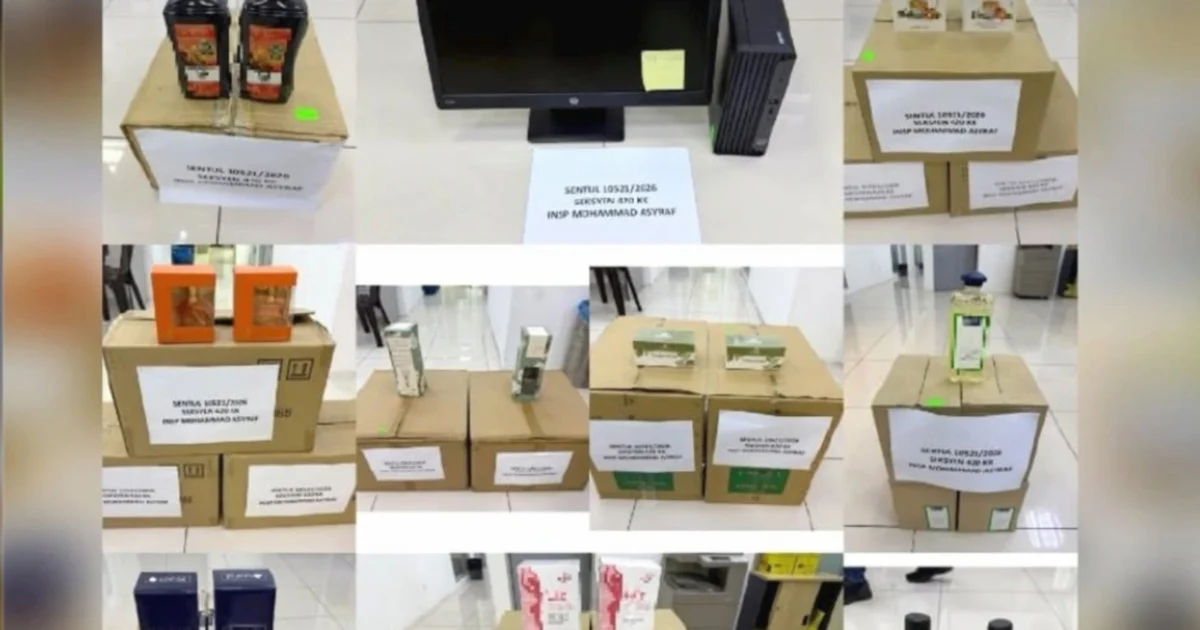
A significant crackdown on investment fraud has unfolded in Malaysia's capital, with authorities successfully breaking up what is believed to be a coordinated perfume investment scam. The Kuala Lumpur Police arrested six suspects during a Wednesday raid on commercial premises located in KL Eco City, a prime commercial district in the city centre. The operation marks another instance of police action against increasingly sophisticated fraud schemes that exploit investor appetite for alternative investment opportunities.
The KL Eco City location, known as an upscale business address attracting corporate tenants and professional service firms, had apparently been chosen by the scam operators to lend credibility to their fraudulent venture. This selection of prestigious office space illustrates how modern crime syndicates deliberately cultivate an appearance of legitimacy to deceive potential victims. The choice of such a location suggests the perpetrators understood the importance of environmental cues in building investor confidence, a tactic common in investment fraud operations that prey on affluent individuals seeking high-return opportunities.
Police investigations have identified the detained individuals as part of an organised network rather than independent actors, indicating a structured operation with defined roles and responsibilities. This distinction is crucial for understanding the scale and coordination of the scheme. The syndicate's apparent sophistication suggests participants may have had specific functions—from marketing and client acquisition to financial management and logistics—a structure typical of professional fraud enterprises that operate over extended periods before detection.
Investment scams involving unconventional commodities like perfume have become increasingly prevalent in Southeast Asia over recent years. These schemes typically exploit legitimate interest in niche investment markets by promising unrealistic returns on initial capital, often claiming exclusive supply agreements or special market access. Victims are frequently convinced to invest substantial sums with the understanding they will receive either direct returns or commissions from recruiting additional investors into the scheme.
The Kuala Lumpur Police's intervention reflects heightened awareness among enforcement agencies about fraud networks operating from commercial premises in major business districts. Regular patrols and intelligence gathering have become essential tools as scammers relocate operations away from obvious red-light locations toward legitimate business environments where suspicious activity may be harder to detect. The successful raid suggests police intelligence networks are improving their capacity to identify and locate such operations.
Malaysian investors have increasingly fallen victim to investment schemes targeting asset classes beyond traditional stocks, bonds, and property. The appeal of perfume investments lies partly in their apparent tangibility—unlike cryptocurrency or forex trading, investors receive physical products or certificates representing physical goods. This perceived concreteness can mask the fundamental absence of legitimate business fundamentals backing the investment proposition.
The implications for consumers and investors are significant. Authorities are urging Malaysians to exercise extreme caution when approached with investment opportunities promising exceptional returns in unconventional markets. Legitimate investment platforms typically require extensive regulatory documentation, transparent corporate structures, and verifiable histories. The absence of proper licensing from Bank Negara Malaysia or Securities Commission Malaysia should immediately raise concerns among discerning investors.
The arrested individuals now face investigations to determine the extent of victimisation and the total financial losses incurred. Police will likely examine transaction records, client lists, and communication histories to identify affected parties and understand the operation's timeline and scale. Early indications suggest this was not a small-scale enterprise but rather an ongoing concern that may have operated for considerable periods before police intervention.
For the Malaysian public, this case underscores the evolving nature of investment fraud in contemporary financial markets. As traditional investment vehicles become increasingly regulated and monitored, sophisticated criminals continue developing new narratives and marketing angles to exploit investor aspirations. Perfume investments represent just one iteration of a broader category of commodity-based scams that periodically emerge across Southeast Asia.
Police have appealed to potential victims or individuals with information about the syndicate's operations to come forward. Assistance from the public often proves instrumental in dismantling larger criminal networks, as investigators seek to understand the full scope of the scheme and identify victims who may not yet have reported losses. Cooperative witnesses can provide crucial details about recruitment methods, payment systems, and promises made to investors.
The case also highlights the importance of investor literacy and financial awareness programmes across Malaysia. Educational initiatives teaching citizens how to identify common fraud schemes, verify investment credentials, and recognise deceptive marketing tactics remain essential preventative measures. Many victims of such scams remain reluctant to report losses, either from embarrassment or fear of regulatory complications, creating an information deficit that allows similar operations to flourish.

