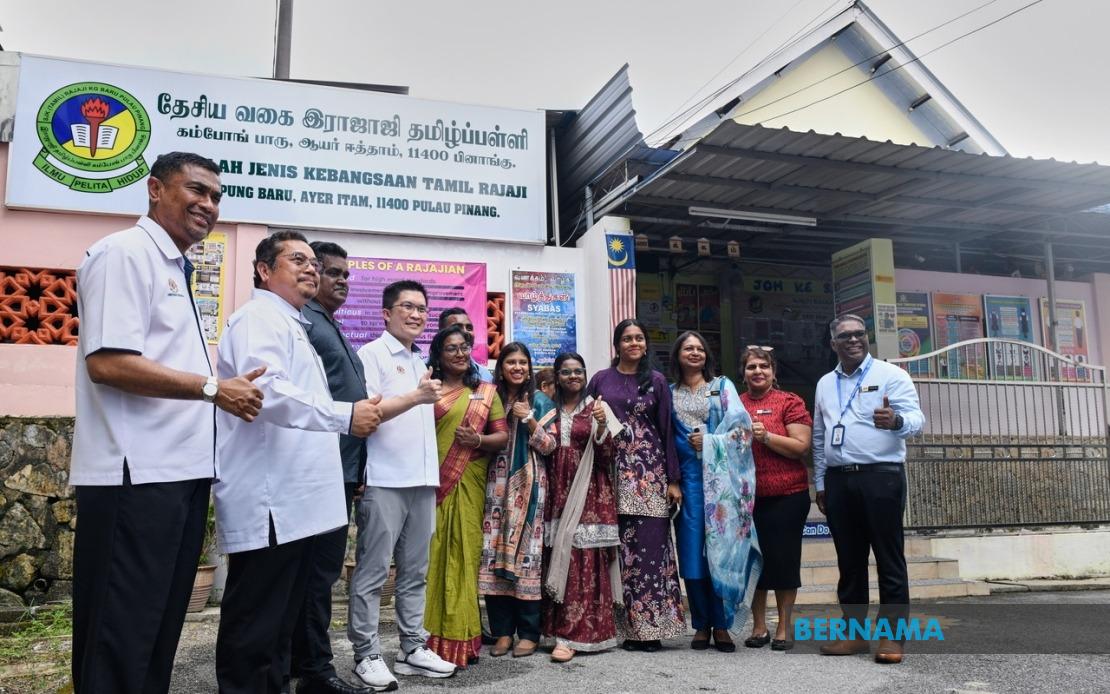
A historic Tamil primary school in Penang is set to leave behind decades of operational constraints with the Education Ministry's approval of an RM8 million relocation project. SJKT Rajaji, which has served the community for 76 years, will transition to a newly constructed campus in Farlim, Bandar Baru Ayer Itam, marking a transformative moment for the institution and its roughly 100 students who have long endured inadequate physical facilities.
Deputy Education Minister Wong Kah Woh announced the green light for the construction initiative, emphasising how the development would provide the aging institution with a fresh beginning. The current premises have operated well beyond their optimal capacity for years, constraining the school's ability to offer the learning environment its student population deserves. The relocation represents not merely a change of venue but an opportunity to reimagine how Tamil-medium education can flourish in the state capital.
The construction timeline spans approximately 18 months, positioning the school to commence classes at the new facility no later than the 2029 academic year. This phased approach allows for meticulous planning and execution, ensuring minimal disruption to the educational continuity of current students. The Penang state government had previously identified a 2.3-acre plot in Farlim, roughly 500 metres distant from the existing site, as the ideal location for this relocation back in 2022.
What distinguishes this project is its funding mechanism—a marked departure from traditional government-led school development. A private developer has committed to underwrite the entire RM8 million construction cost through corporate social responsibility initiatives, demonstrating how public-private collaboration can address educational infrastructure gaps. This partnership model alleviates financial pressure on state budgets while channelling corporate resources toward community development, a framework increasingly relevant across Southeast Asia where educational facilities often lag behind demographic needs.
The journey toward this approval began when SJKT Rajaji's board of governors submitted their relocation application to the Education Ministry last year. Subsequent negotiations with local authorities resolved outstanding issues, clearing the pathway for official endorsement. Wong's presentation of the approval letter yesterday symbolised the culmination of coordinated efforts between school leadership, state agencies, and private sector partners—a collaborative approach that underscores institutional commitment to improving Tamil-medium education in Malaysia.
Penang's Tamil school landscape encompasses 28 institutions, many grappling with similar infrastructure challenges that constrain pedagogical effectiveness and student welfare. State Housing and Environment Committee chairman Datuk Seri S. Sundarajoo highlighted that the SJKT Rajaji project forms part of a broader modernisation initiative across the state. Multiple Tamil schools are simultaneously pursuing development efforts, from acquiring permanent campuses to phased facility upgrades, demonstrating systemic attention to long-standing inequities in infrastructure provision.
The momentum extends beyond SJKT Rajaji. Sundarajoo indicated that groundbreaking ceremonies for at least three Tamil school projects are anticipated this year alone, while initiatives involving SJKT Sungai Bakap and SJKT Juru are being revived after previous interruptions. This acceleration suggests a strategic shift toward comprehensive facility renewal, potentially catalysing broader improvements in learning conditions for Tamil-medium students across Penang.
The significance of this development transcends brick-and-mortar considerations. For Tamil-speaking communities, particularly in urban centres, school infrastructure investments signal governmental recognition of their educational entitlements. When institutions operate in deteriorated or inadequate premises, the implicit message undervalues both the community and the language itself. The SJKT Rajaji project, therefore, carries symbolic weight alongside its practical benefits, affirming that Tamil-medium education merits contemporary, well-resourced facilities comparable to other medium-type schools.
Sundarajoo's assertion that these developments occur without burdening state finances proves particularly noteworthy for Malaysian education policy. As competing developmental priorities strain public treasuries, leveraging corporate social responsibility funding provides viable alternatives. However, this model also raises questions about sustainability, corporate commitment longevity, and equitable access—considerations relevant as Malaysia contemplates how to systematically upgrade educational infrastructure across all communities and regions.
For SJKT Rajaji's students and families, the transition promises tangible improvements in classroom conditions, recreational facilities, and overall campus amenities. The expanded campus accommodates future enrolment growth, potentially reversing decades of capacity constraints. Beyond immediate beneficiaries, the project influences perceptions of Tamil-medium education's institutional standing within Malaysian society, demonstrating that such schools receive significant investment and priority attention.
The 2029 target date for operational commencement allows adequate preparation time, though school administrators must simultaneously manage transition logistics and maintain educational quality during the interim period. This complex choreography requires sustained coordination between multiple stakeholders—the school community, developers, contractors, and government agencies—to ensure the new facility ultimately delivers on its promise of enhanced educational environments.
As Southeast Asian nations grapple with educational equity and infrastructure deficits, the SJKT Rajaji initiative offers instructive lessons. It demonstrates how addressing long-standing facility inadequacies requires patient, multi-stakeholder engagement, sustained bureaucratic support, and creative funding approaches. For Malaysia specifically, the project signals renewed commitment to minority-language education infrastructure, establishing precedent for similar initiatives benefiting other communities with similar institutional constraints.