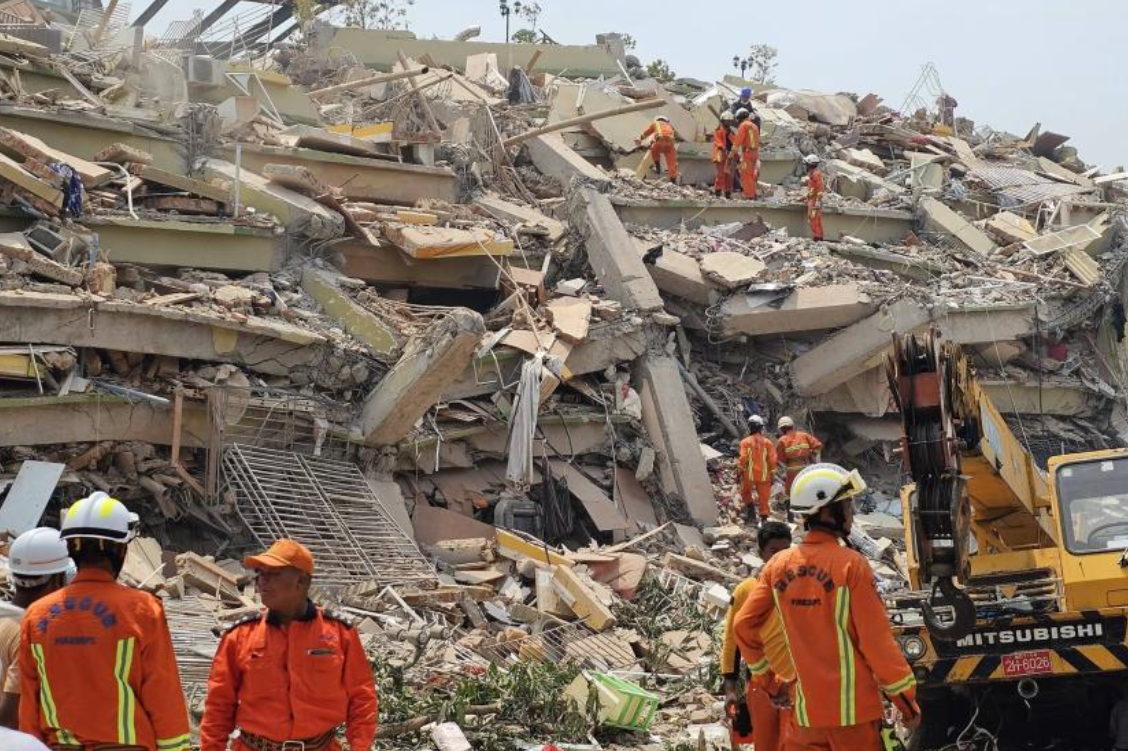
The owner of Sky Villa Condominium has received a five-year prison sentence with hard labour following a devastating building collapse in Mandalay that claimed the lives of more than 200 people. U Naing Htun Lin, the proprietor of the doomed 11-storey residential complex, was convicted by Aungmyaythazan Township Court on charges relating to death by negligence under Section 304-A of the Penal Code. The verdict was delivered on June 23, marking a significant development in Myanmar's accountability efforts following the catastrophic natural disaster that exposed critical structural and safety failures in the construction industry.
The legal proceedings began in February when U Naing Htun Lin was formally charged at the same township court. Initially, he was permitted to defend himself while released on bail, a common practice in Myanmar's justice system that allows defendants to maintain some degree of freedom during trial. However, the situation changed dramatically on March 17 when authorities revoked his bail and remanded him in custody, suggesting prosecutors presented compelling evidence or that flight risk became a concern as the case developed. This shift underscored the seriousness with which the court regarded the charges and the gravity of the disaster itself.
The investigation originated through the Special Investigation Department's work at No. (1) Area Police Station in Aungmyaythazan Township before being escalated to the district court level. U Zaw Moe Aung, a staff officer from the Special Investigation Department, served as the plaintiff in prosecuting the case. The meticulous documentation and evidence gathering were crucial in building the negligence case against the developer, as establishing causal links between construction defects and loss of life requires technical expertise and thorough forensic analysis of the building's structural integrity.
The Sky Villa complex, situated between 21st and 22nd Streets on 60th Street in Aungmyaythazan Township, represented one of Mandalay's residential developments and became emblematic of broader construction safety concerns throughout Southeast Asia. The eleven-storey building's complete collapse during the earthquake revealed fundamental problems in how the structure was designed, engineered, or built. More than 200 bodies were recovered from the rubble, making Sky Villa the deadliest single building failure associated with the disaster and highlighting how inadequate construction standards can transform a natural disaster into a human tragedy of unprecedented scale.
The construction company responsible for building Sky Villa was NTL Construction Company, led by U Naing Htun Lin himself as managing director. This dual role—owner and construction authority—made the defendant personally accountable for decisions affecting the building's structural soundness. The fact that the developer bore responsibility as both the financial owner and the construction overseer suggests that critical corners may have been cut in materials, engineering oversight, or adherence to building codes. Such arrangements, while not uncommon in Myanmar's construction sector, concentrate accountability in a single individual, making the determination of negligence more straightforward in legal proceedings.
Following the initial conviction, multiple layers of legal proceedings have since commenced. Both the prosecution and defence have filed appeals and revision petitions, with the Aungmyaythazan District Court requesting the full case file for review under Criminal Revision Case No. 39Ka/2026. This continuation of legal action reflects the complex nature of disaster-related prosecutions and the potential for appeals courts to revisit sentencing decisions. The lengthy review process is typical in Myanmar's legal system and allows for thorough examination of whether the five-year sentence adequately reflects the scale of negligence and resulting casualties.
Beyond the criminal verdict, the defendant's family and associated parties undertook compensatory measures that provided some financial redress to grieving families. Daw Thet Thet Khine, the wife of U Naing Htun Lin, participated in a group that organized three separate memorial ceremonies at a monastery pavilion on 19th Street. During these events, organized mourning sessions combined public acknowledgement of responsibility with tangible financial support. The group distributed 10 million kyats to the family of each person killed in the collapse, representing an estimated total compensation of more than 2 billion kyats depending on the precise death toll.
The case carries implications far beyond Myanmar's borders, resonating throughout Southeast Asia where rapid urbanization has often outpaced regulatory development. Countries in the region face similar pressures to balance construction industry growth with adequate safety oversight. The Sky Villa verdict signals that courts are willing to hold developers criminally accountable when negligence results in mass casualties, potentially influencing how construction companies across Southeast Asia approach building standards and safety protocols. However, the relatively modest five-year sentence compared to the scale of loss—over 200 deaths—may raise questions about whether criminal penalties sufficiently deter future negligence.
The broader context involves Myanmar's nascent attempts to strengthen building code enforcement following years of limited regulatory oversight. The earthquake exposed not merely individual developer failures but systemic weaknesses in how buildings are inspected, approved, and monitored throughout their operational life. The Sky Villa case represents the judicial system's effort to address at least one component of this larger problem through individual accountability. Whether similar prosecutions will follow for other collapsed structures or whether this case proves exceptional remains uncertain, but it establishes a precedent that constructors and developers can face significant criminal consequences when their projects fail catastrophically.

