As Johor heads toward its state election on Saturday, the political contest has unmistakably shifted to digital terrain. With only three days remaining before voters head to the polls, candidates representing the major coalitions and independent slates have made social media platforms the centrepiece of their closing campaign strategy. Facebook, TikTok, Instagram and X have become the battleground where political messaging competes for attention, reflecting a broader transformation in how Malaysian electoral campaigns are fought in the social media age.
The pivot toward digital engagement extends across the entire political spectrum contesting the 56 state assembly seats. While candidates continue traditional ground campaigning and public appearances, their campaign machinery now operates around the clock on multiple online platforms simultaneously. This dual approach allows campaigns to maintain visibility during hours when physical rallies are impossible, and to reach voter segments—particularly younger demographics and undecided voters—who consume most of their news and political information through their phones.
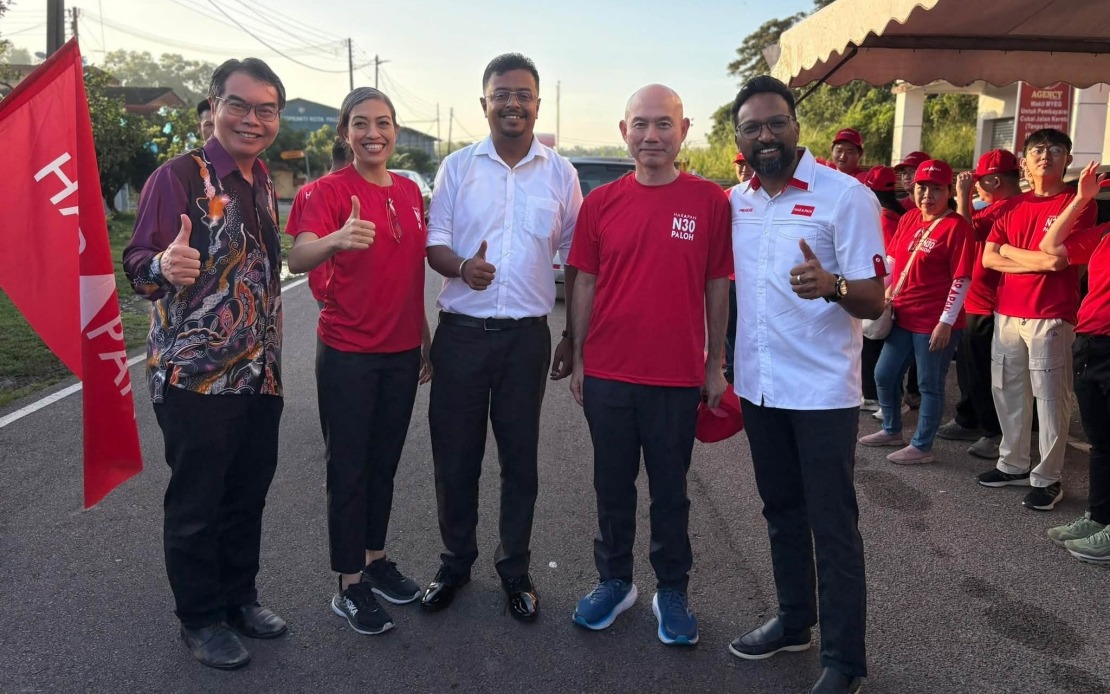
Candidates from the Pakatan Harapan coalition have demonstrated particular sophistication in their content strategy. Dr. A Ruban, contesting the Paloh seat, has focused his messaging on transformative rural development and youth empowerment, framing these priorities as investments in Paloh's future competitiveness. Despite currently receiving medical treatment for a spinal condition, his campaign team has maintained momentum through consistent social media updates, demonstrating how digital infrastructure allows campaigns to function even when physical limitations constrain candidates' movements. This resilience in digital platforms becomes especially valuable during the final campaign week when every day of visibility counts.
The Barisan Nasional campaign, represented prominently by Johor Menteri Besar Datuk Onn Hafiz Ghazi contesting the Machap seat, has emphasised the experience and integrity of its candidates as differentiators. Through his official Facebook presence, Onn Hafiz has sought to establish legitimacy based on track records and demonstrated understanding of local constituencies—a messaging approach that leverages experience as the primary selling point against potential challengers.
Content creation across campaigns has evolved beyond simple announcements. Candidates have adopted varied digital personas to match local voter expectations. In Tanjung Surat, Faizul Abdul Ghani presents himself as accessible and community-focused through imagery of constituency visits, cultivating an image of constant engagement with constituents. This people-centric approach contrasts with policy-heavy messaging, instead banking on perceived availability and attentiveness to local concerns as electoral advantages.
Dr. Maszlee Malik's campaign for the Puteri Wangsa seat exemplifies the specialist approach, where candidates leverage previous government experience to demonstrate concrete achievements. As a former education minister, his social media strategy centres on documenting higher education development, school infrastructure improvements and economic initiatives—tangible accomplishments designed to address specific voter concerns about government performance. His inclusion of details such as school shoe provision illustrates how campaigns translate broader policy into household-level benefits that resonate with parents managing family budgets.
The creative use of everyday moments has emerged as a powerful micro-influencing tactic. Ir Nazri Abdul Rahman's campaign in Simpang Jeram generated genuine local engagement by sharing a casual breakfast scene at a neighbourhood warung, a post that gained viral traction precisely because it humanises the candidate beyond formal political positioning. Such authentic-seeming content often outperforms polished campaign materials in generating organic social sharing and genuine voter connection.
Local sentiment mobilisation appears across multiple campaigns, with candidates crafting messaging tailored to specific constituency concerns. Shazwan Dzainal Abidin's 'Tiga Tawaran HARAPAN' initiative for Parit Raja exemplifies targeted promises designed to demonstrate that development benefits extend inclusively across communities. Meanwhile, incumbent BN candidate Datuk Mohd Jafni Md Shukor in Bukit Permai has deployed social media to consolidate support in Kulai, suggesting that incumbency advantage now depends substantially on digital presence maintenance.
Smaller parties and independent candidates have proven equally adept at digital campaigning. Perikatan Nasional, Parti Bersama Malaysia and independent slates have adopted live streaming and short-form video content to compensate for limited financial resources and ground machinery. The democratisation of campaign tools through TikTok and similar platforms has substantially lowered barriers to entry for non-establishment candidates, allowing them to communicate directly with voters without traditional media gatekeeping.
The tactical sophistication of campaign timing reflects strategic understanding that the final 48 hours represent peak persuasion opportunity. Campaign managers expect digital activity to intensify dramatically as the 11.59 pm July 10 cutoff approaches, recognising this final window as most effective for reaching voters who operate primarily within digital information ecosystems. For constituencies spanning large geographic areas or with dispersed populations, this extended-hours digital reach becomes particularly valuable for candidates unable to physically visit every neighbourhood.
The 16th Johor state election represents a critical test case for the maturation of digital campaigning in Malaysia. With 2,727,926 registered voters and 172 candidates contesting 56 seats, the scale enables meaningful observation of how digital strategy influences electoral outcomes. The prominence of social media in this campaign cycle suggests that future Malaysian elections will increasingly depend on candidates' capacity to manage digital presence, adapt messaging for different platforms and sustain engagement with fragmented, platform-specific voter audiences.
This digital transformation carries implications extending beyond Johor's boundaries. As other states prepare for electoral contests and as Malaysia approaches potential federal election cycles, the strategies tested in Johor provide templates that parties across the spectrum will likely adopt and refine. The successful integration of grassroots campaign activity with coordinated social media strategies demonstrates that future electoral competitiveness will depend on organisational capacity to operate simultaneously across physical and digital spaces, targeting voters according to their preferred information channels and communication styles.

