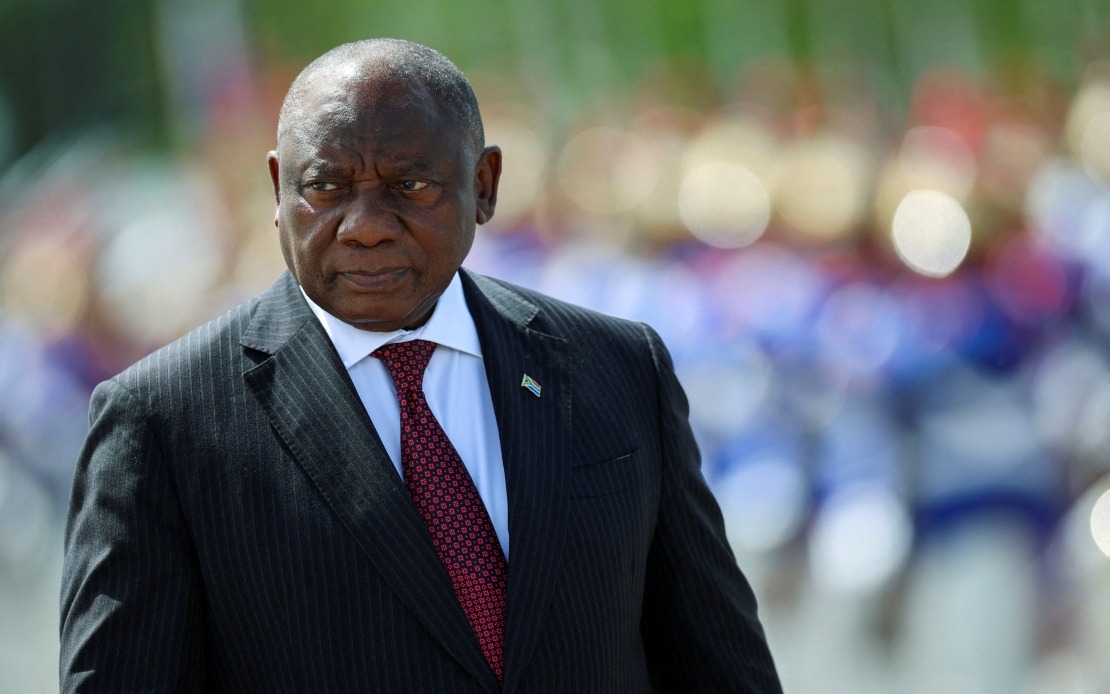
President Cyril Ramaphosa has secured a temporary legal reprieve in his fight against impeachment, with South Africa's Western Cape High Court granting him an interim interdict on Friday that halts parliamentary proceedings against him. The ruling prevents the National Assembly's impeachment committee from advancing its work until the court decides on the president's broader challenge to the findings of an independent panel that investigated his conduct, marking a significant tactical victory in what has become a protracted constitutional battle with profound implications for South African governance and the rule of law.
The court's majority judgment does not address the substantive merits of Ramaphosa's case, but rather establishes a procedural pause that allows him to pursue a separate judicial review of the panel's conclusions before parliament can move forward with any formal impeachment vote. This distinction is legally significant: the interdict operates as a holding mechanism, preserving the status quo while deeper questions about the independence panel's conclusions remain unresolved. The president's legal team successfully argued that parliament should wait for the courts to examine the panel's work before the legislature acts on its recommendations, a sequencing argument that has now been accepted by the judiciary.
Ramaphosa initiated this urgent legal manoeuvre on June 12, just as momentum was building behind efforts to resurrect the impeachment committee's work following a May decision by South Africa's Constitutional Court. That landmark ruling had determined that parliament had acted unlawfully in 2022 when it voted down the independent panel's report, effectively nullifying the legislative body's attempt to shelve the matter. The president's argument centres on the notion that parliament should not proceed with impeachment based on a report that remains legally vulnerable, and the high court has agreed to pause the process pending full judicial scrutiny.
The Phala Phala controversy stems from an incident in February 2020 when approximately US$580,000 in cash disappeared from Ramaphosa's private residence and game farm in Limpopo Province. The theft raised immediate questions about the source of the funds, their legitimacy, and whether they had been properly disclosed to tax and financial authorities as required by law. Initial reports suggested the money had been kept on the property without appropriate declaration, potentially violating South African financial regulations and presidential conduct standards. The incident has cast a shadow over Ramaphosa's presidency and raised broader questions about accountability and financial transparency among South Africa's political elite.
The investigation into the matter, conducted by a panel chaired by former Chief Justice Sandile Ngcobo, concluded in 2022 that substantial prima facie evidence existed suggesting Ramaphosa may have engaged in serious misconduct. The panel's findings, presented in a formal report, provided the factual and legal basis upon which impeachment proceedings could theoretically proceed. However, when parliament voted on whether to adopt the report and pursue impeachment in 2022, legislators rejected both propositions, effectively derailing the process at that time. This parliamentary vote appeared to signal an end to the matter, but the Constitutional Court's subsequent intervention reopened the question entirely.
The May Constitutional Court decision that revived the impeachment threat was itself a dramatic reversal. The court determined that parliament's 2022 vote against adopting the panel report was procedurally defective and violated parliamentary rules and constitutional principles. By striking down that vote, the court effectively revived the report's legal status and reopened the pathway to impeachment proceedings. This ruling placed Ramaphosa in an increasingly precarious position, as it meant that parliamentary mechanisms for removing him from office were no longer blocked by a legislative veto, creating urgency around both the president's legal strategy and parliament's consideration of next steps.
Ramaphosa filed his separate challenge to the panel's findings on May 26, initiating what promises to be a comprehensive judicial examination of the Ngcobo Commission's work and conclusions. His legal argument appears to centre on contending that the panel's findings are themselves vulnerable to legal challenge, raising questions about the investigation's thoroughness, the evidence base for its conclusions, or procedural fairness concerns. This judicial review process will unfold over coming months, with the substantive hearing scheduled for September 2-4. A successful challenge could fundamentally undermine the basis upon which parliament might seek to impeach the president, as the legislature's authority to proceed would rest on findings the courts have deemed legally defective.
For Malaysian observers of South African politics, this case illustrates the complex interplay between legislative, judicial, and executive power during constitutional crises. The freezing of impeachment proceedings pending judicial review reflects principles of procedural fairness and separation of powers that resonate with Commonwealth legal traditions shared across the region. South Africa's willingness to use constitutional courts to police legislative behaviour demonstrates robust checks and balances, though it also reveals how constitutional interpretation can strategically advantage particular political actors depending on judicial composition and reasoning.
The temporary halt also buys Ramaphosa crucial political time as he attempts to consolidate support within the ruling African National Congress party, which remains divided on his political future. Many party members view the Phala Phala matter as damaging to the ANC's legitimacy and reform agenda, while others regard vigorous defence of the president as essential to maintaining party stability. The delay allows internal party dynamics to potentially shift, and provides Ramaphosa's political allies with additional opportunity to mobilise opposition to any formal impeachment motion should parliament eventually proceed.
Regional governance watchers will note that South Africa's constitutional framework is being tested in ways that carry lessons for other African democracies grappling with similar questions about presidential accountability and legislative oversight. The Ramaphosa case demonstrates both the strength of judicial independence in challenging executive and legislative actions, and the vulnerability of any political actor to sustained legal scrutiny. The September judicial review hearing will prove decisive; if courts validate the panel's findings, Ramaphosa faces genuine impeachment danger, while a successful challenge could clear his path considerably.
The immediate practical effect of Friday's interim interdict is that parliament's impeachment committee cannot schedule votes or conduct formal proceedings against Ramaphosa until at least September, when courts will examine the panel's underlying conclusions. This procedural pause represents a notable defensive victory for the president's legal team, though it represents merely the opening skirmish in what promises to be a sustained constitutional battle that will command South African political attention for months ahead. The outcome will significantly shape presidential politics in Africa's most developed economy and influence broader questions about how young democracies manage conflicts between powerful state institutions.

