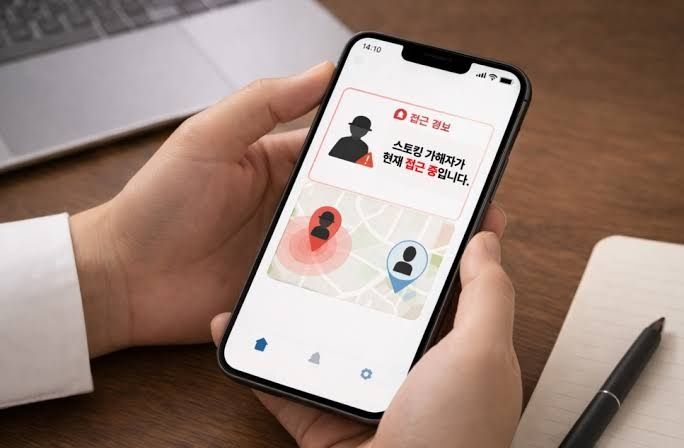
South Korea has taken a significant step forward in victim protection by launching a technology-driven solution to combat persistent stalking threats. On June 24, the Ministry of Justice unveiled a dedicated mobile application that grants stalking victims direct access to location data from electronic ankle monitors worn by suspected stalkers. The system represents an escalation in the country's multi-layered approach to tackling stalking crimes, which have become increasingly prevalent across East Asia and merit closer attention from regional law enforcement authorities.
The application, managed directly by the Justice Ministry, functions as a real-time surveillance tool allowing victims to monitor not only where a suspect is located at any given moment but also the direction in which they are moving. This granular level of information access is intended to enable potential targets to make informed decisions about their immediate safety and to avoid areas where a suspected stalker may be present. The system integrates with electronic monitoring infrastructure already deployed in high-risk cases, creating a comprehensive digital ecosystem around victim protection.
The introduction of this app reflects growing public pressure on South Korean authorities to strengthen existing safeguards. Concerns have mounted that previous protective measures, while well-intentioned, proved inadequate in preventing serious harm. The government acknowledged these limitations and positioned the new application as a direct response to identified gaps in the protective framework. This candid acknowledgement of past shortcomings signals a willingness to modernize victim support mechanisms rather than defend outdated approaches.
Electronic monitoring requirements for stalking cases were comparatively recent additions to South Korea's criminal justice arsenal, having been implemented from 2024 onwards through court orders in designated high-risk situations. These orders supplement an older victim protection tool—smartwatch-style emergency alert devices that have been distributed to victims for several years prior. The integration of multiple monitoring technologies suggests a recognition that no single intervention sufficiently addresses the complexity and danger of stalking crimes.
However, the persistent vulnerability of even protected victims underscores the severity of the problem. Between 2021 and August 2025, Representative Lee Gwang-hee of the ruling Democratic Party of Korea documented that 23 victims were either killed or subjected to attempted murder despite having been issued emergency alert devices. These tragic figures represent a sobering indictment of earlier protective systems and justify the government's continued investment in technological solutions. For Malaysian readers, such statistics should prompt reflection on whether comparable gaps exist in local victim protection frameworks.
Addressing valid concerns about surveillance and privacy, the Justice Ministry took care to revise regulations governing electronic monitoring in December 2025, establishing guardrails around the collection and dissemination of suspect location data. This regulatory evolution demonstrates an awareness that security measures, while necessary, must balance victim protection against individual rights and potential misuse of location tracking capabilities. The regulatory framework underpinning this new system will likely serve as a case study for other jurisdictions considering similar initiatives.
The government has already signaled its intention to expand victim empowerment further through additional institutional reforms. Beginning in April 2027, stalking victims will gain the ability to petition courts directly for restraining orders rather than depending on law enforcement agencies to initiate such requests on their behalf. This shift transfers agency to the victims themselves, reducing bureaucratic delays and potential gatekeeping by police who may not always prioritize such cases with appropriate urgency.
The South Korean experience offers valuable lessons for Southeast Asian jurisdictions grappling with rising stalking incidents. Malaysia, Singapore, and other regional nations have seen increased awareness of stalking as a serious crime, yet protective infrastructure remains fragmented and sometimes ineffective. The technological solutions emerging from South Korea—real-time location tracking combined with court-ordered restraining mechanisms—represent approaches that could be adapted to regional contexts while respecting local legal frameworks.
Moreover, the emphasis on victim agency in the South Korean reforms contrasts with older protective models that positioned victims as passive recipients of government protection. By enabling victims to access location data directly and to initiate legal proceedings independently, South Korea's approach acknowledges that those facing stalking threats often possess situational awareness and decision-making capacity that authorities may lack. This victim-centered philosophy increasingly shapes global best practices in domestic safety interventions.
The practical implementation of such systems raises additional questions about technological equity and accessibility. Not all stalking victims may possess smartphones or reliable internet connectivity, potentially creating tiers of protection that correlate with socioeconomic status. South Korea's rollout should indicate whether alternative access mechanisms were built into the system design from inception. Regional governments considering similar approaches would be wise to prioritize inclusive access patterns.
The broader implication of South Korea's investment in victim protection technology is that governments increasingly recognize stalking as a crime amenable to technological intervention. Electronic monitoring, real-time tracking applications, and digitized court petition systems represent a convergence of victim advocacy, criminal justice reform, and technological capability. As South Korea refines and expands these mechanisms over the coming years, the metrics generated will inform similar initiatives across Asia-Pacific democracies seeking to improve safety outcomes for vulnerable populations.

