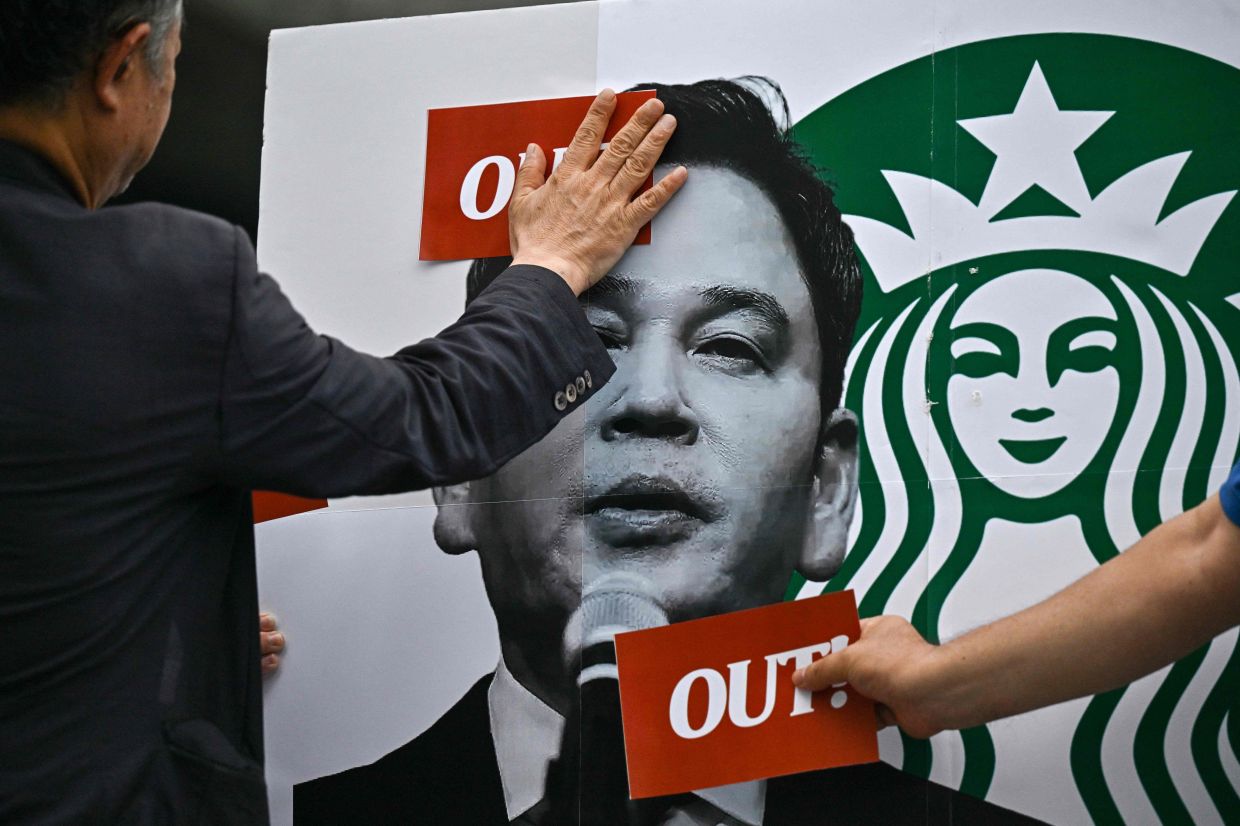
South Korean law enforcement has begun questioning senior management at Starbucks operator Shinsegae Group regarding an ill-fated promotional campaign that inadvertently reignited memories of a tragic historical event. The inquiry centres on what became known as the "Tank Day" promotion, a reusable cup initiative scheduled for May 18 that coincided with the anniversary of the Gwangju uprising, the 1980 pro-democracy crackdown that claimed official death toll of 165 civilians, though historians widely believe the actual figure was substantially higher. Yang Jong-hwan, head of Shinsegae Group's audit team, was summoned as a witness by the Seoul Metropolitan Police Agency, marking a significant escalation in the official response to what has become one of South Korea's most contentious corporate missteps in recent years.
The timing of the promotion proved catastrophic for Starbucks' Korean operations, igniting public outrage that cut to the heart of South Korean national memory. Rather than merely triggering customer complaints, the gaffe prompted civic organisations to lodge formal complaints alleging that company leadership violated the May 18 Democratic Uprising Act of 2016, legislation that specifically prohibits the spread of false or misleading information about the 1980 crackdown. The complainants additionally accused executives of defamation and insult, transforming what initially appeared to be a marketing oversight into a potential legal matter with ramifications far beyond standard corporate governance issues.
Shinsegae's response to the scandal has been unusually swift and dramatic by corporate standards. The group terminated its Korea chief executive immediately upon learning the campaign had sparked public indignation, a decisive move rarely executed so quickly in South Korean business culture. Shinsegae Group chairman Chung Yong-jin subsequently made a public apology, acknowledging the gravity of the error and signalling the company's awareness that this transcended ordinary public relations management. Despite these immediate corrective measures, the company has faced persistent pressure from civil society groups who view the incident as symptomatic of deeper organisational negligence regarding historical sensitivity.
Investigations have since revealed a pattern of procedural failures within Shinsegae that allowed the campaign to progress toward execution. Company officials acknowledged that multiple negligent acts contributed to the debacle, including the approval of promotional materials without proper verification of design elements and the date's historical significance. No single individual or department appeared to have exercised adequate oversight, suggesting systemic gaps in institutional processes rather than deliberate malice. This institutional failure has become central to understanding how a major corporation operating in a historically conscious society could overlook such a sensitive anniversary.
The Korean operations represent a substantial portion of Starbucks' global footprint, making the reputational damage particularly significant for the American coffee chain. South Korea constitutes Starbucks' third-largest market globally, surpassed only by the United States and China in terms of operational scale. The controversy consequently threatened the company's market position in a strategically important Asian market where consumer sentiment and social awareness often intersect directly with purchasing decisions. Initial reports indicated that the scandal precipitated sharp sales declines in the early aftermath, though sustained commercial impact remains to be fully documented.
Starbucks has moved beyond defensive posturing toward implementing remedial educational initiatives. All Starbucks locations across South Korea are scheduled to close for half-day staff training focused on the Gwangju uprising and its historical significance, representing a substantial operational commitment to institutional learning. Shinsegae's senior leadership, including the group chairman, will participate in comparable historical education sessions two days thereafter. These measures signal an attempt to transform the crisis into a broader educational initiative, though critics question whether corporate training can adequately address the depth of historical consciousness required to prevent such oversights.
The Gwangju uprising occupies a foundational position in South Korean democratic consciousness, particularly for citizens who view the 1980 crackdown as instrumental to the nation's eventual transition toward democracy. Memory of the event remains deeply embedded in South Korean political discourse, and any perceived disrespect toward the victims or trivialisation of the crackdown generates immediate social backlash. The May 18 date functions almost as a national marker of democratic sacrifice, making Starbucks' campaign selection appear extraordinarily tone-deaf rather than merely unfortunate timing. This cultural and historical context explains why the controversy transcended typical corporate scandal territory and entered the sphere of national historical reckoning.
President Lee Jae Myung's public condemnation of the incident underscored the severity with which political leadership viewed the matter. The president's characterisation of the promotion as "inhumane and disgraceful conduct" elevated the controversy into the realm of national political discourse, signalling that corporate responsibility extends beyond shareholder value into broader social and historical accountability. This political dimension has positioned the Starbucks scandal as emblematic of broader questions concerning corporate citizenship and the obligations multinational enterprises bear when operating within societies with distinctive historical traumas and commemorative practices.
The police investigation's focus on potentially criminal violations under the May 18 Democratic Uprising Act represents an unusual legal approach to what might typically be dismissed as corporate negligence or poor judgment. The law's prohibition against disseminating false information about the 1980 crackdown provides prosecutors with statutory grounds to examine whether the campaign's oversight constituted a violation warranting legal sanctions beyond corporate discipline. This legal pathway suggests that South Korean authorities view the incident as touching upon statutory protections for historical truth and commemorative integrity, categories that typically fall outside commercial regulation.
The controversy has exposed significant gaps in corporate awareness regarding historical sensitivity within South Korea. Despite operating over 2,000 locations throughout the country under a licensing agreement with Shinsegae Group, Starbucks Korea apparently lacked adequate institutional mechanisms to identify obvious calendar conflicts with significant national commemorations. This systemic failure raises broader questions about how multinational corporations operating across diverse cultural and historical contexts can develop genuinely responsive governance structures that respect local historical consciousness while maintaining operational efficiency. The incident suggests that historical awareness cannot simply be downloaded as part of corporate compliance protocols but requires deeper cultural integration within organisational decision-making processes.
For Malaysian observers, the Starbucks scandal offers instructive insights regarding how multinational corporations operating across Southeast Asia might inadvertently create cultural flashpoints by failing to account for local historical memory. Malaysia's own complex relationship with commemoration and historical consciousness—particularly regarding significant dates and events within the nation's democratic development—suggests that international corporations require far more sophisticated understanding of local historical sensitivities than typically provided through standard market-entry consultation. The Starbucks case demonstrates that operational success in culturally complex markets demands ongoing engagement with historical consciousness rather than generic corporate social responsibility frameworks developed for Western markets.