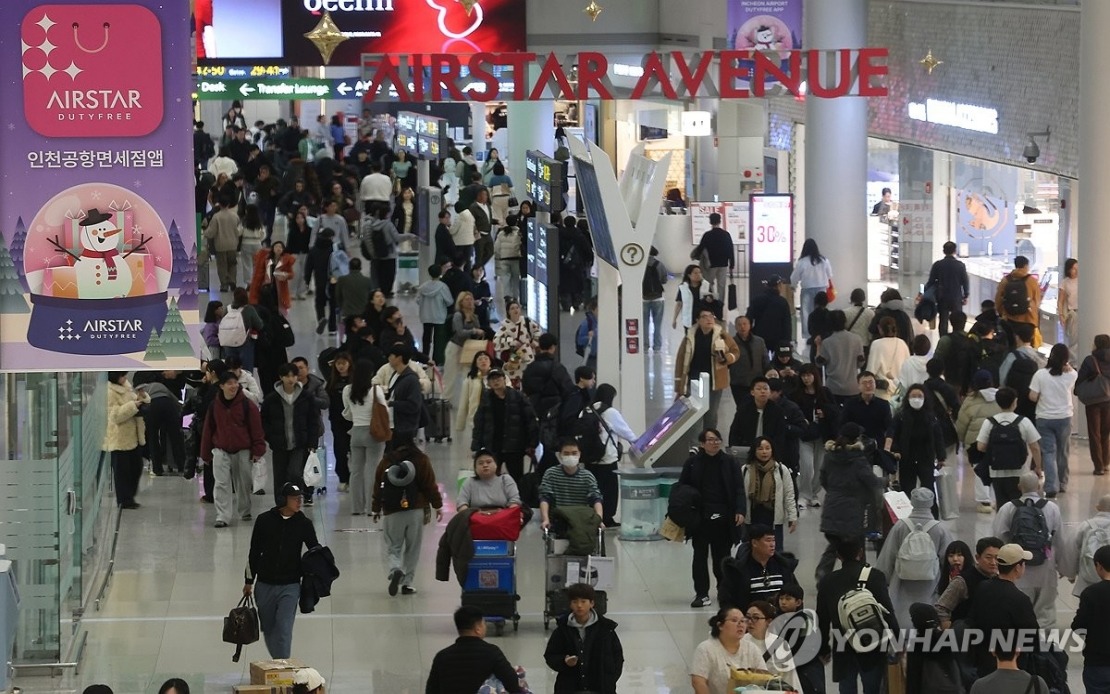
South Korea's tourism sector is experiencing a robust resurgence, with the nation welcoming its 10 millionth foreign visitor during the third week of June—a milestone achieved approximately a month ahead of the previous year's timeline. The Ministry of Culture, Sports and Tourism confirmed that this represents the first occasion the figure has been reached before the calendar flips into the second half of any year, signalling the fastest pace of international arrivals the country has recorded to date.
The timing carries significant implications for South Korea's tourism industry. By reaching the 10 million threshold in mid-June rather than mid-July, as occurred in 2023, the country is positioned to shatter its existing annual visitor record before the busy summer travel season even approaches its peak. This acceleration suggests sustained momentum extending well beyond seasonal fluctuations, indicating that the recovery from pandemic-related disruptions has matured into genuine structural demand for Korean tourism experiences.
The rebound gained particular traction during May, when South Korea recorded 1.95 million international arrivals—a performance representing a 19.4 per cent increase compared to the same month the previous year. This month-on-month acceleration demonstrates that the recovery is not merely catching up to pre-pandemic baselines but genuinely expanding the tourist base. The consistency of growth across consecutive months indicates that temporary promotional campaigns or one-time events are not driving the surge, but rather a fundamental shift in how Southeast Asian and global travellers perceive South Korea as a destination.
Chinese nationals dominated the visitor composition in May, accounting for 560,000 arrivals and establishing themselves as the primary source of international tourism to the peninsula. Japanese visitors followed with 360,000 entries, while American tourists contributed 210,000 arrivals. For Malaysian readers, these figures underscore China's outsized influence in regional tourism dynamics—a reality that shapes both opportunities and competitive pressures for other ASEAN tourism destinations. The dominance of these three source markets reflects South Korea's successful positioning in East Asian leisure travel and its growing appeal to Western tourists seeking cultural experiences distinct from traditional beach and heritage destinations prevalent throughout Southeast Asia.
Particularly noteworthy is the geographic diversification occurring within South Korea itself. Officials highlighted that regional airports, historically overshadowed by Seoul's Incheon International Airport, have experienced steady traffic growth, rising from 230,000 monthly arrivals in January to 360,000 by May. This distribution pattern addresses a significant challenge facing Seoul, which traditionally concentrated tourism infrastructure and visitor spending in the capital metropolitan area. The expansion of regional airport arrivals suggests tourists are exploring beyond iconic Seoul landmarks, potentially discovering secondary cities and provinces that offer distinct cultural and commercial attractions while reducing infrastructure strain on the capital.
The economic impact of this visitor surge manifests clearly in consumer spending patterns. Foreign visitors' credit and debit card expenditures in May, encompassing both physical retail transactions and online purchases, totalled 2.12 trillion won, equivalent to approximately US$1.38 billion. Critically, this represented the first occasion that monthly spending surpassed the 2 trillion won threshold since South Korea commenced systematic tracking of such data in 2018. For Malaysian stakeholders in hospitality, retail, and entertainment sectors, this metric illustrates the substantial spending capacity of international tourists—a reminder that visitor volume gains translate directly into meaningful economic activity when properly channelled.
The achievement of these figures gains additional significance given external economic headwinds. Officials explicitly acknowledged that higher fuel surcharges connected to Middle East tensions could reasonably have dampened international travel demand by increasing airfares. Despite this pricing pressure, arrivals through May showed a robust 21 per cent year-on-year increase, indicating that promotional initiatives, currency competitiveness, and the inherent appeal of Korean cultural products have successfully overcome cost barriers that might otherwise have suppressed discretionary travel spending.
Kang Jung-won, heading the Ministry of Culture, Sports and Tourism's tourism policy division, outlined an expansionist approach to sustaining momentum. Officials signalled intentions to deepen partnerships with private-sector entities, particularly K-pop artists and export-oriented companies, as instruments for reinforcing South Korea's international brand positioning. This strategy reflects recognition that tourism promotion increasingly operates as an integrated component of broader nation-branding efforts. The instrumentalisation of cultural exports—particularly the global phenomenon surrounding Korean popular music—demonstrates how entertainment, commerce, and tourism policy intersect in contemporary destination marketing. For ASEAN nations competing for international visitor attention, the South Korean model suggests that cultural soft power, when authentically rooted in genuine creative industries, can generate measurable economic returns far exceeding traditional tourism promotion budgets.
The trajectory toward a new annual record carries implications extending beyond South Korea's immediate economic metrics. As tourism volumes intensify, questions of sustainability, infrastructure capacity, and cultural preservation become increasingly salient. The dispersal of visitors through regional airports represents a pragmatic response to managing growth, though maintaining service quality across multiple entry points presents operational complexity. Furthermore, the reliance on source markets dominated by geographically concentrated regions—China, Japan, and North America—creates potential vulnerability should economic downturns or geopolitical tensions disrupt these markets.
For Malaysian and Southeast Asian readers evaluating their own tourism strategies, South Korea's achievement offers both inspiration and cautionary lessons. The nation has successfully created differentiated appeal through cultural exports, technology integration, and strategic brand positioning rather than competing primarily on price or geographic proximity. The early achievement of 10 million visitors reflects sustained investment in infrastructure, customer experience consistency, and international marketing. Yet the concentration of arrivals from specific source markets underscores the importance of portfolio diversification—a lesson particularly relevant for ASEAN destinations developing tourism strategies in an era of shifting geopolitical alignments and economic volatility.

