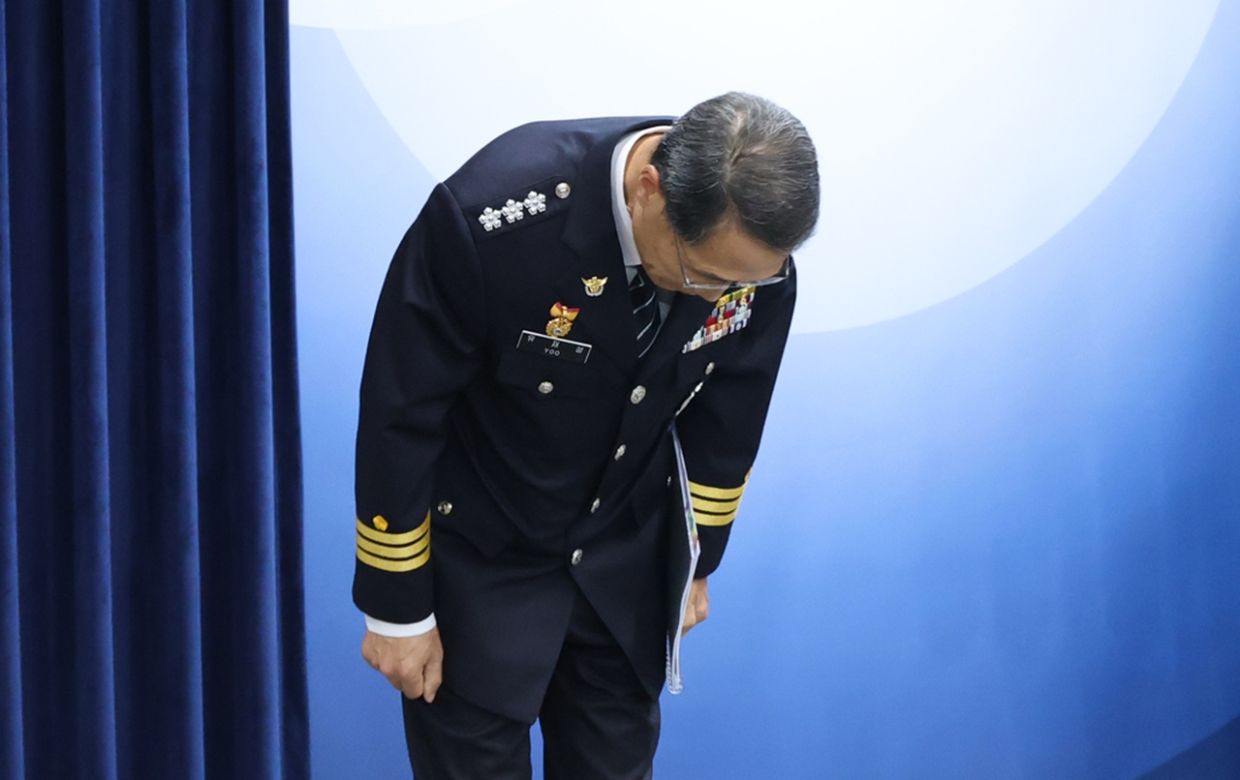
The South Korean police leadership faces mounting pressure to restore public confidence after a damaging scandal revealed serious lapses in investigative integrity. Acting National Police Agency Commissioner General Yoo Jae-sung announced on July 20 an ambitious reform programme designed to address systemic failings exposed by allegations of misconduct in the investigation of suspect Jang Yoon-gi, who is accused of killing a teenage girl in Gwangju in May. The case has become emblematic of deeper institutional problems within the force, with particular outrage focusing on claims that investigators leaked sensitive information to Jang's father, himself a police officer, and allowed critical evidence to slip through their hands.
Yoo's commitment to comprehensive institutional change reflects the gravity with which South Korean authorities are treating the scandal, which has severely damaged public trust in law enforcement. Speaking at a press briefing at the Government Complex Seoul, the acting commissioner acknowledged that the case represented a pivotal moment for the entire police apparatus and promised to use it as a catalyst for fundamental restructuring of how investigations are conducted. His willingness to characterise the situation with such urgency suggests the scandal extends beyond a single botched case to reveal broader vulnerabilities in command, accountability, and professional standards throughout the agency.
Central to the reform initiative is the establishment of an investigative reform task force, scheduled to commence operations by the end of July. This body will comprise seven to ten members, with outside experts comprising more than half the panel—a structural feature designed to bring independent perspectives to police operations. The task force has been tasked with addressing personnel systems to eliminate improper relationships between officers and their local communities, a recurring problem in Korean policing that can compromise investigative impartiality. Additionally, it will examine procedures for handling cases involving socially vulnerable populations, a particularly sensitive area given the victim in this case was a teenager.
A new internal affairs investigation unit operating under the National Office of Investigation will shortly begin its operations, marking a significant institutional innovation. This unit possesses authority to investigate serious duty-related crimes allegedly committed by police personnel regardless of rank, an important provision that signals intention to eliminate the kind of protective hierarchies that may have enabled the collusion in the Jang case. The structure ensures that no officer, however senior, can evade scrutiny for serious misconduct, fundamentally altering the internal accountability landscape that previously allowed breaches to persist unchecked.
The broader reform package includes creation of a civilian-led oversight mechanism under the Korean National Police Commission, comprising approximately 100 civilian investigators tasked with examining alleged human rights violations and misconduct within police investigations. This represents a substantial expansion of civilian input into police accountability, reflecting growing recognition that internal mechanisms alone have proven insufficient. Yoo acknowledged that establishing this body will require amendments to the Police Act, and a related amendment has already been submitted to the National Assembly. The police will present their institutional perspectives during the legislative deliberation, recognising that implementation will require political consensus and legal authority.
The civilian oversight body will only achieve its intended impact if structural provisions ensure that its investigative findings translate into meaningful consequences. Yoo specifically emphasised that the oversight mechanism must be designed so that its determinations can trigger personnel recommendations and disciplinary actions, ensuring it functions as genuine accountability rather than symbolic oversight. This emphasis suggests awareness that previous administrative arrangements may have created investigation units lacking sufficient leverage to effect actual change. For Malaysian and Southeast Asian readers accustomed to debates around police accountability and civilian oversight, the Korean case study offers both cautionary and constructive lessons about designing enforcement mechanisms that can counterbalance institutional resistance.
Yoo also signalled receptiveness to the Interior Ministry's intention to expand the police rotation system, though he emphasised the need to gather perspectives from rank-and-file officers before implementation. Currently, superintendent-level officers are subject to nationwide rotations, with some senior inspectors also rotated, but expanding the system across all ranks presents practical challenges. The provision of official residences for transferred officers at superintendent level and above would become prohibitively expensive if extended throughout the force, and questions of fairness would inevitably emerge. Yoo pledged to identify a balanced approach that restores public confidence while securing officer support, acknowledging that sustainable reform requires institutional buy-in rather than top-down imposition.
The police's approach to handling an internal inspection of Jang's father will remain in abeyance pending the special investigation team's final findings, according to Yoo. This measured stance indicates recognition that precipitous action could complicate the criminal investigation while potentially compromising any subsequent disciplinary proceedings. The decision reflects tension between desire for rapid accountability and legal prudence, a balance that police leadership must navigate carefully to maintain both institutional credibility and investigative integrity.
For regional observers, the Korean case illuminates vulnerabilities in police systems where personal connections and hierarchical deference can undermine investigative independence and procedural integrity. South Korea's response—combining internal structural reform, civilian oversight expansion, and transparency around institutional failings—offers a template that other Asian democracies grappling with police accountability might study. The scandal demonstrates that protecting vulnerable populations requires not merely policy proclamations but institutional architecture designed to prevent the selective application of investigative rigour based on officers' family networks or professional relationships. Whether these reforms will effectively transform police culture and practices, or remain largely administrative adjustments without genuine behavioural change, will become apparent only through sustained implementation and transparent performance assessment over the coming months and years.

