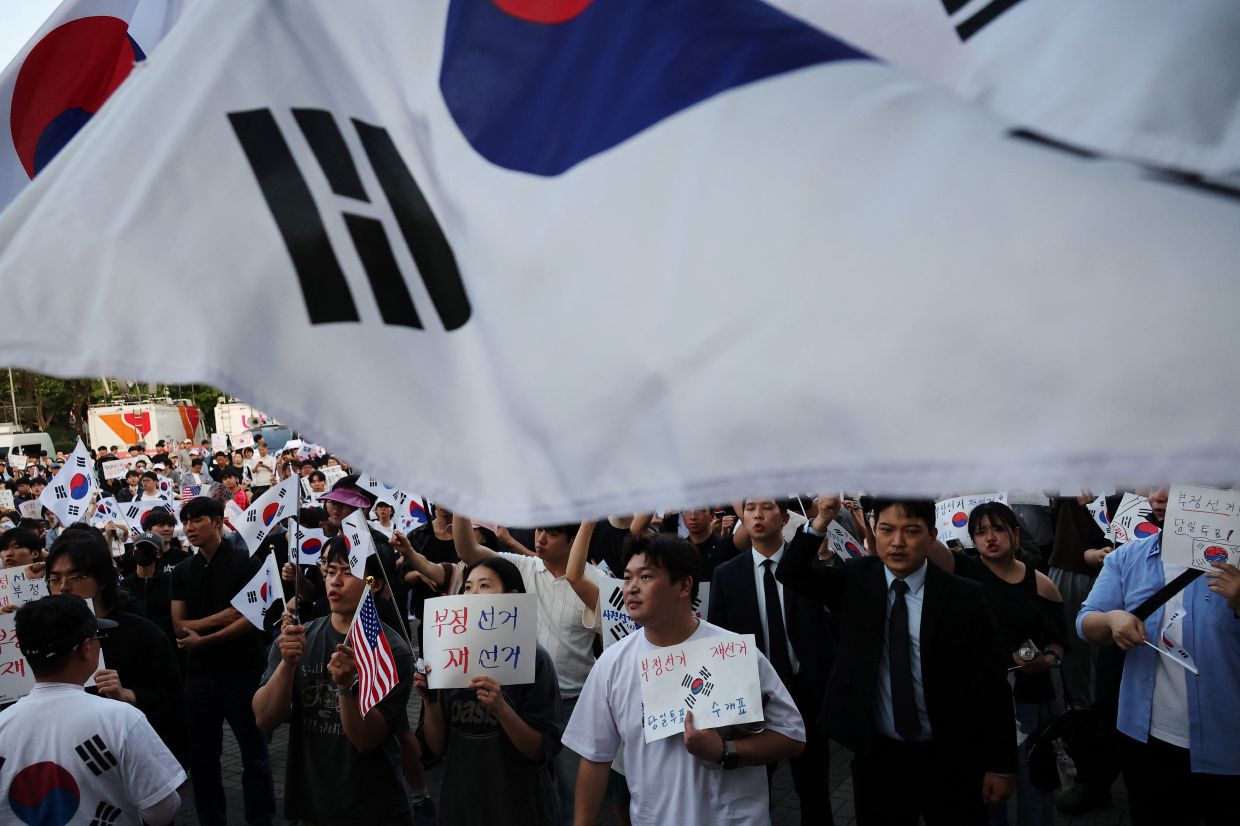
South Korean President Lee Jae Myung has appealed for measured conduct among demonstrators protesting ballot paper shortages from the June 3 local elections, while drawing a sharp distinction between legitimate criticism of administrative failures and unfounded conspiracy theories about electoral fraud. In a statement posted to social media on June 15, Lee acknowledged public anger over voting irregularities but cautioned that protest activities must not encroach upon the rights and freedoms of other citizens, particularly those whose access to essential facilities and services has been disrupted.
The catalyst for Lee's intervention was sustained disruption around the Olympic Park handball arena in southern Seoul, which served as the vote-counting centre for the contentious elections. Sports organisations maintaining offices within the Olympic Park complex have experienced significant operational hindrance as demonstrators maintained a presence blocking entrance points, preventing staff from attending to administrative duties critical for South Korean athletes preparing for international sporting events. The president instructed law enforcement to investigate comprehensively both those directly responsible for forcibly obstructing access and facilities, and individuals who may have coordinated or encouraged such actions.
The June 3 local elections descended into chaos when numerous polling stations exhausted their ballot paper supplies, forcing officials to temporarily suspend voting or impose delays that effectively disenfranchised some citizens. This unprecedented administrative breakdown struck at the heart of democratic participation and triggered justified public outrage about the integrity of the electoral process. Lee explicitly acknowledged that citizens had legitimate grounds for concern, recognising that the National Election Commission's mismanagement represented a fundamental violation of voting rights, a pillar upon which democratic systems rest.
Yet Lee drew a decisive line separating reasonable accountability for bureaucratic incompetence from the broader narratives circulating among protest movements suggesting systemic electoral manipulation. During remarks delivered via video link while attending engagements at the Vatican, he cautioned that certain actors were weaponising public frustration to propagate what he termed "absurd conspiracy theories" about election rigging. This framing suggests Lee's government views some protest movements as extending beyond legitimate demands for administrative reform into territory that threatens institutional confidence.
The president's statement reflects broader tensions within South Korean society regarding how to respond to genuine governance failures without enabling what officials perceive as destabilising claims of democratic compromise. Lee outlined allegations that some individuals promoting election fraud theories had engaged in intimidation of police officers and citizens, conducted unauthorised inspections and searches, and obstructed official functions. Such behaviour, he contended, crosses fundamental legal and institutional lines that must be respected regardless of underlying grievances.
Lee's approach emphasises the necessity for what he termed "healthy criticism and constructive alternatives," implying that productive democratic discourse requires channelling dissent through proper institutional mechanisms rather than sustained street demonstrations. He called upon the National Election Commission to cooperate fully with a parliamentary investigation into vote-counting procedures and ballot management protocols, with proceedings potentially commencing within days. Simultaneously, he urged prosecutors and police to accelerate investigations into responsibility for the election day failures without exempting any officials, however senior, from accountability.
For Malaysian observers, Lee's statements illuminate the challenges democratic systems face when administrative failures intersect with political polarisation. South Korea, like other East and Southeast Asian democracies including Malaysia, has witnessed how electoral irregularities—whether genuine or perceived—can rapidly erode public confidence in institutional integrity. The distinction Lee attempts to maintain between criticising the National Election Commission's performance and entertaining claims of intentional fraud mirrors debates in the Malaysian context around election management and the credibility of electoral commissions.
The president's emphasis on legal and institutional "lines" that cannot be breached suggests an administration determined to maintain state authority even while conceding failures. This balancing act—acknowledging genuine problems while delegitimising broader challenges to electoral systems—represents a common strategy among governments confronting simultaneous crises of competence and confidence. Whether this approach successfully rebuilds faith in South Korean electoral institutions or merely suppresses dissent without addressing underlying concerns remains an open question with obvious relevance for Southeast Asian democracies grappling with similar tensions.
The temporary suspension of voting on June 3 exposed significant gaps in the National Election Commission's contingency planning and resource allocation. Election officials failed to anticipate demand or provide adequate ballot supplies despite months of preparation, suggesting systemic weaknesses that extend beyond individual negligence. Lee's call for preventative measures aims to ensure such failures do not recur, yet the depth and scope of reforms required remain unclear, particularly given the relatively quick pivot from investigating administrative failure to dismissing claims of deliberate manipulation.
International electoral observers and democracy advocates will likely scrutinise whether the investigation processes Lee described—parliamentary inquiry, prosecutorial review, and police examination—operate with genuine independence or become vehicles for deflecting blame away from senior officials. The president's insistence on transparency and thoroughness carries credibility only if investigations follow evidence rather than predetermined conclusions about appropriate institutional outcomes. For Southeast Asian democracies watching developments in Seoul, the case underscores how electoral credibility depends equally on conducting genuine fact-finding and on protecting democratic space for legitimate criticism, even when that criticism challenges official explanations.