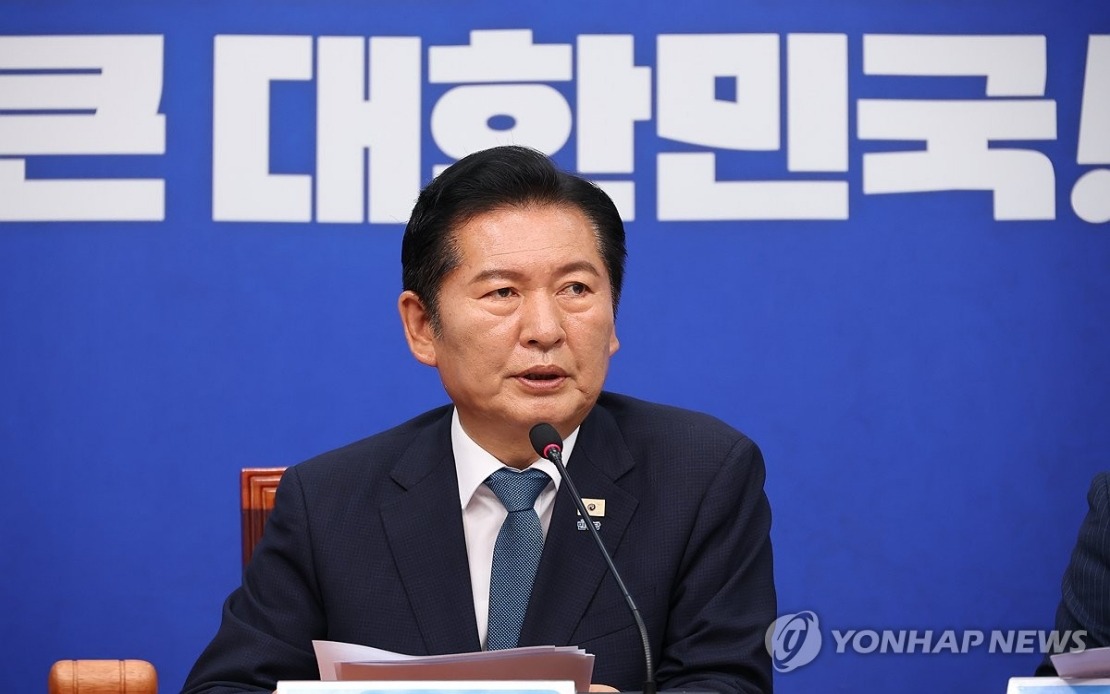
South Korean Democratic Party chairman Jung Chung-rae announced his resignation on Wednesday at a meeting of the party's supreme council, a move interpreted as a calculated step to position himself for re-election at the party's national convention slated for August 17. The resignation, delivered at the National Assembly, represents a strategic manoeuvre in what is shaping up to be one of South Korea's most competitive intra-party leadership contests in recent years.
In his resignation statement, Jung reflected on the personal toll of his tenure, describing sleepless nights spent evaluating his political trajectory and performance as party leader. He sought to reframe his departure not as a retreat but as a principled exit that would allow him to seek fresh legitimacy from the party membership. His carefully chosen words underscored his unwavering commitment to President Lee Jae Myung's administration, suggesting that continuity of vision rather than ideological rupture would define his campaign pitch.
Jung's period in office has been marked by considerable internal friction within the Democratic Party. He faced mounting criticism from pro-Lee factions who contended that his leadership style prioritised his own power base and supporters rather than working collaboratively with the president on critical policy matters. This tension reveals a deeper structural challenge in South Korean ruling parties, where competing power centres within government and party structures frequently clash over strategic direction and resource allocation.
The former chairman's public statements during his resignation reflected an apparent desire to deflect blame for party divisions. He highlighted the obstacles he encountered from both internal party rivals and external political opponents, characterising his stewardship as steadfast despite perpetual turbulence. Such framing suggests Jung may be laying groundwork to appeal to party members who value stability and loyalty to the presidential office, core constituencies he hopes will back his candidacy in the August contest.
The convention is now positioned as a genuine three-way race among heavyweight contenders. Prime Minister Kim Min-seok, who functions as a trusted lieutenant to President Lee, represents establishment continuity and presidential backing. His involvement carries implications for how the party's machinery and resources might be deployed during the campaign. Song Young-gil, a former Democratic Party leader, brings his own organisational network and historical standing within the party structure, making him a formidable alternative choice for delegates seeking an experienced operator unbeholden to either Jung or Kim.
Song's reported engagement with the presidential office and his discussions with other candidates about potential unity arrangements demonstrate the complex web of negotiations occurring beneath the surface of formal politics. According to DP lawmaker Park Jie-won's radio interview with CBS, Song has signalled to President Lee his intention to enter the race and has even explored possibilities of consolidating his candidacy with Kim's. Such manoeuvres suggest that some candidates may be open to post-convention power-sharing arrangements rather than pursuing winner-take-all outcomes.
Until the convention convenes, DP floor leader Han Byung-do will assume the responsibilities of acting party leader, a caretaker role designed to maintain institutional stability during the interregnum. Han's appointment signals an effort to keep party operations functioning without giving disproportionate advantage to any particular candidate during the campaign period. The two-month gap between now and August 17 will likely witness intense grassroots campaigning among the party's provincial organisations and affiliated bodies.
For Malaysian and Southeast Asian observers, South Korea's Democratic Party leadership transition offers insights into how ruling coalitions manage internal succession contests in systems where presidential and party structures nominally operate separately yet remain deeply intertwined. The Democratic Party's predicament mirrors challenges facing other regional parties navigating the tension between strong personalised leadership and institutional governance frameworks. Jung's resignation and the subsequent three-way contest demonstrate how even governing parties with substantial resources and electoral success must contend with legitimacy questions when internal factions compete for direction-setting authority.
The outcome of the August convention will carry implications for how the Lee administration pursues its policy agenda through the final phase of the presidential term. A victory for Kim would reinforce presidential control over party machinery, while a Song victory might introduce a degree of independent party leadership that could complicate presidential initiatives. Jung's reinstatement would suggest that party members value continuity despite recent friction, potentially signalling acceptance of his leadership approach among key constituencies. Each scenario carries different consequences for the alignment between government institutions and party structures, a balance critical to South Korea's political stability and legislative effectiveness.

