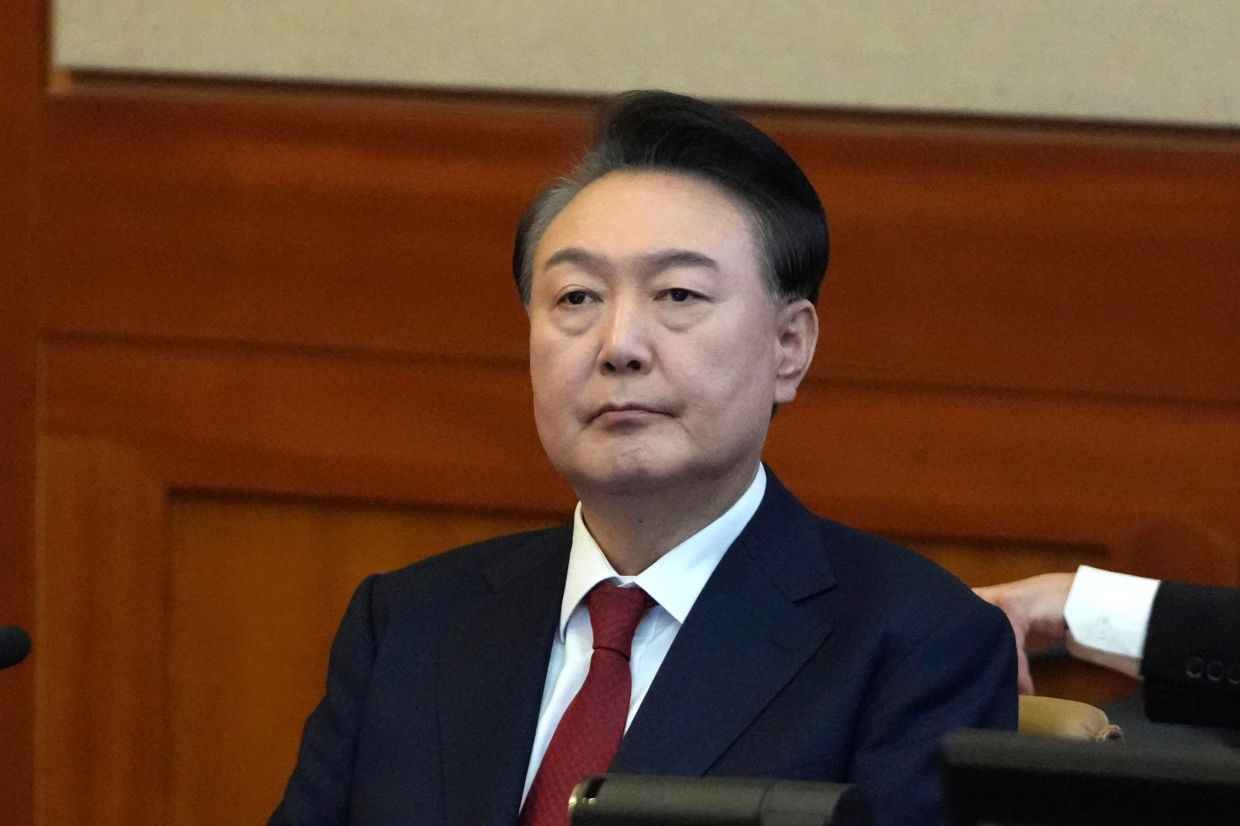
South Korea's Supreme Court has delivered its final judgment on former President Yoon Suk Yeol's conviction stemming from his disastrous attempt to impose martial law in December 2024. The nation's highest judicial authority confirmed on Thursday that a seven-year prison sentence should stand, rejecting both prosecution requests for a harsher penalty and the defence's appeals for leniency. This conclusive ruling marks a critical juncture in the legal reckoning over an event that fundamentally destabilised the country's democratic institutions and shocked the international community.
The case that reached the Supreme Court centred on a constellation of serious allegations connected to how Yoon orchestrated and executed his martial law declaration. Prosecutors had initially sought a decade-long sentence, arguing that Yoon's conduct demonstrated a brazen disregard for constitutional governance. The charges extended beyond the announcement itself to encompass the calculated steps he took to set the stage for such an extraordinary action. Among these were accusations that he deliberately circumvented proper cabinet procedures by assembling only a handpicked group of ministers for critical discussions immediately before issuing the martial law edict. This selective convening effectively prevented broader deliberation on such a consequential decision.
Additional criminal allegations painted a portrait of systematic deception and abuse of executive authority. Yoon stood accused of fabricating an official martial law decree that bore forged signatures from Prime Minister Han Duck Soo, suggesting coordination at the highest levels of government. Beyond document forgery, prosecutors charged that Yoon ordered officials to craft a misleading press release targeting foreign media outlets, demonstrating an apparent attempt to shape international perceptions of his actions. The indictment also included charges that Yoon directed a senior army commander to purge records from secure military communication devices, suggesting a deliberate effort to obstruct investigations and destroy evidence of the planning process.
The trajectory of legal proceedings illustrates how the conviction strengthened as courts examined the evidence more thoroughly. A lower court initially handed down a five-year sentence in January after convicting Yoon on the majority of charges. When the case proceeded to an appellate tribunal in April, judges not only upheld that conviction but added a guilty verdict regarding the misleading international press release and elevated the sentence to seven years. This escalation reflected the appellate panel's assessment that the lower court's initial judgment had not fully captured the gravity of Yoon's misconduct. The Supreme Court's decision to maintain this seven-year term effectively endorsed the appellate court's analysis and demonstrated consistency across the judicial hierarchy.
Yoon's legal representatives responded to the Supreme Court's definitive ruling with expressions of profound dissatisfaction, contending that the justices had reached their conclusion "without sufficient deliberation." The defence team indicated plans to pursue a constitutional challenge to the judgment, suggesting they believe the ruling violated fundamental legal principles embedded in South Korea's constitutional framework. Additionally, they announced intentions to lodge formal complaints, though such post-judgment motions typically carry little practical weight given the Supreme Court's final authority. This defiant stance reflects the ex-president's consistent characterisation of his prosecution as politically motivated rather than based on legitimate legal grounds.
Underlying these criminal proceedings is a separate but equally serious case in which another court imposed a 30-year sentence on Yoon for orchestrating drone incursions into North Korean airspace. Prosecutors argued that Yoon deliberately manufactured this military crisis to justify his subsequent martial law declaration, suggesting a calculated effort to create an external threat narrative. Yoon has persistently maintained that his entire martial law initiative served exclusively the national interest, a defence that carries little weight with the courts that have examined the evidence. The cumulative effect of these multiple convictions and sentences places Yoon among the most heavily penalised figures in modern South Korean politics.
The context surrounding Yoon's December 2024 late-night address remains crucial to understanding the severity of his legal situation. His televised declaration suspending civilian rule shocked a nation that had spent decades consolidating democratic reforms. The dramatic announcement plunged South Korea into uncharted constitutional territory, though the crisis resolved with surprising speed when lawmakers convened in emergency session and voted down the martial law declaration within roughly six hours. Despite this relatively brief duration, Yoon's gambit triggered widespread public demonstrations, triggered a significant stock market downturn and caught crucial international allies, particularly the United States, completely unprepared.
For regional observers and Malaysian readers following Korean affairs, the case illustrates the fragility of democratic institutions even in technologically advanced nations with decades of democratic experience. The incident demonstrated how quickly foundational constitutional protections can come under assault when a sitting chief executive commands security apparatus loyalty and controls emergency executive powers. The rapid parliamentary response that negated Yoon's martial law declaration also demonstrated the value of legislative bodies acting as counterweights to executive overreach, a principle that resonates throughout Southeast Asia as nations grapple with governance challenges.
Yoon's political career effectively concluded in April 2025 when he faced impeachment and removal over the martial law crisis. Subsequent national elections transferred presidential authority to Lee Jae Myung of the centre-left Democratic Party, reflecting public rejection of the conservative agenda that Yoon represented. The electoral outcome underscored how dramatically the martial law miscalculation damaged conservative political fortunes in South Korea. Yoon's insistence that his actions targeted so-called "anti-state forces" and responded to alleged North Korean threats appears to have persuaded few voters or judges, despite his repeated invocation of national security rationales.
As Yoon currently remains in custody while pursuing separate appeals on the life sentence imposed for the insurrection charges connected to his martial law declaration, the Supreme Court's final confirmation of the seven-year term removes any possibility of judicial mercy on this particular aspect of his conviction. The decisiveness of the Supreme Court ruling, combined with the finality it carries under South Korean law, suggests that the courts have comprehensively rejected Yoon's characterisation of his conduct as serving legitimate state purposes. The comprehensive nature of his legal troubles, spanning multiple concurrent sentences and ongoing constitutional challenges, positions him as a cautionary example of how far a democratically elected leader can fall when institutional safeguards are tested.

