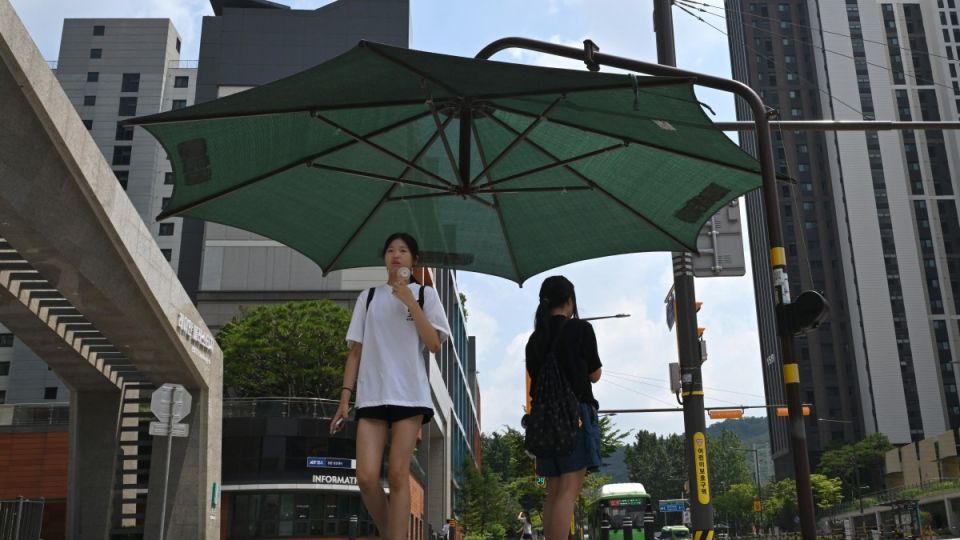
South Korea is confronting a mounting occupational health emergency as record temperatures transform the country's workplaces into danger zones, prompting major corporations to implement increasingly sophisticated heat-mitigation strategies. Yet beneath the corporate response lies a troubling disparity: while industrial giants invest in air-conditioned facilities and electronic monitoring systems, millions of workers at smaller enterprises and outdoor sites remain dangerously exposed to conditions that have already claimed lives this year.
The scale of the crisis became starkly apparent when Yangsan in South Gyeongsang Province recorded a national temperature high of 42.5 degrees Celsius, while Seoul endured a prolonged heatwave warning at the highest alert level. These are not isolated incidents but markers of a broader climatic shift that threatens the nation's workforce. Official data provided by Rep. Kim Wi-sang of the ruling People Power Party reveals that since 2022, Korea's Workers' Compensation and Welfare Service has recognised 195 heat-related occupational accidents, including 20 deaths. More ominously, thirteen cases—with four proving fatal—had already been documented by June of this year, before the traditionally deadlier months of July and August even arrived, signalling an accelerating trend in workplace heat casualties.
A watershed moment in corporate accountability came last year when a district court convicted a construction company under the Serious Accidents Punishment Act for the heatstroke death of a subcontractor's employee, marking the first such prosecution involving heat-related fatalities. This legal precedent has galvanised large employers, particularly those in construction and heavy industry where outdoor and furnace-adjacent work is unavoidable, to adopt comprehensive protective measures. The construction sector, which disproportionately accounts for industrial deaths, has emerged as a sector forcing innovation in heat protection strategies.
Large construction firms have pioneered sophisticated responses. Lotte E&C operates an Internet of Things-based monitoring system across approximately eighty construction sites that measures perceived temperature readings every five minutes and assigns heat risk into five distinct categories, enabling real-time response. Hyundai Engineering & Construction has implemented incentive programmes rewarding workers for utilising designated rest areas, while Daewoo E&C grants workers the autonomy to cease work without penalty if they experience physical distress. Meanwhile, companies like Hyundai E&C have distributed emergency reporting guides in twenty-two languages and supplied cooling vests equipped with built-in fans to migrant workers, recognising their particular vulnerability. Kumho E&C has partnered with Lotte Chilsung Beverage to provision bottled water, sports drinks, cooling towels and portable shelters at job sites through September.
Heavy industrial operations that cannot simply suspend activity during extreme heat have fundamentally restructured their work rhythms. Posco, where blast furnaces run perpetually, mandates fifteen-minute rest periods following each forty-five-minute work stint once perceived temperatures exceed thirty-five degrees Celsius, reducing the work interval to ten-minute breaks after fifty minutes of labour when temperatures climb above thirty-one degrees. Hyundai Steel similarly requires minimum ten-minute breaks each hour when perceived temperatures surpass thirty-one degrees, extending to fifteen-minute intervals above thirty-five degrees. Shipbuilding companies have pursued parallel strategies: Hanwha Ocean has doubled its standard ten-minute breaks to twenty minutes through August's conclusion regardless of temperature readings, whilst extending lunch periods by thirty minutes at twenty-eight degrees and adding a full extra hour when thermometers rise above thirty-one point five degrees. HD Hyundai Heavy Industries has lengthened lunch breaks from one hour to ninety minutes through August's end and operates more than two hundred and seventy cooling facilities across its shipyard infrastructure, supplementing this with cooling vests, ice water and electrolyte provisions.
Yet this corporate response, while impressive in scale and sophistication, starkly illuminates the structural inequalities embedded within Korea's labour market. Analysis of the one hundred ninety-five recognised heat-related accidents since 2022 reveals a disturbing concentration at the bottom of the economic ladder: more than half occurred at workplaces employing fewer than fifty people, whilst forty-two occurred at businesses operating with fewer than five workers. Labour experts and parliamentarians acknowledge that workers at smaller enterprises encounter significantly reduced access to occupational safety personnel, cooling infrastructure and adequate rest facilities, leaving them extraordinarily vulnerable during extreme weather events. The disparity is not merely numerical but represents a fundamental gap in worker protections that reflects broader economic stratification.
Migrant workers represent perhaps the most precarious cohort, performing physically demanding labour in agricultural and construction settings with minimal regulatory oversight or corporate protection. Recent deaths underscore this vulnerability: last month, a Thai seasonal worker died whilst labouring in fields in Haenam, South Jeolla Province, whilst a Vietnamese national perished during outdoor farm work in Goesan, North Chungcheong Province. These fatalities, occurring despite Korea's status as a developed economy with advanced industrial sectors, reveal how seasonal labour migration systems perpetuate dangerous working conditions at the margins of the formal economy.
Rep. Kim has articulated a critical policy challenge, urging the government to transcend what he characterises as an excessive concentration on protecting large workplaces and instead strengthen inspections and practical protections specifically targeting seasonal migrant workers and employees at small outdoor operations. This recommendation acknowledges that market forces alone will not address the protection gap, as smaller employers lack both the capital resources to install expensive cooling systems and the economies of scale that allow major corporations to restructure schedules without production losses. The path forward requires regulatory intervention that raises baseline standards for all employers whilst providing targeted support for the most vulnerable workforce segments.

