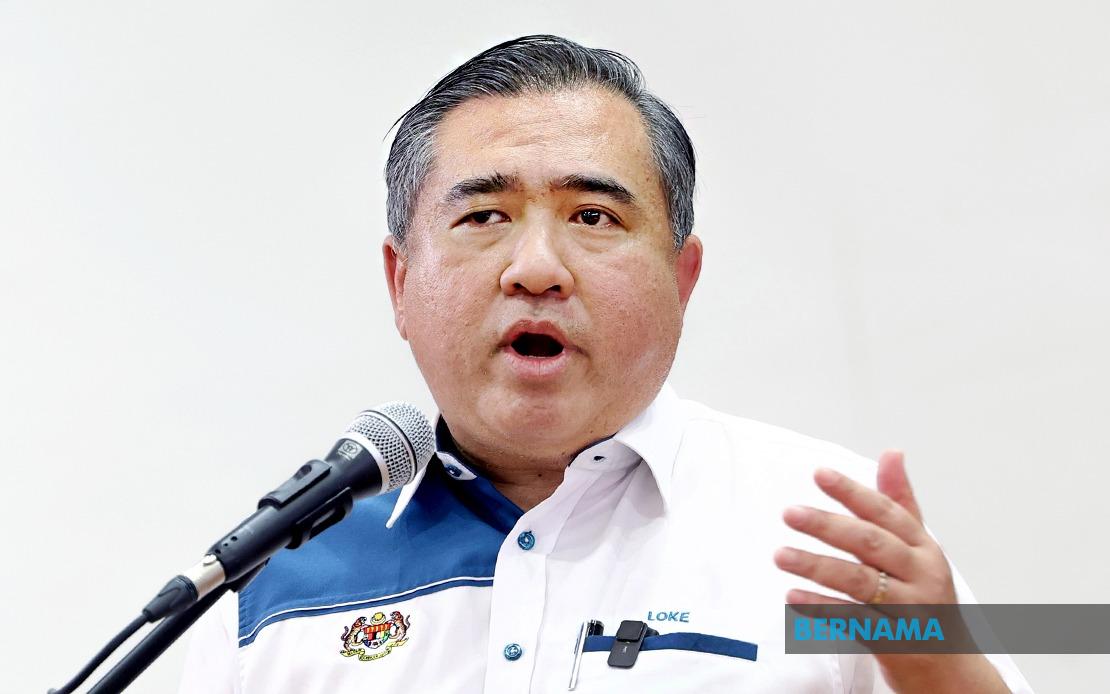
Transport Minister Anthony Loke has clarified that the deployment of diesel locomotives on the Southern Shuttle service represents a pragmatic interim arrangement rather than a permanent fixture. The decision reflects a fundamental choice between maintaining public expectations for immediate rail connectivity or compelling passengers to endure prolonged waiting periods while authorities procure and prepare the planned electric fleet. Speaking through official channels on June 20, Loke articulated the strategic rationale underpinning this operational pivot, emphasising that the Ministry of Transport has prioritised accessible public transit over technological ideals.
The underlying tension centres on the acquisition timeline for new Electric Multiple Unit trains. Manufacturing and delivery of ten new EMU train sets is projected to extend between two to three years, a delay that would have left Johor residents without enhanced rail services in the interim. Rather than accept this extended gap, transport planners opted to repurpose existing diesel rolling stock, effectively bridging the infrastructure transition period. This approach acknowledges a practical reality in Malaysian public transport development: the interval between policy decision and infrastructure availability frequently stretches beyond realistic public patience thresholds.
Financial commitment to the service expansion appears substantial, with the ministry earmarking annual subsidies between RM11 million and RM15 million to broaden ridership and offset operational costs. These allocations signal government determination to establish the Southern Shuttle as a viable public transport option rather than a peripheral service. The subsidy framework suggests authorities recognise that fare-setting alone cannot sustain regional transit systems, particularly in their developmental phases when passenger volumes remain nascent and operational efficiencies have yet to materialise.
The Southern Shuttle network interconnects three significant Johor nodes: Kulai, JB Sentral, and Pasir Gudang, offering residents previously unavailable rapid transit alternatives. Journey times are notably competitive, with the Kulai-JB Sentral segment completing in approximately 40 minutes while the Kempas Baru-Pasir Gudang connection requires 40 to 45 minutes. These timeframes position the service attractively against conventional road transport options, particularly during peak-hour congestion periods that frequently characterise southern Malaysian corridors. The expanded network addresses a historical transportation gap in Johor's southern districts, where freight infrastructure previously dominated rail operations.
A particularly significant development involves the conversion of the Kempas Baru-Pasir Gudang route from exclusive freight utilisation to passenger service. This transition represents infrastructural repurposing rather than new construction, amplifying the economic efficiency of the overall initiative. Opening dormant or underutilised transport corridors to commercial passenger operations reflects increasingly sophisticated asset optimisation strategies within Malaysia's transport sector. Such approaches extract greater value from existing capital investments while incrementally expanding network reach without proportional capital expenditure.
Public criticism has centred on the apparent tariff disparity between Southern Shuttle fares and comparable services operating in the Klang Valley and Seremban regions. Detractors contend that passengers utilising diesel-powered trains should not experience fare structures three times higher than those applicable to more technologically advanced electric services elsewhere. This complaint illuminates broader concerns about regional equity in Malaysian public transport pricing—a persistent tension between cost-reflective tariffs and accessibility imperatives. The critique also implicitly questions whether diesel operation justifies premium pricing or whether fares should diminish in reflection of perceived service degradation relative to electrified alternatives.
Loke's explanation attempts to reframe this criticism by emphasising availability over technological sophistication. From the ministry's perspective, inferior technology operated immediately surpasses superior technology delayed indefinitely. This utilitarian logic prioritises pragmatic service delivery against perfectionist standards that would defer benefits pending ideal conditions. However, this rationale may struggle to persuade passengers experiencing discomfort aboard aging diesel rolling stock, particularly during extended journeys in tropical climates where air-conditioning adequacy becomes paramount to passenger satisfaction.
The Gemas-Johor Bahru electrified double-tracking project emerges as the structural framework conditioning this transition timeline. Completion of this electrification initiative will fundamentally alter operational parameters, enabling transition to Electric Train Service operations across the corridor. The diesel-to-electric switchover thus represents not merely a technological upgrade but rather a critical infrastructure milestone facilitating the entire transport modernisation agenda for Johor's southern districts. Planners envision this electrification as catalytic, unlocking operational efficiencies and capacity expansions previously constrained by diesel-powered limitations.
For Malaysian and Southeast Asian observers, the Southern Shuttle experience encapsulates the contemporary challenge facing developing regional transit systems: reconciling immediate public service demands against extended procurement and construction timelines inherent in transport infrastructure development. The Malaysian approach—deploying functional if technically inferior interim solutions—contrasts with alternative strategies emphasising postponement until optimal configurations materialise. This operational philosophy prioritises human convenience and economic activity continuity over technological purity, reflecting pragmatism increasingly evident throughout Malaysian transport policy.
The diesel interim period also illuminates supply chain realities affecting Southeast Asia's transport sector. Ten EMU train sets represent substantial manufacturing commitments that international suppliers cannot accelerate regardless of funding availability. This constraint reflects global manufacturing capacity limitations and the bespoke engineering requirements of Malaysian-gauge electrified systems. Consequently, transport authorities across the region increasingly recognise that optimising existing assets during procurement intervals constitutes rational infrastructure management rather than technical compromise.
Looking forward, the eventual transition to Electric Train Service operations will represent a genuine service quality improvement rather than mere technological substitution. Electrified trains offer superior acceleration profiles, enhanced passenger comfort through climate control, reduced operational noise, and lower lifetime maintenance requirements compared to diesel alternatives. These advantages extend beyond mere technological fashion to material improvements in transport user experience. The interim diesel phase thus functions as a calculated sacrifice of medium-term comfort for immediate service availability—a trade-off that Johor residents will evaluate through practical experience over the coming years.

