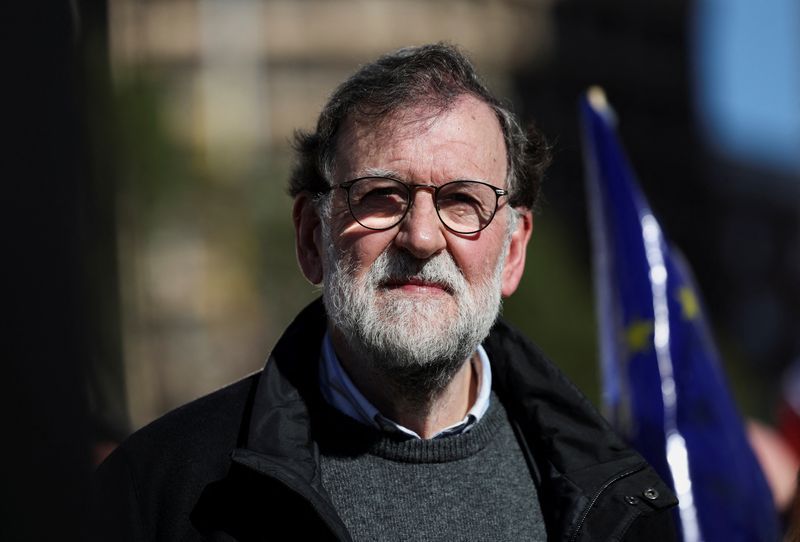
Spain's Foreign Minister Jose Manuel Albares formally apologised on Tuesday for remarks made by conservative former Prime Minister Mariano Rajoy in a column questioning the ethnic composition of France's national soccer team, ahead of the two nations' World Cup semi-final clash. The diplomatic intervention underscored the deep concern sparked by Rajoy's piece, which many observers considered to cross from sporting commentary into territory marked by racial and xenophobic undertones that have no place in modern European discourse.
Rajoy's column, published on Friday in the online publication El Debate, praised France as a formidable sporting opponent before delivering a provocative observation. "France has a squad of the very highest calibre. Mind you, there are no French players in it," he wrote—a statement widely interpreted as a reference to several squad members' African and Afro-Caribbean heritage. The remark immediately drew sharp rebukes from Madrid's political establishment, signalling that such commentary fails to reflect contemporary Spanish values or attitudes toward national identity and citizenship.
Albares spoke directly with his French counterpart to ensure that Spain's official position distanced the country from Rajoy's language. During a radio interview with Cadena SER, the Foreign Minister described the former premier's words as "intolerable" and characterised them as carrying "the poison of racism and xenophobia." He emphasised that the remarks did not represent the views of the vast majority of Spanish citizens, a clarification seemingly necessary given the international attention and diplomatic sensitivity the incident had generated. For Malaysia and other Southeast Asian nations watching European affairs, the episode illustrates how quickly sports commentary can veer into territory that challenges fundamental principles of national inclusion and equal citizenship.
The core issue at stake transcends soccer itself. Albares framed the controversy in terms of basic human dignity and legal principle, telling broadcasters that "it's a very serious matter to go around using skin colour to determine who can be a citizen and who cannot." This formulation highlighted how Rajoy's suggestion that players of certain ethnic backgrounds could not truly be French struck at the heart of post-war European identity frameworks, which reject biological or ancestral definitions of nationality in favour of civic belonging.
Spain's Prime Minister Pedro Sanchez, visiting Paris for France's National Day celebrations on July 14, added his own rebuke through a social media post. He condemned "those who measure nationality by a person's surname, birthplace or skin colour," directly referencing Rajoy's words as "shamefully xenophobic." Sanchez's intervention while physically present in the French capital carried additional symbolic weight, demonstrating Madrid's commitment to regional solidarity and shared democratic values at a moment when such unity mattered diplomatically.
Rajoy himself remained unavailable for immediate comment, leaving the interpretation of his intentions to others. His party spokesperson, Borja Semper, attempted damage control by characterising the column as satire rather than a serious statement of belief. According to this reading, Rajoy had intended sarcasm—a framing that many observers found unconvincing given the straightforward nature of the published text and the genuine international controversy it sparked. Whether intended as sarcasm or not, the remarks had been published, circulated, and now required official response.
France's political establishment responded with unusual unity that cut across traditional left-right divides. Foreign Minister Jean-Noël Barrot condemned Rajoy's comments as "pathetic" during a television interview, declaring with emphatic clarity that "France has no skin colour." He characterised any statement suggesting otherwise as indicative of "idiocy, racism, or both combined"—language suggesting not merely diplomatic irritation but genuine moral revulsion. Even France's far-right National Rally, typically eager to emphasise national identity in exclusionary terms, distanced itself from Rajoy's remarks, with spokesman Julien Odoul calling them "scandalous, shameful, deplorable" and accusing Rajoy directly of racism.
This incident did not occur in isolation but rather formed part of a broader pattern of concerning rhetoric during the World Cup tournament. Days earlier, Paraguayan Senator Celeste Amarilla had launched a racist attack on French captain Kylian Mbappe following Paraguay's tournament elimination, describing him as a "colonised Cameroonian, desperately trying to pass himself off as French." Mbappe had responded with admirable composure, defending not only himself but also demonstrating solidarity with Paraguayan players while condemning Amarilla's comments as beneath the dignity of elected office.
Mbappe's measured response contrasted with the broader condemnatory chorus that Rajoy's column provoked. The convergence of these incidents—separated by days and involving actors from different countries—suggested a concerning undercurrent of ethnic nationalism resurfacing in European sports discourse. For Malaysia and Southeast Asia, where multiethnic and multicultural societies navigate their own questions around national identity, citizenship, and belonging, the European controversies offer both cautionary tales and examples of institutional resilience when such sentiments emerge.
The swift official response from Spain's government, including its Foreign Ministry's direct diplomatic communication with France and the Prime Minister's public condemnation, demonstrated that modern democracies possess mechanisms to isolate and reject such rhetoric when it emerges from public figures. Yet the incidents themselves highlighted how traditional understandings of national identity—rooted in ethnic homogeneity or ancestral belonging—retain rhetorical power even in contemporary Europe. The broader significance lay not merely in the soccer match to follow but in what these moments revealed about ongoing tensions between civic and ethnic conceptions of national membership in the twenty-first century.

