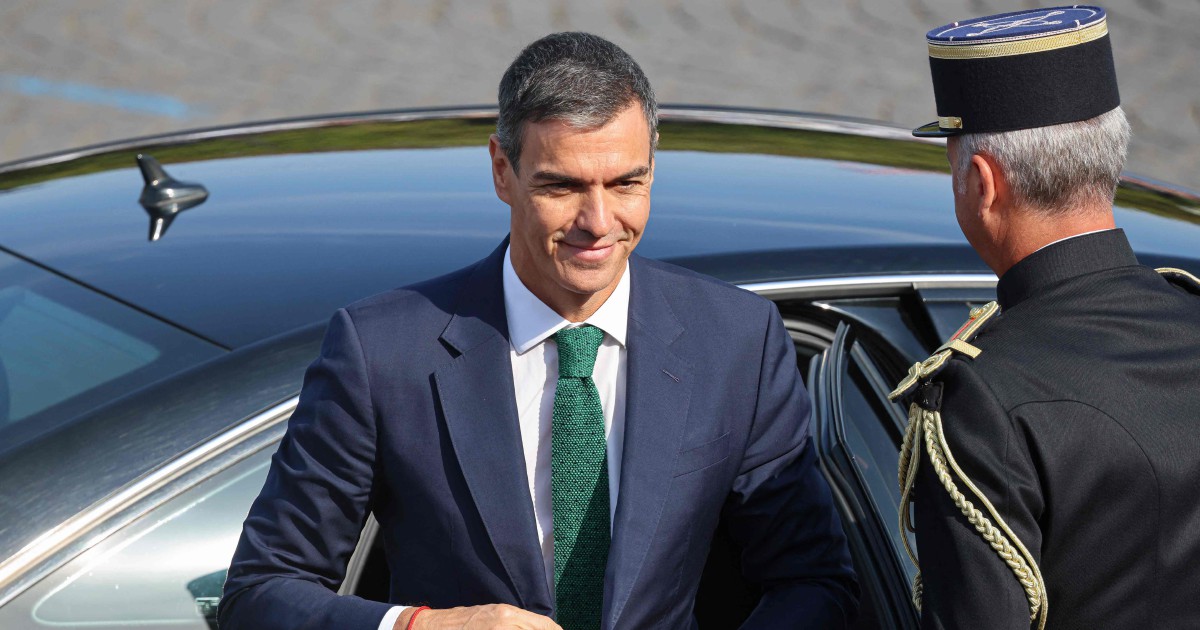
Spanish Prime Minister Pedro Sanchez has thrown his weight behind the national football team, emphasizing the squad's exceptional togetherness as it prepares for Sunday's World Cup final confrontation with Argentina. The statement arrives at a particularly complicated moment for Sanchez, who is navigating multiple corruption allegations that have created significant headwinds for his government and leadership standing.
Sanchez's public endorsement of the team reflects a broader political calculation common among world leaders—harnessing national sporting achievement as a unifying force that transcends domestic divisions. Football possesses a peculiar power in Spanish society, capable of momentarily overshadowing the grinding disputes of parliament and the courts. By associating himself with the team's success, the Prime Minister positions himself within a narrative of national pride and collective accomplishment, temporarily redirecting public attention away from institutional challenges.
The characterization of Spain's squad as "unique" underscores the particular tactical and philosophical approach that has come to define the current iteration of the national team. Under their management, Spain has cultivated a style emphasizing possession-based football, intelligent movement off the ball, and a collective understanding of defensive responsibilities. This systematic approach requires extraordinary levels of coordination and mutual trust among players—qualities that Sanchez specifically highlighted in his remarks.
Spain's journey to this World Cup final represents a significant achievement given the generational transition the team has undergone. The squad that conquered international football from 2008 to 2012, winning two European Championships and a World Cup, has substantially evolved. Younger players have integrated into the structure, bringing fresh energy while senior figures provide stability and experience. This blend has proven more harmonious than many observers anticipated when the old guard began stepping away.
The political backdrop to Sanchez's comments adds another dimension to his decision to publicly celebrate the team. Corruption allegations have strained public confidence in institutional leadership, creating an environment where demonstrations of national unity hold particular resonance. A successful World Cup campaign could provide psychological comfort to Spanish citizens and potentially reshape public perception of their leadership, even if only temporarily. Sports historians and political analysts often note how major tournament victories have historically shifted domestic political sentiment.
For Southeast Asian readers, the Spanish situation offers an instructive parallel to similar dynamics in the region. Several countries have witnessed their leaders leverage national sporting moments to build political capital during periods of institutional uncertainty. The relationship between sports success and political fortune remains deeply intertwined across democracies worldwide, reflecting how human societies seek meaning and coherence through collective experiences.
The Argentina matchup promises to be technically demanding and emotionally charged. Argentina's own pedigree in international football, combined with the narrative surrounding what could be a final World Cup appearance for some of their senior players, creates compelling storytelling dimensions beyond the tactical contest. Both nations bring decades of football tradition and deeply invested populations to the final.
Spain's emphasis on team unity also reflects strategic recognition that World Cup victory requires not just individual brilliance but sophisticated collective execution. The tournament has consistently demonstrated that talent alone proves insufficient—squads must function as coherent units where every player understands their role within a larger system. Sanchez's highlighting of this characteristic suggests Spanish football authorities believe they have constructed precisely such an organization.
The timing of Sanchez's statement, delivered on the eve of the match, serves to reinforce messaging to both the team and Spanish citizens about expectations and identity. Such pre-match affirmations from political leadership have become standard in the modern era, with prime ministers and presidents routinely offering public encouragement to their national teams. Whether such gestures materially affect team performance remains debatable among sports psychologists, but their symbolic importance in national discourse is undeniable.
For the broader football world, Spain's presence in the final validates the organizational model that has guided the country's academy system and player development infrastructure over the past two decades. Despite occasional setbacks and periodic criticism that the passing-based philosophy has become too rigid, Spanish football has maintained its philosophical consistency and institutional commitment. The final provides vindication of that long-term strategic investment.
As the match approaches, Spanish society will likely experience a temporary reprieve from the political controversies that have dominated recent headlines. Whether Sanchez's political fortunes ultimately benefit from a successful outcome or suffer from disappointment remains to be seen, but the stakes have clearly extended beyond the football pitch into the realm of national governance and public sentiment.

