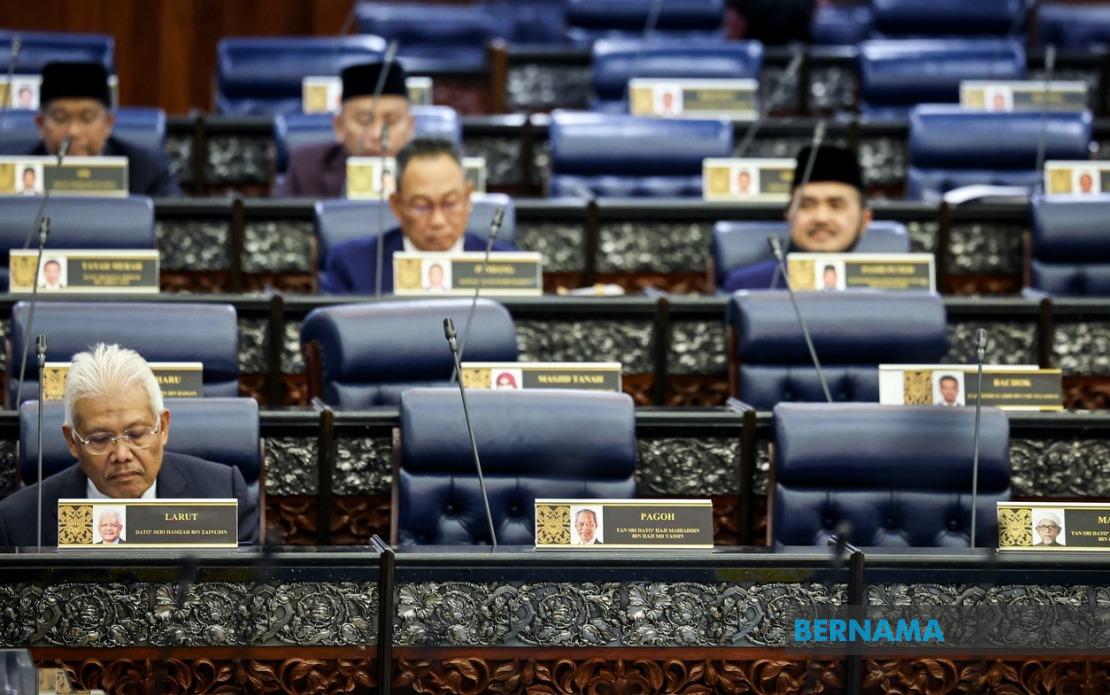
The Dewan Rakyat Speaker has officially documented Larut MP Datuk Seri Hamzah Zainudin's assumption of the opposition leader role, marking a significant moment in Malaysia's parliamentary hierarchy. Tan Sri Dr Johari Abdul confirmed receiving formal notification of this leadership transition, cementing Hamzah's status in a position that carries considerable procedural and political weight within the legislative chamber.
Hamzah's elevation to opposition leader represents a consolidation of Perikatan Nasional's parliamentary influence following internal reorganisations within the opposition bloc. The confirmation comes after PAS president Tan Sri Abdul Hadi Awang publicly announced during the Reset Malaysia Convention that Hamzah had resumed his duties leading the opposition, signalling broader agreement among coalition partners on the leadership arrangement. This development underscores the complex political dynamics shaping Malaysia's opposition landscape, where multiple parties and personalities compete for prominence and parliamentary influence.
The incoming parliamentary session, commencing on June 22 and extending through July 16, brings with it several logistical adjustments to accommodate shifting political relationships and individual preferences. The Second Meeting of the Fifth Session of the 15th Parliament represents a fresh chapter in legislative proceedings, and the Speaker's office has implemented corresponding modifications to the physical layout within the chamber. These seating changes, though apparently procedural, often reflect deeper recalibrations in parliamentary coalitions and the relative standing of different political groupings.
Muhyiddin Yassin, who leads Bersatu as well as the Pagoh constituency, requested relocation to Block E of the Dewan Rakyat according to the updated seating plan published on June 19. This reassignment, made at Muhyiddin's express request, removes him from his previous position and places him in a different section of the chamber. The change carries potential symbolic significance, as parliamentary seating arrangements can indicate shifts in a politician's relationship to his party, coalition, or the broader legislative body. Observers of Malaysian politics recognise that such seemingly minor adjustments sometimes foreshadow broader developments in party dynamics or coalition relationships.
Despite these adjustments affecting other members, Hamzah's seating arrangement as opposition leader remains fixed on the opposition front bench, a position conferring both visibility and procedural authority. He continues to occupy this prominent location alongside Kemaman MP and Perikatan Nasional chairman Datuk Seri Dr Ahmad Samsuri Mokhtar, reflecting the coordinated structure of opposition representation. The opposition front bench serves as the formal stage for the largest opposition grouping to direct questioning at government ministers and articulate parliamentary positions, making the seating arrangement more than merely ceremonial.
For Malaysian political observers, these parliamentary developments carry implications extending beyond procedural arrangements. Hamzah's confirmed opposition leadership consolidates Perikatan Nasional's parliamentary presence and provides clearer hierarchical structure to opposition activities in the Dewan Rakyat. The coalition, comprising primarily PAS, Bersatu, and affiliated parties, has worked to maintain cohesion despite the inherent tensions between partner parties with differing ideological emphases and regional power bases. Hamzah's formalised role potentially strengthens this cohesion by establishing unambiguous leadership.
The timing of these confirmations and adjustments reflects the parliamentary calendar's rhythm and the government's planning for the extended June-July session. With multiple weeks of parliamentary sittings ahead, the reshuffle allows both government and opposition to position themselves optimally for the anticipated legislative agenda. The government, led by the coalition of Barisan Nasional, PKR, and other partners, will likely table various measures during this period, making the opposition's organisational clarity particularly relevant.
Muhyiddin's request for relocation warrants particular attention given his prominent position within Bersatu and his historical significance in Malaysian politics. His decision to move from his previous location to Block E might relate to health considerations, preferred sightlines within the chamber, or symbolic repositioning within Bersatu's parliamentary contingent. As a former Prime Minister and current Bersatu president, Muhyiddin commands considerable influence, and any adjustments to his parliamentary positioning potentially carry messages about his intentions or his party's strategic direction.
The confirmation process itself, whereby the Speaker formally acknowledges opposition leader status, represents an important procedural safeguard in Westminster-style parliaments. By requiring written notification and Speaker confirmation, Malaysia's parliamentary system ensures clarity regarding who holds this influential position. The opposition leader enjoys special procedural rights, including question time allocations and the ability to raise urgent matters, making the formal identification of this role essential for proper legislative functioning.
These parliamentary arrangements also reflect the broader stability of Malaysia's political landscape following the formation of the current government. The establishment of a clear opposition leadership structure suggests a consolidation of forces that have stabilised legislative proceedings and made parliamentary business more predictable. For Malaysian business, civil society, and international observers, this clarity regarding parliamentary leadership and structure provides greater certainty regarding how opposition scrutiny will be conducted during the current session.

