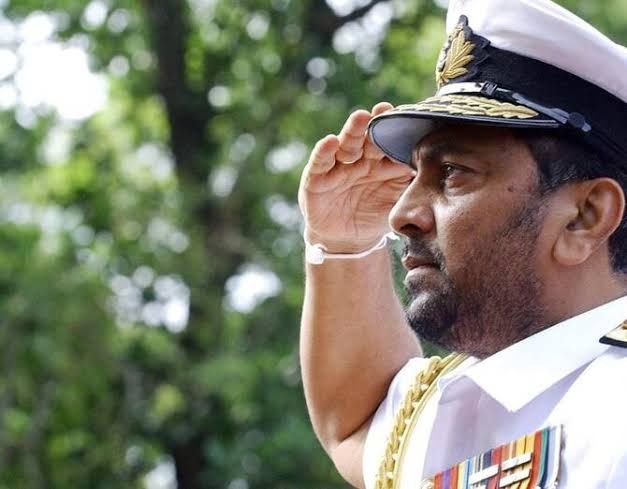
Sri Lankan authorities have taken into custody a retired senior military officer in the latest development of an expanding investigation into the Rajapaksa family's conduct during and after their time in power. Admiral of the Fleet Wasantha Karannagoda, 73, was arrested on Friday by the country's Bribery Commission following allegations that he improperly enabled the 2006 recruitment of Yoshitha Rajapaksa into the navy despite the younger man lacking the necessary qualifications for the position.
Karannagoda occupied the position of navy commander during a critical period in Sri Lankan history, leading the service through the final years of the civil conflict with Tamil separatist groups that concluded in 2009. His elevated rank of admiral of the fleet was conferred upon him a decade later in 2019, and he maintains no operational duties within the military establishment at present. The detention marks a significant moment in the government's intensifying focus on alleged malfeasance within Sri Lanka's defence and political establishment.
The charges against Karannagoda form part of a broader pattern of legal proceedings targeting individuals connected to the Rajapaksa administration. His arrest comes as Yoshitha Rajapaksa, now 38 years old, awaits trial following his own detention last month in a related matter. The younger Rajapaksa stands accused of misappropriating state resources to finance naval training at Dartmouth, the prestigious British military institution. He currently remains free on bail while the allegations against him proceed through the courts.
The Bribery Commission's formal statement presented the core allegation with striking directness: that Karannagoda had perpetrated corruption through his involvement in both the enlistment and training provision for Yoshitha Rajapaksa. This dual dimension to the allegations suggests a systematic pattern rather than an isolated breach of procedure, indicating that Karannagoda may have leveraged his authority across multiple stages of the process to accommodate the former president's son.
Beyond the recruitment controversy, Karannagoda faces substantially graver accusations rooted in events during and immediately after the ethnic conflict. He remains under investigation for alleged war crimes and has incurred sanctions from the British government following allegations of grave human rights violations and unlawful killings. These charges place him within a broader accountability framework that has emerged in recent years as international pressure for justice in post-conflict societies has intensified.
The military officer also confronts charges of conspiracy to commit murder in connection with the deaths of eleven young individuals during the 2008-2009 period. These particular charges reveal the contentious nature of post-conflict accountability in Sri Lanka, as they were initially abandoned in October 2021 during the presidency of Gotabaya Rajapaksa, Mahinda's brother. The decision to revive them represents a fundamental shift in the country's approach to transitional justice.
The revival of dormant prosecutions directly reflects the political transformation that occurred when Anura Kumara Dissanayake assumed the presidency in September 2024. Dissanayake's election campaign explicitly emphasised the need to confront widespread corruption and address longstanding unresolved high-profile criminal matters. His administration has subsequently prioritised cases targeting both the Rajapaksa family and their associates, signalling that legal mechanisms will be deployed more vigorously against those who wielded power under the previous regime.
Yoshitha Rajapaksa himself faces additional criminal charges stemming from his inability to account for the sources of income he utilised to acquire property during his father's tenure as president from 2005 to 2015. His explanation to investigators—that the funds derived from the sale of gemstones gifted by his paternal grandaunt—has proven insufficient to satisfy authorities, particularly given the grandaunt's own inability to explain how she obtained the precious stones. This apparent implausibility has fuelled suspicion that the assets represent proceeds of state theft or similar misconduct.
The legal jeopardy surrounding the Rajapaksa family extends beyond Yoshitha to his uncle Gotabaya, who received a travel restriction last month following allegations connecting him to the 2019 Easter Sunday bombings that claimed 279 lives. That catastrophic terrorist attack remains a defining tragedy in contemporary Sri Lankan history, and investigations into possible official negligence or complicity continue to generate public and international scrutiny.
Cumulatively, these developments reflect a deliberate prosecutorial strategy targeting the Rajapaksa political network. Multiple family members and close associates face diverse charges—ranging from recruitment impropriety and financial misconduct to war crimes and terror-related offences—all of which remain pending adjudication in the courts. For Malaysian observers, the cases underscore how transitional justice systems grapple with the tension between political continuity and legal accountability, a dynamic that carries relevance across Southeast Asia where similar post-conflict and post-authoritarian transitions have presented comparable challenges.
The trajectory of cases against the Rajapaksas also demonstrates how electoral change can reallocate institutional resources and political will toward accountability mechanisms. Dissanayake's victory broke the family's electoral dominance, thereby removing their ability to influence prosecutorial decisions through executive power. For Sri Lanka's democracy, the outcomes of these proceedings will substantially determine whether accountability mechanisms can function independently of political cycles, or whether legal processes will remain vulnerable to reversal whenever political leadership shifts.

