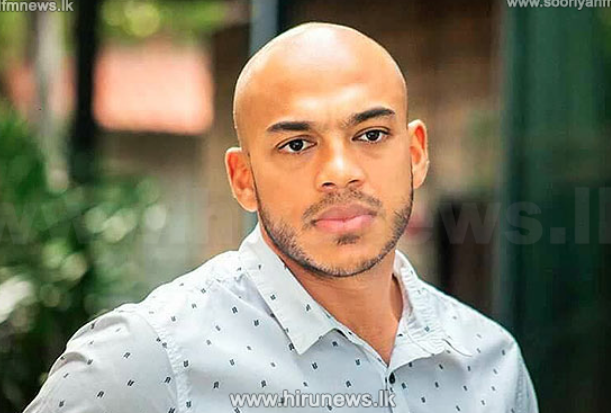
Sri Lanka's anti-corruption authorities have arrested Yoshitha Rajapaksa, the 38-year-old son of former president Mahinda Rajapaksa, on charges of leveraging state resources for personal advancement through unauthorized military training abroad. The detention on Wednesday marks an escalation in the government's crackdown against one of the country's most influential political families, whose members have long wielded considerable power across military, business, and state institutions.
According to the Bribery Commission, Yoshitha Rajapaksa is accused of securing a position within the naval officer corps without possessing the requisite qualifications, then obtaining government-funded access to a prestigious training programme at Dartmouth, Britain's renowned naval college. The commission's statement explicitly references his advancement through military ranks as occurring without merit-based justification, a particularly sensitive allegation given the importance of meritocratic standards in professional armed services across the region. His detention follows a preliminary investigation phase during which he had remained free on bail despite earlier money-laundering accusations and a ban on international travel.
The case carries significant symbolic weight within Sri Lanka's current political landscape. When Yoshitha attended Dartmouth during his father's presidency between 2005 and 2015, observers questioned whether his enrollment displaced another naval cadet who had genuinely earned selection through competitive examination. Such concerns over nepotistic advancement within state institutions resonate deeply in Southeast Asia, where questions about fair access to elite training programmes and military commissions frequently spark public debate. The allegation extends beyond simple favouritism; the Bribery Commission contends that Yoshitha engaged in actively facilitating and abetting arrangements that circumvented normal recruitment procedures.
President Anura Kumara Dissanayake's electoral victory in 2024 was substantially built upon pledges to systematically dismantle corruption networks that had flourished under previous administrations. His administration has signalled through these prosecutions that no family, regardless of historical political status, should expect immunity from accountability. This represents a significant departure from the patronage-based governance patterns that had characterized much of Sri Lankan politics, and observers across South Asia are watching whether the government can sustain momentum against entrenched interests.
Yoshitha Rajapaksa faces multiple simultaneous legal proceedings that collectively paint a picture of accumulated advantages allegedly derived from his proximity to state power. Beyond the current recruitment and training fund allegations, he is prosecuted in separate cases concerning his inability to satisfactorily document the financial sources used to purchase residential property during his father's tenure. In response to investigators' questions about these funds, he claimed that gems gifted by his great-aunt, who herself cannot explain their origin, were sold to raise the necessary capital—an explanation that authorities apparently found insufficient. Additionally, he confronts separate charges related to his acquisition of a television network, suggesting a pattern of unexplained asset accumulation.
The Rajapaksa family's trajectory offers a cautionary narrative about the consequences of sustained political dominance without institutional restraint. Mahinda Rajapaksa, who served as president from 2005 to 2015, constructed a political apparatus centred on family loyalty and dynastic power-sharing. His younger brother Gotabaya assumed the presidency in 2019, only to be forced from office in 2022 as severe economic mismanagement triggered widespread social upheaval. The economic crisis that precipitated Gotabaya's departure was so destabilizing that it prompted fundamental reassessment among voters regarding governance standards and institutional accountability.
Gotabaya Rajapaksa himself now faces serious legal exposure. The former president recently received a foreign travel restriction order, and he has petitioned the courts seeking protection against potential arrest concerning his administration's failures in security coordination prior to the Easter Sunday bombings in 2019. Those attacks killed 279 people and exposed systematic intelligence breakdowns that occurred despite warnings from international partners. The convergence of multiple investigations affecting senior family members suggests that previous political untouchability has fundamentally eroded.
For Malaysian observers and regional analysts, the Sri Lankan developments hold relevance beyond their immediate geographic context. Questions about institutional independence in investigating political elites, the strength of anti-corruption frameworks, and whether newly elected administrations can sustain reform momentum despite resistance from entrenched networks are issues confronting governments throughout Southeast Asia. Sri Lanka's experience demonstrates both the possibility of accountability mechanisms activating following electoral change and the complex challenge of managing simultaneous investigations into multiple family members without appearing vindictive or politically motivated.
The timing and sequencing of charges against Rajapaksa family members will likely influence perceptions of whether prosecutions reflect genuine institutional commitment to rule of law or constitute politically selective enforcement. The fact that cases have remained pending across multiple government administrations before accelerating under Dissanayake suggests some investigation infrastructure existed previously, though the new government has clearly prioritized resource allocation toward these matters. Whether convictions ultimately materialize and result in meaningful penalties will substantially determine whether this represents genuine institutional reform or merely a temporary political realignment.
Regional governance analysts will monitor whether Sri Lanka's courts demonstrate independence in adjudicating these high-profile cases, given the political sensitivity involved and historical questions about judicial autonomy in the country. For Southeast Asian governments grappling with their own corruption challenges, the Sri Lankan experience offers both encouragement that political will can translate into investigative action and caution regarding the institutional prerequisites necessary for sustainable reform. Yoshitha Rajapaksa's arrest signals intensified pressure on the broader Rajapaksa network, though the outcomes of his trials and those of other family members will ultimately determine whether this represents a transformative moment or merely another cyclical shift in Sri Lankan political competition.