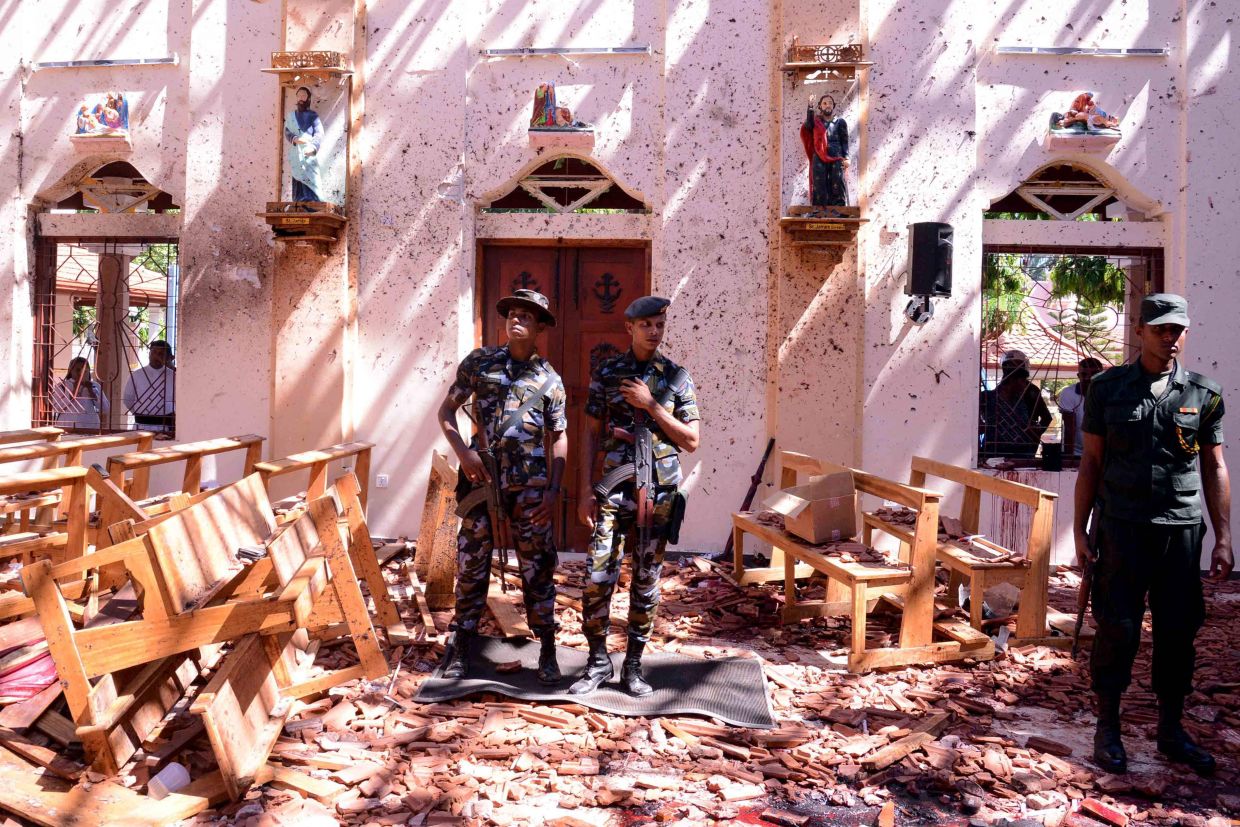
A man who lectured the Pentagon and United Nations on combating terrorism now finds himself detained under the very anti-terrorism laws he helped shape. Suresh Sallay, a retired Sri Lankan major general and counterterrorism specialist, was arrested in February and stands accused by his government of orchestrating the Easter bombings of April 21, 2019—a coordinated assault that claimed 279 lives and wounded over 500 more. The arrest of this former military figure, who previously advised international security bodies on the dangers of extremism and social media radicalisation, represents one of the most extraordinary reversals in any country's official investigation into a major terrorist attack.
The Easter Sunday bombings themselves were horrific in their scale and precision. Three luxury hotels and three churches across Sri Lanka came under simultaneous attack from seven suicide bombers in strikes claimed to be inspired by the Islamic State group. The death toll included 45 foreign nationals—tourists and visitors from Australia, Britain, China, Denmark, the Netherlands, Japan, and the United States. Initial investigations pointed firmly toward Islamist extremists, with the government blaming a jihadist network for executing a coordinated plan. Yet Sallay, who headed the State Intelligence Service after Gotabaya Rajapaksa's 2019 election victory, now faces startling allegations that he "strategically directed" the very attacks he later investigated.
Public Security Minister Ananda Wijepala made the extraordinary allegation public in June, declaring before parliament that Sallay was the "mastermind" behind the bombings. According to Wijepala, Sallay had met with Muslim men just three weeks before the attack to gather information about target locations. The minister's statement signalled an official pivot away from the narrative of an independent jihadist cell toward a darker theory: that elements within Sri Lanka's own state apparatus had orchestrated or enabled the massacre. This shift from blaming external extremists to accusing a powerful military intelligence official reflects the emergence of troubling new evidence and witness testimony that has accumulated over four years of investigation.
The investigative spotlight has gradually illuminated connections between the bombers and at least two state intelligence agencies, a development that contradicts the initial official accounts. Questions began surfacing almost immediately after the attacks about how Indian intelligence warnings went unheeded and how security forces failed to interdict the bombers despite apparent prior intelligence. Over time, critics and investigators have advanced a hypothesis far more sinister than organisational failure: that the network of extremists was deliberately cultivated, nurtured by intelligence handlers pursuing a hidden political agenda. According to this theory, the attacks were orchestrated not despite state involvement but because of it.
Investigators and critics have presented a striking motive for this alleged conspiracy. By allowing or engineering the Easter bombings, supporters of the Rajapaksa political dynasty—a force that had dominated Sri Lankan politics for years—could create the very chaos and security threat they needed to justify seizing more authoritarian powers. Gotabaya Rajapaksa had campaigned for the 2019 presidency on a hardline platform promising to crush Islamist extremism with an iron fist, drawing on his reputation for ruthlessness as Defence Secretary during the final phase of the island's civil war against Tamil rebels. A major terrorist attack just months before the election would validate his security-focused messaging and ensure electoral victory. Britain's Channel 4 reported in 2023 that a whistleblower had alleged precisely this scenario: that the attack was permitted to proceed to help Rajapaksa secure the presidency.
Historical precedent lends this theory a troubling plausibility. Previous Rajapaksa administrations have openly acknowledged that the state recruited and funded jihadists during the 1983-2009 civil war, employing them as intelligence assets to gather information on Tamil rebel movements. However, these same officials have insisted that the militants ultimately betrayed their handlers and carried out the Easter attacks independently. This history demonstrates both Sri Lankan security forces' willingness to work with extremists when operationally convenient and the inherent unpredictability of such arrangements. The question investigators now grapple with is whether the 2019 bombings represented another such arrangement that spiralled beyond official control—or whether the spiral was intentional.
Sallay's background makes the accusations against him particularly striking. A career military officer with extensive international experience, he studied at prestigious institutions in India and Britain and represented Sri Lanka in diplomatic postings in France and Malaysia. He became the first military officer appointed to head the State Intelligence Service, reflecting his standing within the security establishment and his relationship with the Rajapaksa administration. His academic credentials and international lectures on counterterrorism positioned him as a serious figure in regional security discussions. The sudden arrest of such a prominent figure, lacking public charges and pending a court hearing, has created significant uncertainty about whether he faces genuine accountability or political persecution.
Sallay's personal background reflects Sri Lanka's religious diversity in ways that complicate any simple narrative about sectarian conflict. A Muslim man married to a Buddhist woman, with a Catholic mother, he embodies the interfaith bonds that characterise much of Sri Lankan society. Religious minorities comprise significant portions of the population: approximately 12 percent are Hindu, 10 percent Sunni Muslim, and 7 percent Christian, alongside the 70 percent Buddhist majority. His mother's recent appeal to Pope Francis for his release underscores both the international dimensions of the case and the personal toll on his family.
The arrest of Sallay has cast a troubling light on earlier investigations that now appear premature or misdirected. In 2020, Sallay himself ordered the arrest of Hejaaz Hizbullah, a Muslim human rights lawyer, accusing him of being the attack's "mastermind." Hizbullah spent 22 months in detention before authorities released him, unable to produce credible evidence. The reversal raises uncomfortable questions about whether initial arrests were based on genuine investigative leads or on other motives. Hizbullah's case demonstrates how terrorism investigations in an unstable political environment can become tools for silencing critics and targeting minorities.
For Malaysia and the broader Southeast Asian region, the unfolding Sri Lankan situation carries important lessons about the risks of unchecked military power and intelligence agency autonomy. Allegations that security services might orchestrate terror attacks to justify political consolidation strike at the heart of what makes democracies vulnerable. Malaysia itself has navigated complex terrain around Islam, security, and political power, making the Sri Lankan case a cautionary study. The case also raises questions about international oversight of intelligence agencies and the mechanisms through which democratic governments can maintain civilian control over security forces.
Sallay remains uncharged and denies any involvement in the bombings. His next court hearing is scheduled for mid-July, with the legal process expected to unfold over many months. The case will likely determine not only his personal fate but also the public's understanding of what actually happened on Easter Sunday 2019. Should investigators establish that state elements were involved in orchestrating the attacks, it would represent one of the most shocking revelations in modern South Asian history. Alternatively, should Sallay be exonerated, it will raise troubling questions about the politicisation of justice and whether Sri Lanka's institutions can fairly investigate powerful officials.

