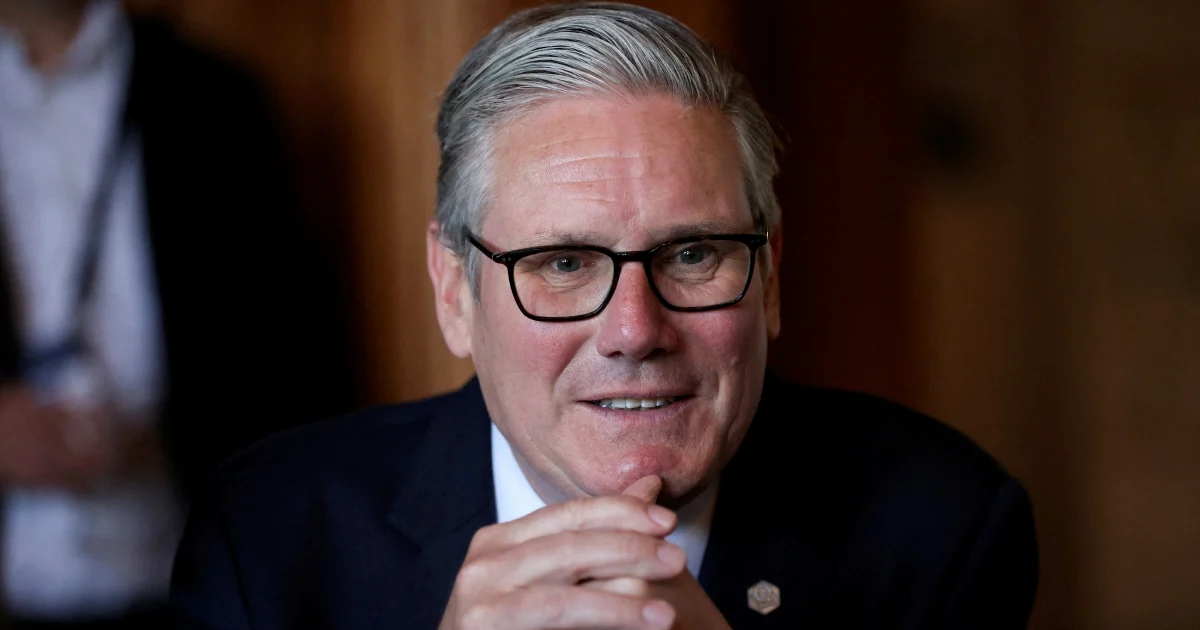
The British political establishment faced fresh speculation about Prime Minister Keir Starmer's future after the Observer newspaper reported expectations that he would announce his resignation on Monday and outline a schedule for stepping down. However, officials within his government swiftly contradicted the claim, insisting the Prime Minister continues to concentrate on the substantive work of leading the nation.
The contrasting accounts highlight the heightened sensitivity surrounding Starmer's position and the broader turbulence engulfing the Labour Party government. Since assuming office following the 2024 general election, Starmer's premiership has been tested by a succession of challenges, from internal party dynamics to external policy demands. Each setback or critical news cycle has prompted fresh speculation about his longevity in the role, creating a cycle of rumour and denial that has become characteristic of the current political climate.
Government sources emphasised that Starmer's focus remains fixed on delivering his agenda and implementing the policies that formed the cornerstone of Labour's election campaign. The deliberate pushback against the resignation narrative suggests a determination to move beyond speculation and restore momentum to the government's legislative and policy priorities. Such moments often reflect the underlying anxiety within Number 10 regarding media narratives and public perception, particularly when facing cumulative criticism.
The timing of the Observer report coincided with an already challenging period for the government, which has fielded criticism on multiple fronts including economic policy, public sector industrial action, and the direction of key government initiatives. The resignation rumour, whether credible or speculative, arrived at a moment when any perception of weakness could compound existing difficulties in projecting governmental authority and coherence.
For Malaysian readers, the episode illustrates broader patterns visible across Westminster and other Westminster-modelled parliaments in the Commonwealth. Leadership instability, particularly when fuelled by media speculation and internal party pressures, can undermine government effectiveness and the implementation of long-term strategic objectives. The constant question of whether a prime minister can complete their term creates uncertainty that affects everything from economic investor confidence to public sector morale.
Starmer's situation also reflects a contemporary challenge facing many democratic leaders: the compressed news cycle and social media amplification mean that internal party matters and speculation acquire disproportionate public prominence. What might once have been contained within parliamentary corridors now shapes public perception within hours, influencing approval ratings and the government's ability to command legislative space.
The Labour government's majority in parliament provides Starmer with a significant structural advantage compared to some recent predecessors, yet majorities alone have proven insufficient to insulate prime ministers from either internal dissent or the relentless media scrutiny that characterises modern politics. The party unity that allowed Labour's decisive election victory appears fragile when confronted with the difficult realities of fiscal constraints and competing policy demands.
From a Southeast Asian perspective, the UK's apparent instability stands in contrast to the more stable executive arrangements found in some regional democracies. Yet it also demonstrates the resilience of Westminster institutions, where speculation about leadership can be aired publicly and contested without triggering constitutional crises or extra-institutional interventions. The system's legitimacy depends partly on this openness, even when it generates discomfort for sitting leaders.
The government's response strategy—vigorous denial combined with reiteration of policy focus—represents the standard playbook for managing such episodes. Whether such reassurances gain traction depends heavily on subsequent developments. Any hint that the government is losing control of its agenda or failing to deliver measurable results will inevitably revive questions about Starmer's capacity to lead effectively through the remainder of his term.
The coming weeks will likely prove decisive in determining whether this episode becomes a minor footnote or marks a turning point in the government's fortunes. Success in implementing key policies and demonstrating improved governance metrics would substantially deflate resignation speculation. Conversely, continued accumulation of setbacks would render such reassurances increasingly hollow, potentially validating the very concerns the government is currently attempting to dismiss as premature or media-generated fiction.

